Polymeric Electrospun Nanofiber Composites as Fast Equilibrium Passive Samplers: Integration of Surface Functionalities and Porosity to Improve Organic Chemical Uptake
Matthew R. Nagorzanski, Jiajie Qian, Sarah A. Crane, David M. Cwiertny, Andres Martinez

TL;DR
Researchers developed electrospun nanofiber composites that can quickly and effectively sample organic pollutants in water, with some formulations showing up to 45-fold better uptake.
Contribution
The study introduces electrospun nanofiber composites with tailored surface and porosity features for enhanced and rapid passive sampling of water contaminants.
Findings
CNT-containing ENMs showed higher sorption of contaminants like atrazine and 2,4-D compared to unmodified materials.
Surfactant-modified ENMs increased uptake of specific pollutants by up to 40-fold.
Field tests showed good agreement with grab samples for atrazine but overestimated metolachlor due to stronger binding.
Abstract
Despite advances in passive sampling technologies, challenges persist in improving the selectivity, sensitivity, and response time. This study presents the fabrication and evaluation of electrospun nanofiber mats (ENMs) embedded with carbon nanotubes (CNTs), with and without surfactant modifications, as fast equilibrium passive sampling materials. We investigated the sorption and desorption behaviors of four common surface water contaminants: atrazine, metolachlor, diuron, and 2,4-dichlorophenoxyacetic acid (2,4-D). We demonstrated that ENMs modified with the cationic surfactant tetrabutyl ammonium bromide (TBAB) exhibited higher sorption than their unmodified PAN/CNT counterparts for all species, including anionic 2,4-D, for which uptake increased by up to 45-fold. ENMs modified with sodium dodecyl sulfate (SDS), a leachable porogen, exhibited greater surface area and improved sorption…
Genes, proteins, chemicals, diseases, species, mutations and cell lines named across the full text — each resolved to its canonical identifier and authoritative record.
Click any figure to enlarge with its caption.
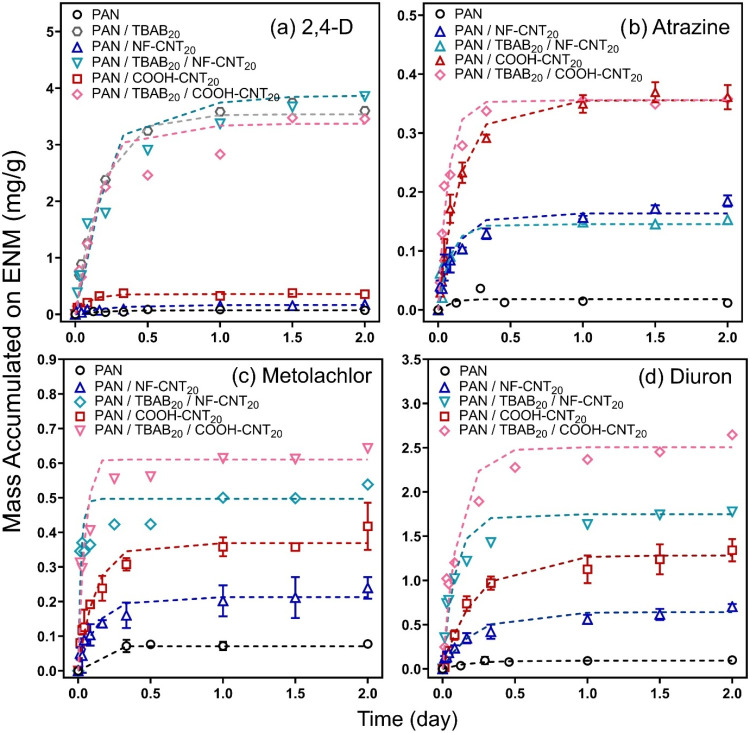 Figure 1
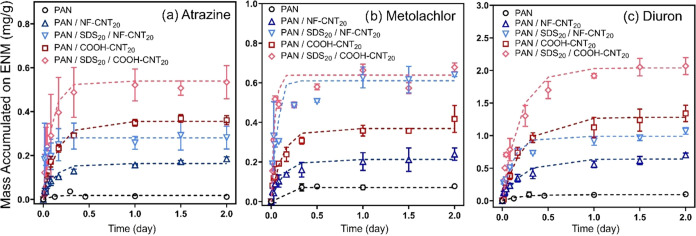 Figure 2
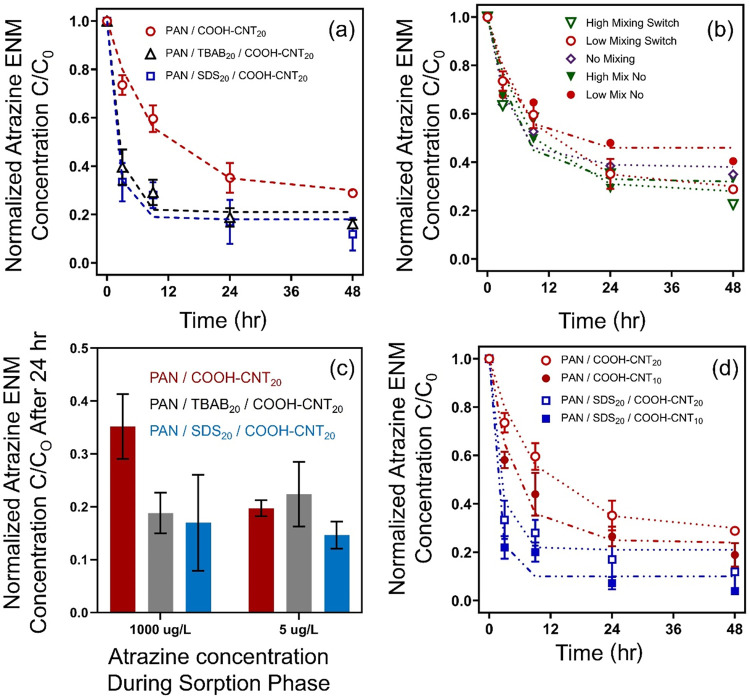 Figure 3
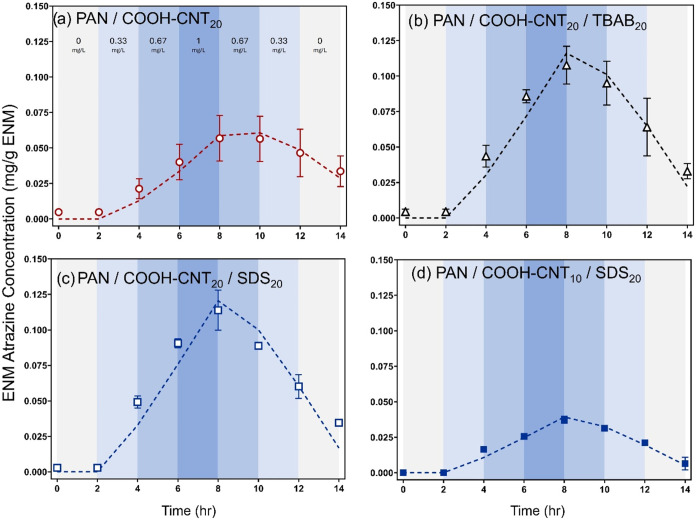 Figure 4
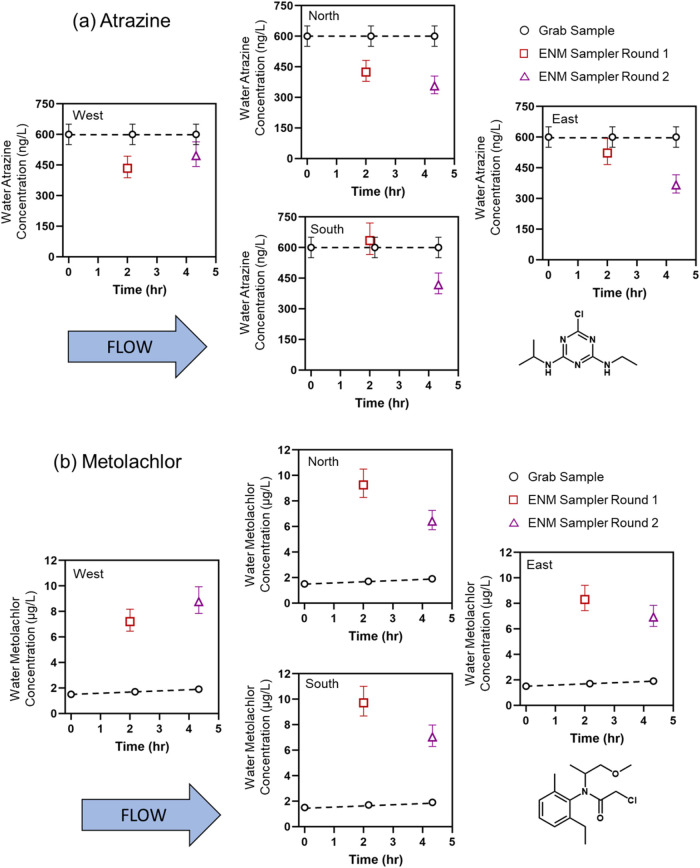 Figure 5
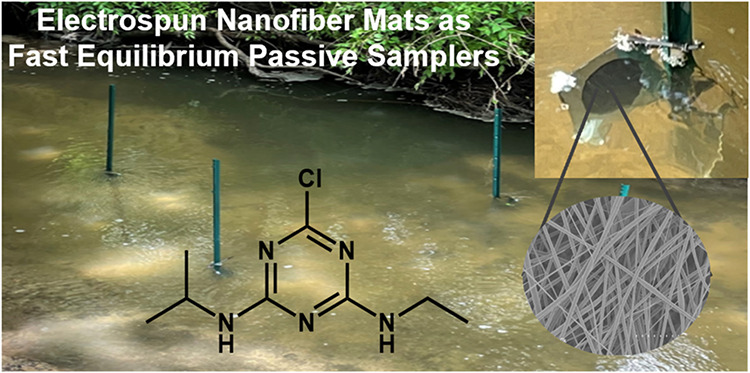 Figure 6
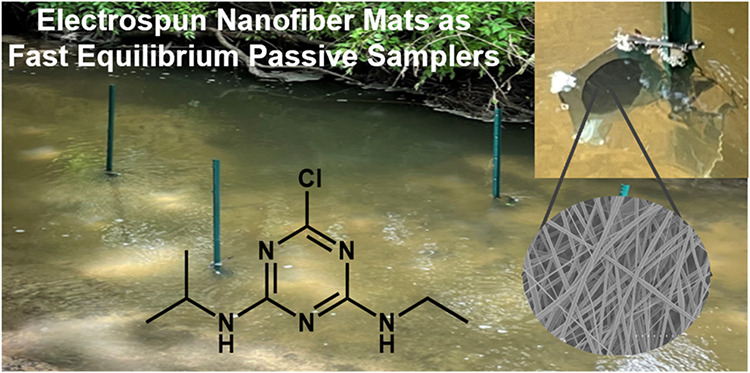 Figure 7
 Figure 8
 Figure 9
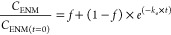 Figure 10
 Figure 11
Peer Reviews
No public reviews on file for this paper yet. If you reviewed it on a platform where reviews are public (OpenReview, ICLR, NeurIPS, ICML), you can paste yours below so the community can read it here.
Videos
No videos yet. Explain this paper in a talk, walkthrough, or lecture? Add one.
Taxonomy
TopicsAdsorption and biosorption for pollutant removal · Pharmaceutical and Antibiotic Environmental Impacts · Analytical chemistry methods development