Methodological Challenges in the Application of QSAR Models for Chemical Prioritization and Toxicity Assessment: A Case Study on Aryl Hydrocarbon Receptor Activity in Environmental Pollutant Mixtures
Jiří Komprda, Katarína Lörinczová, Zuzana Toušová, Marie Smutná, Soňa Smetanová, Klára Komprdová, Klára Hilscherová

TL;DR
This study develops a QSAR model to prioritize chemicals based on their toxicity levels, helping assess environmental pollutants more effectively.
Contribution
A QSAR model that classifies compounds into multiple activity levels for aryl hydrocarbon receptor (AhR) activity is developed and validated.
Findings
The QSAR model achieved 77–87% weighted accuracy in predicting AhR activity levels.
The model successfully identified high-AhR activity compounds like benzonaphthothiophene and perylene.
Combining QSAR predictions with experimental data improved site-specific toxicity assessments.
Abstract
The complexity of chemical mixtures in the environment challenges their in-depth risk assessment due to the diverse compounds in use and the lack of experimental toxicity data. In silico models can be used to fill data gaps for compounds with unknown toxic potency. QSAR models typically distinguish only between active and inactive compounds, providing no information about the levels of activity. In this study, a quantitative structure–activity relationship (QSAR) model that classifies compounds into multiple activity levels was developed to address data gaps in the levels of aryl hydrocarbon receptor-mediated (AhR) activity of compounds commonly detected in environmental samples. Its practical applicability has been demonstrated on highly complex mixtures of aquatic pollutants from the Joined Danube Survey to prioritize the most relevant compounds for experimental assessment. The…
Genes, proteins, chemicals, diseases, species, mutations and cell lines named across the full text — each resolved to its canonical identifier and authoritative record.
Click any figure to enlarge with its caption.
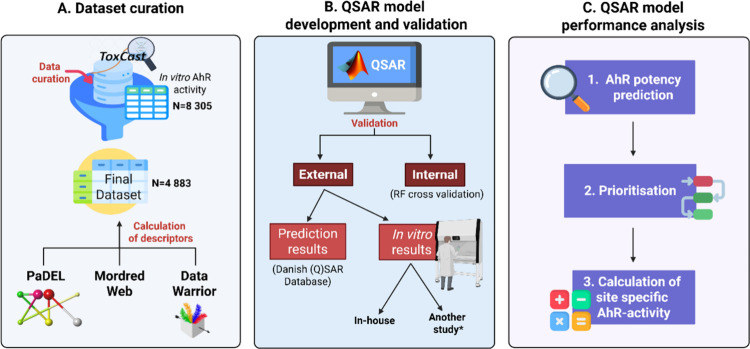 Figure 1
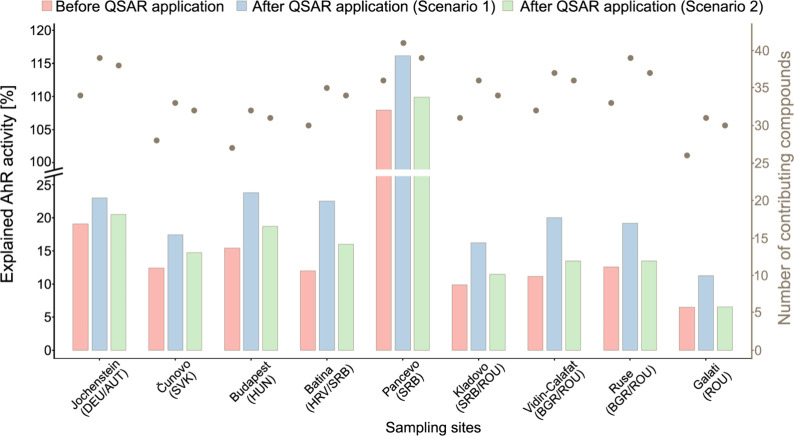 Figure 2
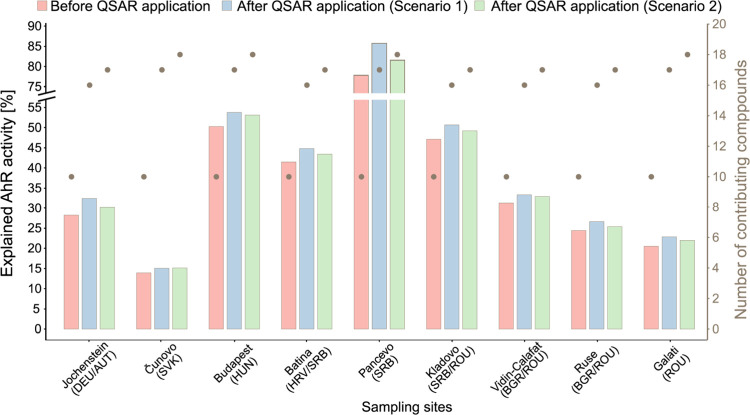 Figure 3
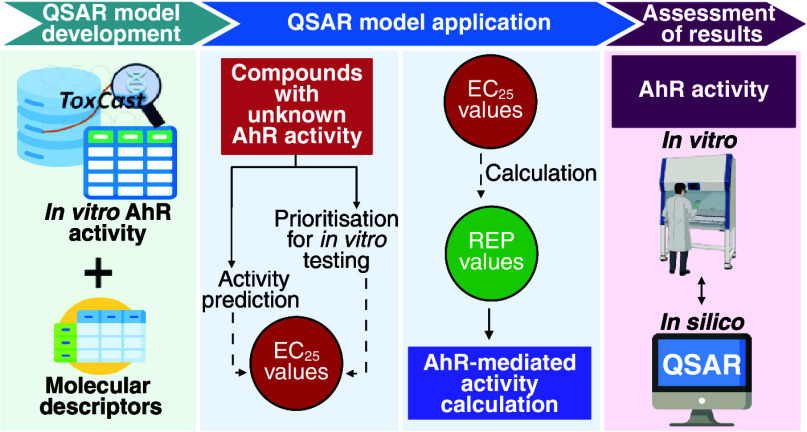 Figure 4
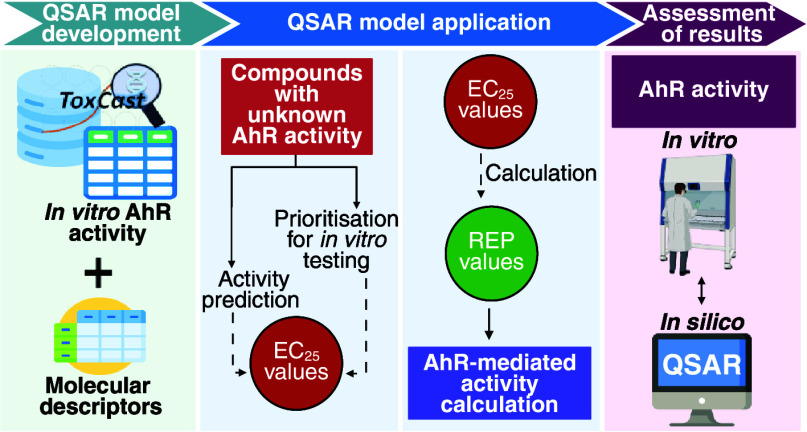 Figure 5
 Figure 6
Peer Reviews
No public reviews on file for this paper yet. If you reviewed it on a platform where reviews are public (OpenReview, ICLR, NeurIPS, ICML), you can paste yours below so the community can read it here.
Videos
No videos yet. Explain this paper in a talk, walkthrough, or lecture? Add one.
Taxonomy
TopicsToxic Organic Pollutants Impact · Environmental Toxicology and Ecotoxicology · Computational Drug Discovery Methods