Sublethal Effects of the Insect Growth Regulator Novaluron on the Midgut Integrity and Survival of Adult Honey Bee Apis mellifera Workers
Mateus Soares de Oliveira, João Victor de Oliveira Motta, Davy Soares Gomes, Giovanna dos Santos Pereira, Gabriel Martins Pantoja, Laryssa Lemos da Silva, João Paulo Pimentel de Oliveira Cruz, José Eduardo Serrão

TL;DR
This study shows that the insecticide novaluron, though considered safe for adult insects, harms honey bees by damaging their gut and reducing survival.
Contribution
The study reveals novaluron's sublethal toxicity to honey bees, challenging its classification as safe for adult insects.
Findings
Chronic exposure to novaluron reduced chitin levels and disrupted the peritrophic matrix in honey bee midguts.
Exposed bees showed increased gut permeability, histopathological changes, and higher mortality rates.
The findings suggest novaluron is toxic to adult honey bees despite being an insect growth regulator.
Abstract
The insect growth regulator novaluron is a benzoylurea compound that disrupts the polymerization of chitin filaments. It is commonly used to control agricultural pests, particularly during their immature stages, and is generally considered nontoxic to adult insects. However, there is a lack of studies addressing the potential side effects of this insecticide on nontarget organisms, such as pollinating bees. In honey bees, the midgut is the primary organ responsible for digestion and nutrient absorption, where ingested food is surrounded by the peritrophic matrix, a structure composed of chitin microfibrils, glycosaminoglycans, and glycoproteins synthesized by digestive cells along the midgut. This study investigated whether chronic oral exposure to novaluron affects adult workers of the honey bee Apis mellifera. Specifically, we assessed the effects of the insecticide on the composition…
Genes, proteins, chemicals, diseases, species, mutations and cell lines named across the full text — each resolved to its canonical identifier and authoritative record.
Click any figure to enlarge with its caption.
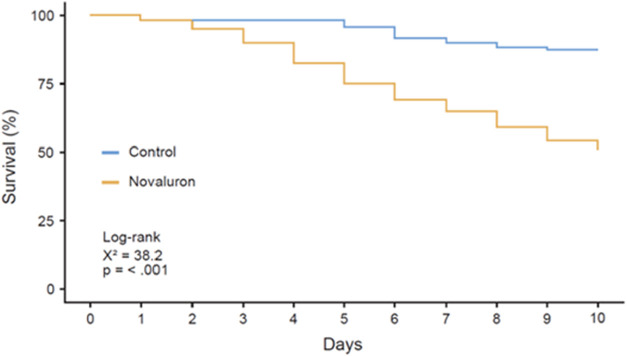 Figure 1
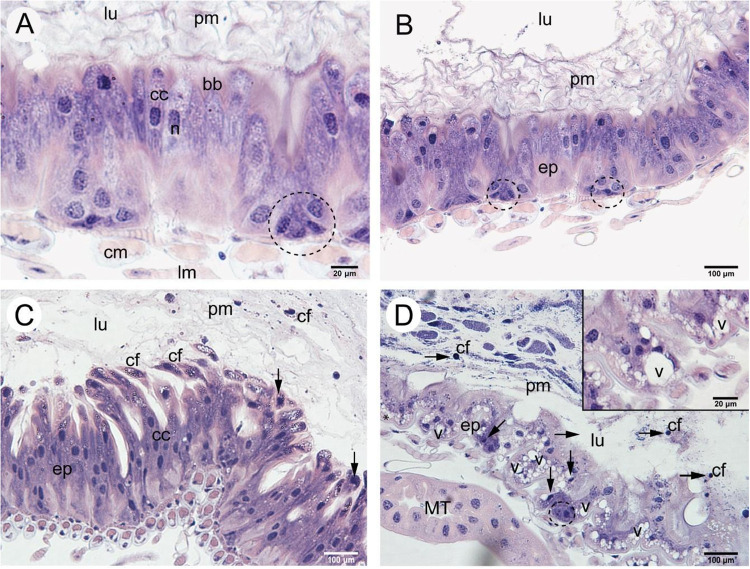 Figure 2
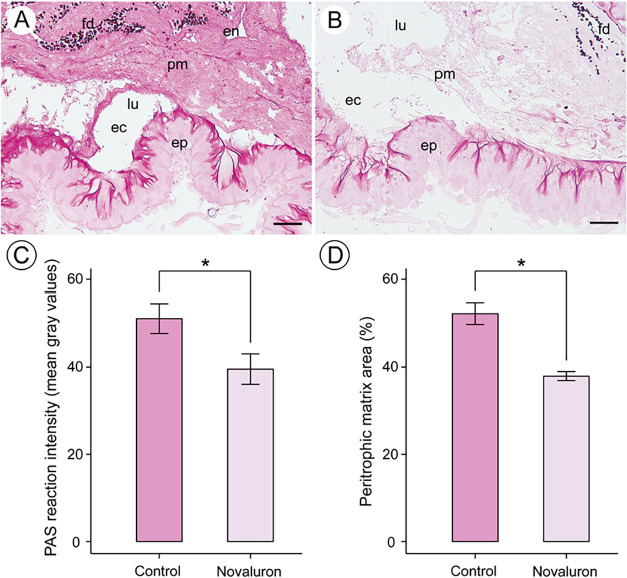 Figure 3
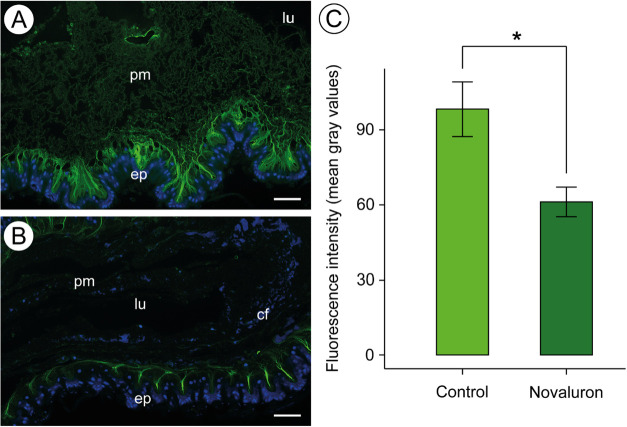 Figure 4
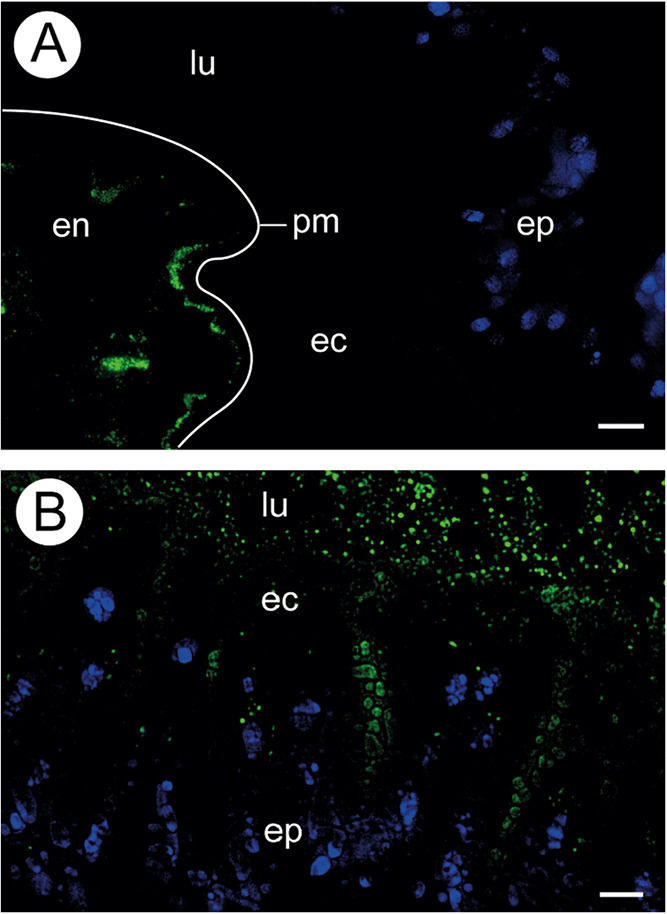 Figure 5
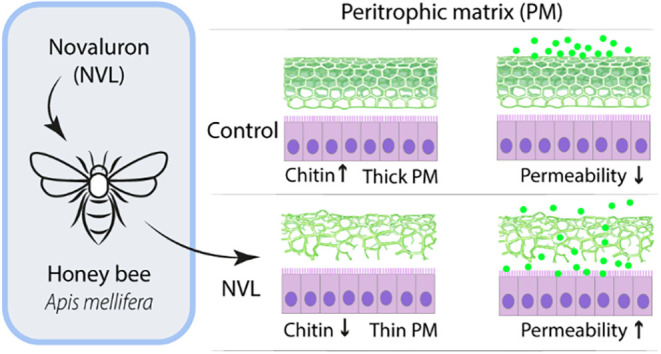 Figure 6
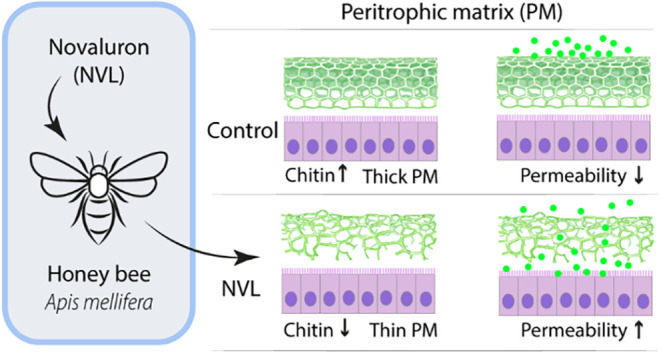 Figure 7
Peer Reviews
No public reviews on file for this paper yet. If you reviewed it on a platform where reviews are public (OpenReview, ICLR, NeurIPS, ICML), you can paste yours below so the community can read it here.
Videos
No videos yet. Explain this paper in a talk, walkthrough, or lecture? Add one.
Taxonomy
TopicsInsect and Pesticide Research · Insect Pest Control Strategies · Insect and Arachnid Ecology and Behavior