Lewis Acid‐Base Effects on Molecular Structure and Charge Density in Solid Polymer Electrolytes for Solid‐State Batteries
Wonmi Lee, Seung‐Min Lee, Min Kyung Kim, Juho Lee, Junhyeok Hwang, Jeongsik Choi, Sungbin Jang, Seok Ju Kang, Sung‐Kyun Jung, Hyun‐Wook Lee, Jinsoo Kim

TL;DR
This paper explores how different lithium salts affect the properties of solid polymer electrolytes used in batteries, finding that a mix of two salts improves performance.
Contribution
The study introduces a binary lithium salt formulation that optimizes ionic conductivity, mechanical strength, and electrochemical stability in solid polymer electrolytes.
Findings
A binary lithium salt mixture improves ionic conductivity to 4.93 × 10⁻⁴ S/cm at 20°C.
The binary formulation increases mechanical strength to 127 MPa.
The salt mixture provides a broad electrochemical stability window.
Abstract
Solid polymer electrolytes (SPEs) are critical for advancing the safety and performance of solid‐state batteries (SSBs). However, challenges such as low ionic conductivity, limited mechanical strength, and narrow electrochemical stability windows hinder their widespread adoption. This study investigates the role of lithium salt formulation, specifically lithium bis(fluorosulfonyl)imide (LiFSI), lithium bis(trifluoromethanesulfonyl)imide (LiTFSI), and a binary mixture of the two, on the molecular structure and charge density of poly(vinylidene fluoride‐co‐hexafluoropropylene) (PVDF‐HFP)‐based SPEs. Through comprehensive characterization, we demonstrate that the choice of lithium salt profoundly affects the crystallinity, dehydrofluorination degree, and ionic conductivity of SPEs. Notably, the binary salt mixture provides a balanced improvement in ionic conductivity (4.93 × 10⁻⁴ S/cm at…
Genes, proteins, chemicals, diseases, species, mutations and cell lines named across the full text — each resolved to its canonical identifier and authoritative record.
Click any figure to enlarge with its caption.
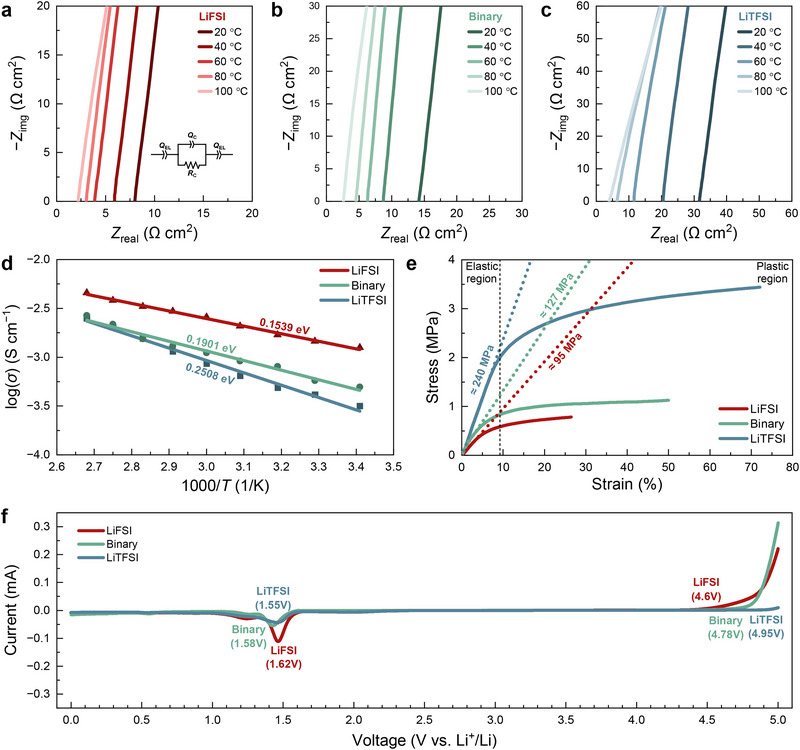 Figure 1
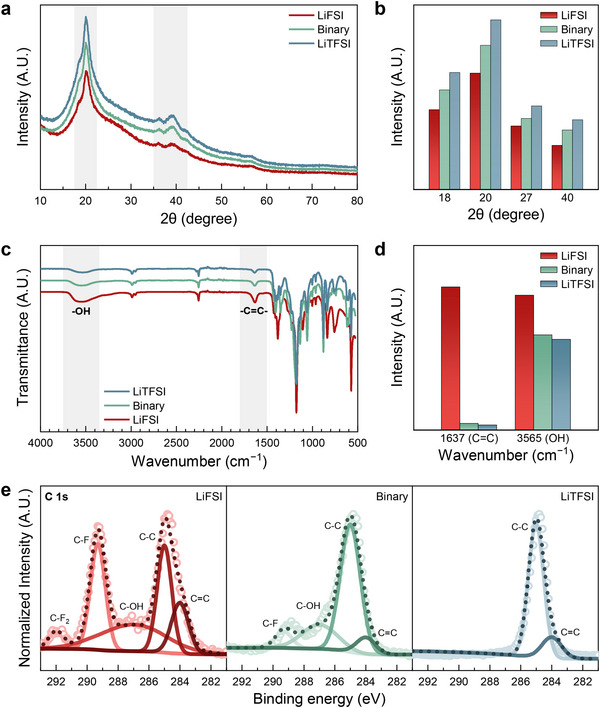 Figure 2
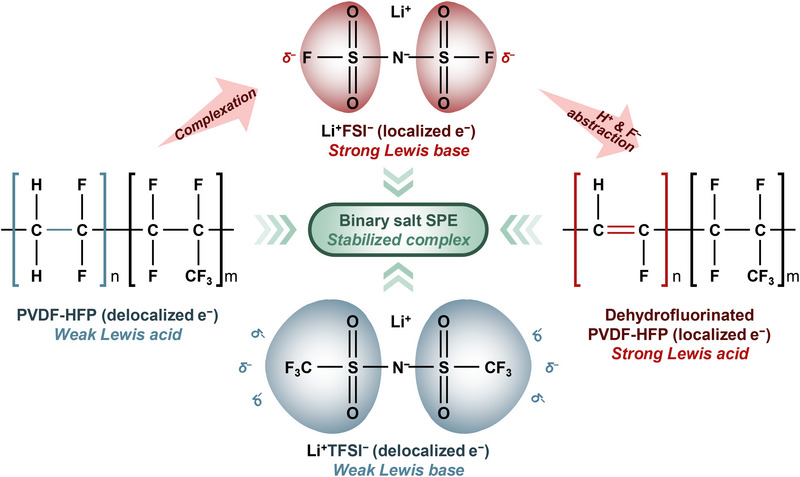 Figure 3
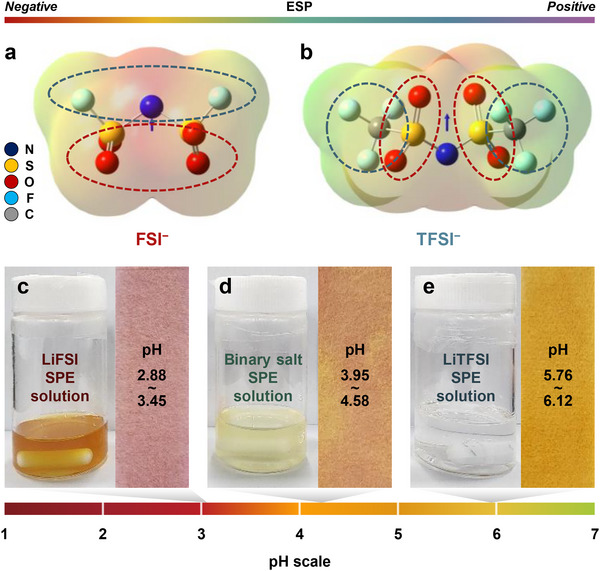 Figure 4
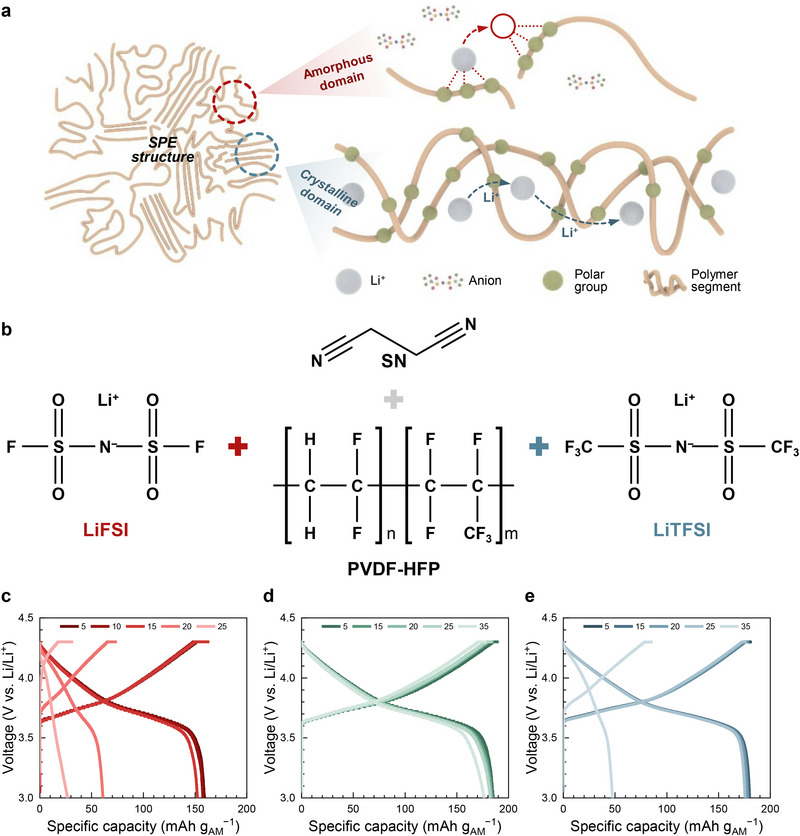 Figure 5
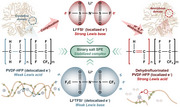 Figure 6
Peer Reviews
No public reviews on file for this paper yet. If you reviewed it on a platform where reviews are public (OpenReview, ICLR, NeurIPS, ICML), you can paste yours below so the community can read it here.
Videos
No videos yet. Explain this paper in a talk, walkthrough, or lecture? Add one.
Taxonomy
TopicsAdvanced Battery Materials and Technologies · Dielectric materials and actuators · Thermal Expansion and Ionic Conductivity