Comparative Genomics Provide Insights Into Karyotype Evolution in Vespertilionid Bats (Vespertilionidae, Chiroptera)
Linjing Lan, Xin Zhang, Jinjin Xie, Xiaohui Lin, Xihong Hong, Wenhui Nie, Jinhuan Wang, Weiting Su, Fengtang Yang, Guimei He, Xiuguang Mao

TL;DR
This study explores how bat chromosomes evolved by comparing two groups with different chromosome numbers, revealing how genetic changes drive diversity.
Contribution
The paper presents a chromosome-level genome assembly and identifies transposable elements as key drivers of karyotype evolution in vespertilionid bats.
Findings
Ancestral karyotype reconstruction suggests fusions and fissions as main drivers of chromosome evolution in vespertilionid bats.
Transposable elements are enriched at fusion sites and in DNA metabolism genes, indicating a role in karyotype diversification.
Genome stability genes and contracted gene families may help bats adapt to chromosomal changes.
Abstract
Studies elucidating the molecular basis and evolutionary consequences of karyotypic changes in mammals remain scarce. Here, we investigate chromosomal evolution by focusing on two contrasting lineages within the family Vespertilionidae (Chiroptera): the karyotypically variable tribe Pipistrellini and the highly conserved genus Myotis. Pipistrellini exhibits extensive karyotype diversity, with diploid numbers (2n) ranging from 26 to 44, whereas Myotis demonstrates remarkable stability, maintaining 2n = 44 across nearly all studied species. To uncover the mechanisms driving these divergent evolutionary trajectories, we generated a high‐quality chromosome‐level genome assembly for Pipistrellus abramus (2n = 26). By integrating multiple high‐quality vespertilionid genomes, we reconstructed the family phylogeny and inferred an ancestral karyotype of 2n = 44, revealing fusions and fissions…
Genes, proteins, chemicals, diseases, species, mutations and cell lines named across the full text — each resolved to its canonical identifier and authoritative record.
Click any figure to enlarge with its caption.
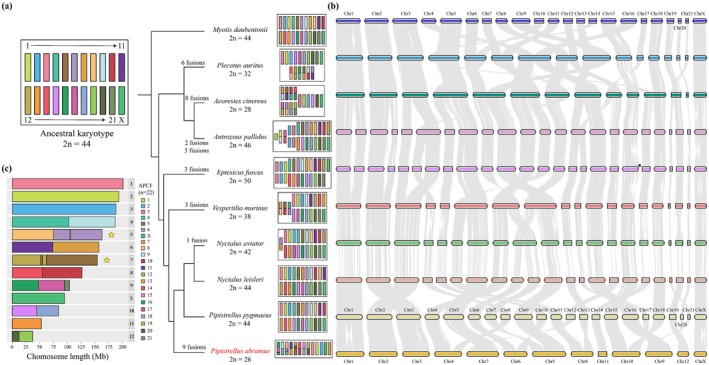 Figure 1
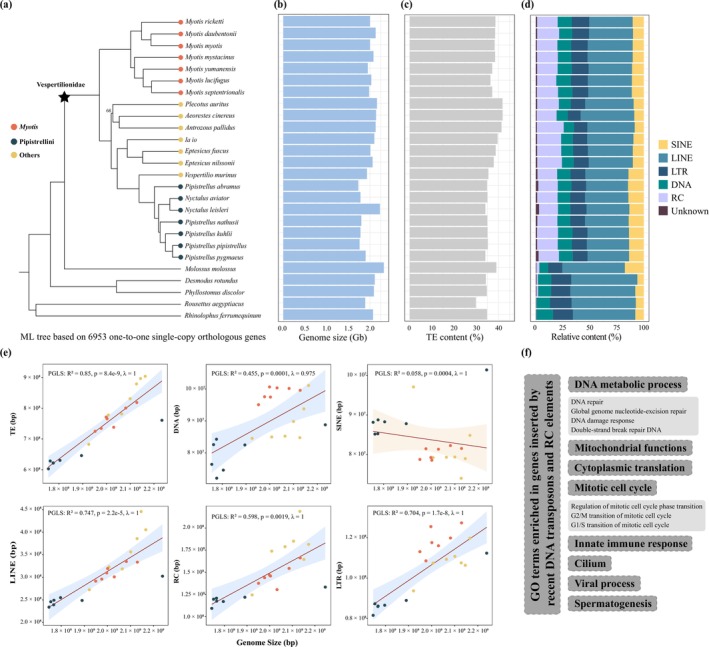 Figure 2
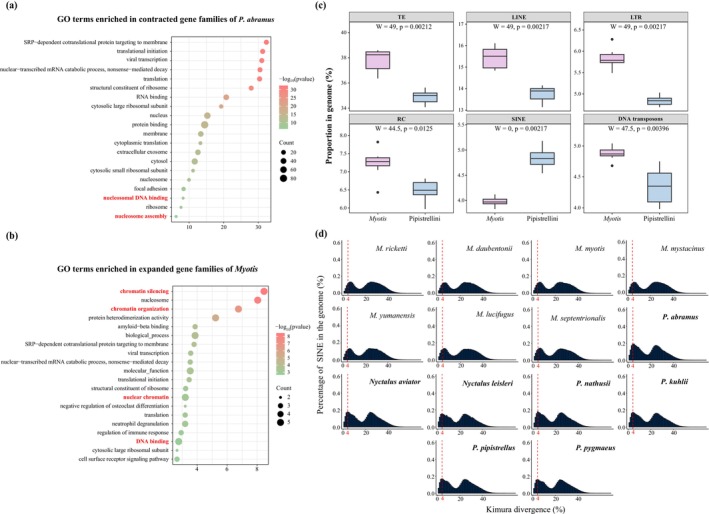 Figure 3
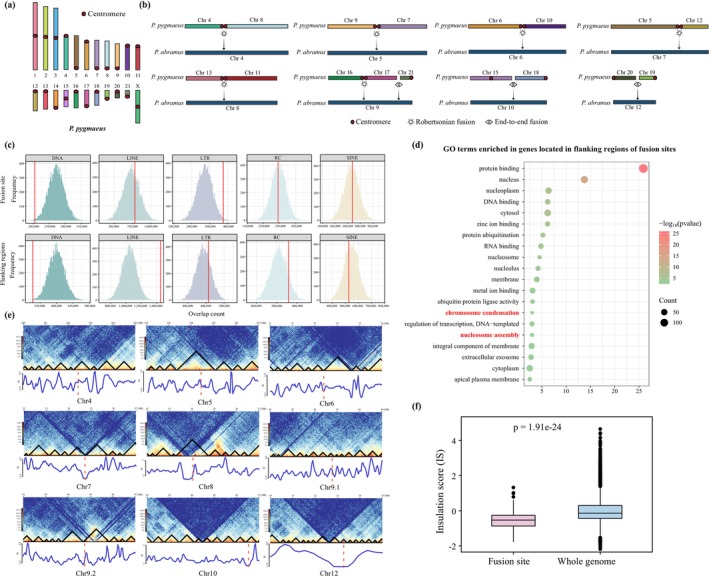 Figure 4
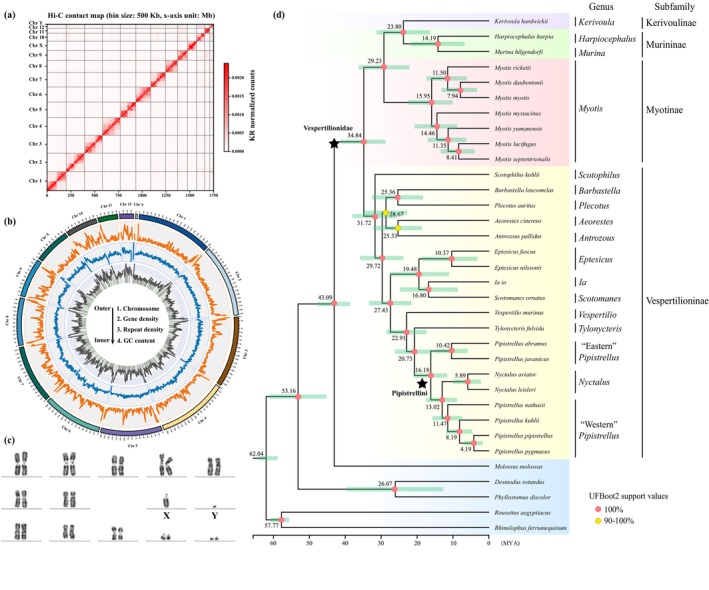 Figure 5
Peer Reviews
No public reviews on file for this paper yet. If you reviewed it on a platform where reviews are public (OpenReview, ICLR, NeurIPS, ICML), you can paste yours below so the community can read it here.
Videos
No videos yet. Explain this paper in a talk, walkthrough, or lecture? Add one.
Taxonomy
TopicsChromosomal and Genetic Variations · Bat Biology and Ecology Studies · Genomics and Phylogenetic Studies