Sleep and Trajectories of Respiratory and Allergic Symptoms Between 1 and 5.5 Years of Age in the Elfe Birth Cohort
Daniele Saade, Rosalie Delvert, Chantal Raherison‐Semjen, Orianne Dumas, Mohammed Sedki, Marie‐Noëlle Dufourg, Blandine de Lauzon‐Guillain, Bénédicte Leynaert, Rachel Nadif, Annabelle Bédard, Sabine Plancoulaine

TL;DR
Poor sleep in 1-year-old children is linked to more respiratory and allergic symptoms by age 5.5, suggesting early sleep issues may predict later health problems.
Contribution
This study identifies early sleep patterns as predictors of later respiratory and allergic health trajectories in children.
Findings
Poor sleep at age 1 is associated with higher odds of persistent respiratory and allergic symptoms by age 5.5.
Four distinct respiratory and allergic symptom trajectories were identified between ages 1 and 5.5.
The association between early sleep disturbances and health outcomes was stronger in children without early wheezing.
Abstract
Sleep troubles and respiratory and allergic health issues are associated in children, but the timeline of their association is overlooked. This study investigates the associations between sleep patterns at age 1 and respiratory and allergic multi‐trajectories (RespA‐MTG) between ages 1 and 5.5, and the associations between these multi‐trajectories and sleep at age 5.5 in the ELFE birth cohort. Sleep clusters at ages 1 and 5.5 (based on nocturnal and diurnal sleep duration, sleep onset difficulties, and night awakenings) and RespA‐MTG between ages 1 and 5.5 (based on wheezing, asthma medication, eczema, allergic conjunctivitis) were identified using data‐driven methods. Associations between sleep clusters and RespA‐MTG were assessed using multinomial regressions adjusted for confounders in 9577 children. Two sleep clusters were identified at ages 1 and 5.5: good sleepers (79.9% at age 1,…
Genes, proteins, chemicals, diseases, species, mutations and cell lines named across the full text — each resolved to its canonical identifier and authoritative record.
Click any figure to enlarge with its caption.
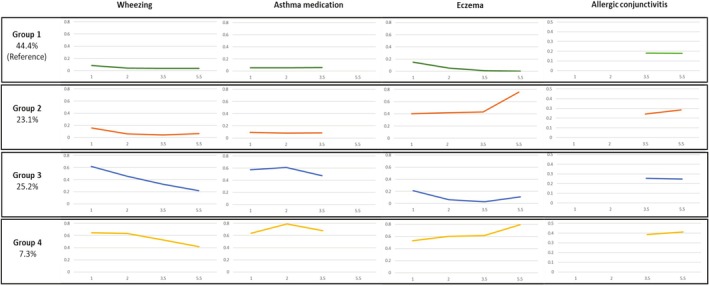 Figure 1
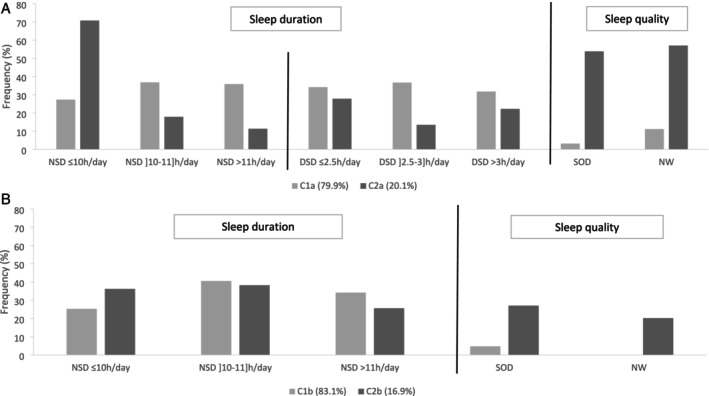 Figure 2
Peer Reviews
No public reviews on file for this paper yet. If you reviewed it on a platform where reviews are public (OpenReview, ICLR, NeurIPS, ICML), you can paste yours below so the community can read it here.
Videos
No videos yet. Explain this paper in a talk, walkthrough, or lecture? Add one.
Taxonomy
TopicsSleep and related disorders · Sleep and Wakefulness Research · Neuroscience of respiration and sleep