Mobile Powerhouses: Mitochondria Transfer via Tunnelling Nanotubes in Brain Health and Neurodegenerative Diseases
Anna Henrich, Hannah Scheiblich

TL;DR
Mitochondria can move between brain cells through structures called tunnelling nanotubes, which may help with energy balance but also spread disease.
Contribution
This paper highlights how tunnelling nanotubes mediate mitochondrial transfer in the brain and its implications for health and disease.
Findings
Mitochondria transfer via tunnelling nanotubes supports bioenergetic recovery and immune modulation in the brain.
Glial cells transfer mitochondria to stressed neurons, aiding in quality control and metabolic balance.
TNT-mediated transfer can also spread pathological proteins and support tumor growth.
Abstract
Mitochondria are central regulators of cellular metabolism, calcium homeostasis and survival. Owing to the brain's exceptional energy demand, mitochondrial dysfunction is tightly linked to neurodegenerative and neuroinflammatory disorders. Recent evidence challenges the traditional view of mitochondria as strictly cell‐autonomous organelles, revealing that they can be exchanged between cells via intercellular transfer by extracellular vesicles, gap junctions or tunnelling nanotubes (TNTs) as part of an adaptive mechanism of metabolic support and signalling. Among the pathways mediating this intercellular exchange, TNTs—thin, actin‐rich cytoplasmic bridges—have emerged as key conduits for mitochondrial transfer in the nervous system. TNTs enable bidirectional exchange of mitochondria between neurons, glia and vascular cells, thereby promoting bioenergetic recovery after injury and…
Genes, proteins, chemicals, diseases, species, mutations and cell lines named across the full text — each resolved to its canonical identifier and authoritative record.
Click any figure to enlarge with its caption.
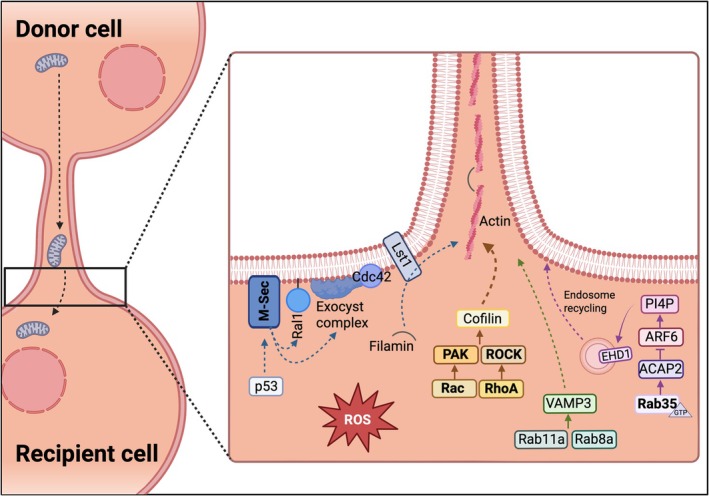 Figure 1
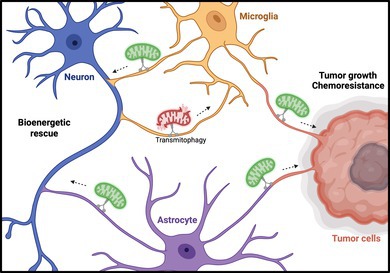 Figure 2
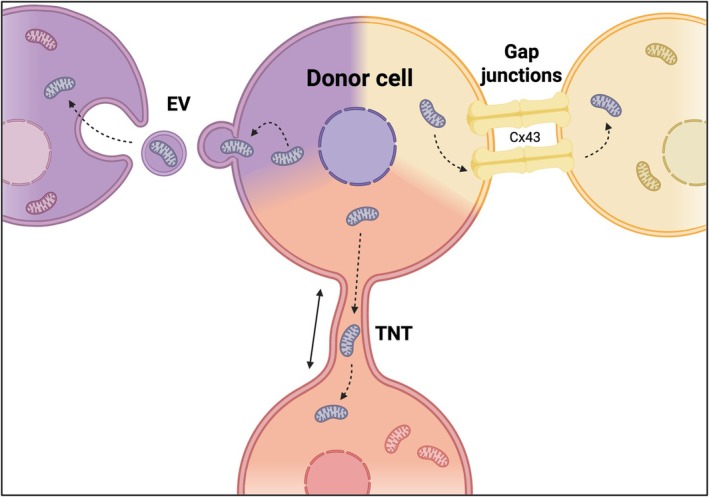 Figure 3
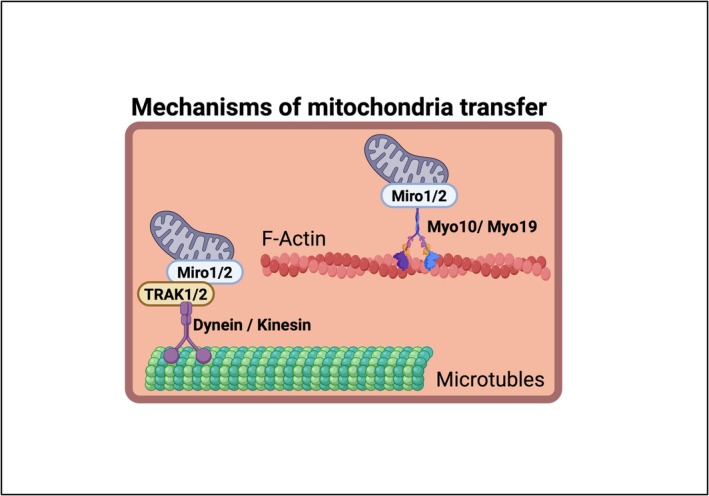 Figure 4
Peer Reviews
No public reviews on file for this paper yet. If you reviewed it on a platform where reviews are public (OpenReview, ICLR, NeurIPS, ICML), you can paste yours below so the community can read it here.
Videos
No videos yet. Explain this paper in a talk, walkthrough, or lecture? Add one.
Taxonomy
TopicsMitochondrial Function and Pathology · ATP Synthase and ATPases Research · Advanced Nanomaterials in Catalysis