Prevalence of Hypoxic Ischemic Encephalopathy and Multiorgan Dysfunction in Late Preterm and Term Infants Receiving Resuscitation Beyond Initial Steps at Birth
Parul Sohane, Shakal N Singh, Himanshu Gupta, Manisha Verma, Shalini Tripathi, Arpita Bhriguvanshi

TL;DR
This study finds that brain injury and organ failure are common in late preterm and term infants needing extended resuscitation at birth, with severe brain injury linked to higher mortality.
Contribution
The study provides new insights into the prevalence and severity of hypoxic-ischemic encephalopathy and multiorgan dysfunction in resuscitated late preterm and term infants.
Findings
40% of resuscitated infants developed hypoxic-ischemic encephalopathy, with Stage III being most common.
Metabolic and renal dysfunction were the most prevalent types of multiorgan dysfunction.
Mortality was highest among infants with cardiovascular dysfunction and severe brain injury.
Abstract
Background and objective: Perinatal asphyxia is a leading cause of neonatal morbidity and mortality, frequently resulting in hypoxic-ischemic encephalopathy (HIE) and multiorgan dysfunction (MOD). During asphyxia, the “diving reflex” preferentially redistributes blood flow to vital organs, predisposing other organ systems to ischemic injury. Data on the burden and pattern of MOD among resuscitated late preterm and term neonates remain limited. The primary objective of this study was to determine the frequency and severity of HIE in late preterm and term neonates requiring resuscitation beyond the initial steps at birth. The secondary objectives were to evaluate the prevalence and pattern of MOD in these infants and to assess the association between HIE severity, organ dysfunction, and mortality. Materials and methods: A prospective observational study was conducted over one year in the…
Genes, proteins, chemicals, diseases, species, mutations and cell lines named across the full text — each resolved to its canonical identifier and authoritative record.
Click any figure to enlarge with its caption.
 Figure 1
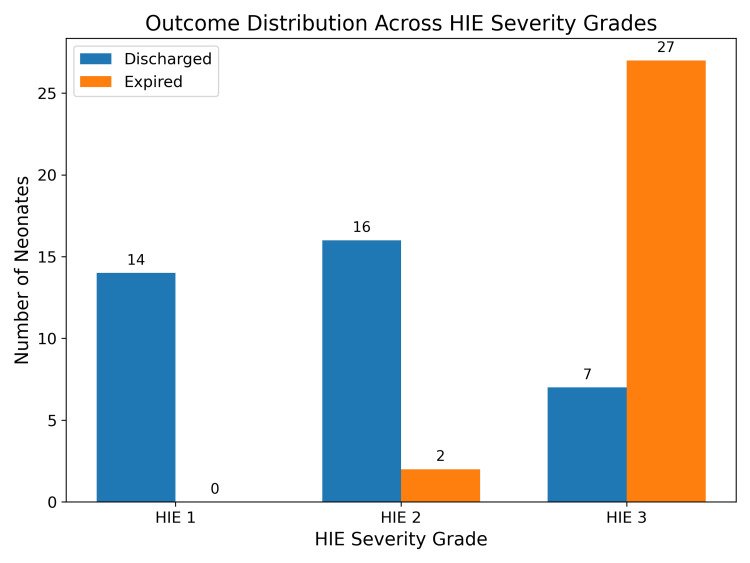 Figure 2
Peer Reviews
No public reviews on file for this paper yet. If you reviewed it on a platform where reviews are public (OpenReview, ICLR, NeurIPS, ICML), you can paste yours below so the community can read it here.
Videos
No videos yet. Explain this paper in a talk, walkthrough, or lecture? Add one.
Taxonomy
TopicsNeonatal and fetal brain pathology · Pregnancy and preeclampsia studies · Neonatal Respiratory Health Research