Personalized signaling pathway analysis of gastrointestinal tumors for patient stratification and drug target evaluation using clinically derived core biopsies
Aaron Stahl, Karsten Büringer, Pavlos Missios, Tatjana Hoffmann, Sven Mattern, Stephan Singer, Felix Schäfer-Ruoff, Nisar P. Malek, Katja Schenke-Layland, Michael Bitzer, Markus F. Templin

TL;DR
This study uses a high-throughput Western blot system to analyze signaling pathways in gastrointestinal tumors, enabling personalized diagnostics and treatment evaluation.
Contribution
The study demonstrates the feasibility of using DigiWest for molecular-level personalization in gastrointestinal tumors with high clinical heterogeneity.
Findings
Distinct protein expression patterns differentiate tumor subtypes and define clinically relevant subgroups.
Proteomic profiles from single biopsies reveal targetable pathway activation patterns aligned with mutational data.
DigiWest proves to be a robust complementary tool to sequencing-based approaches in precision oncology.
Abstract
Aberrant cellular signaling underlies cancer development and progression. Identifying alterations in these pathways yields critical insights for personalized oncology. Clinically, assessing the activation status of signaling proteins complements genetic and histopathological analyses, improving therapeutic evaluation and accuracy. In this study, we employed the high-throughput Western blot system DigiWest for the characterization of gastrointestinal tumors, both retrospectively and in a proof-of-concept direct clinical application. Retrospective analyses of pancreatic and colorectal carcinomas (n = 20) compared with matched normal tissues revealed distinct protein expression and activation patterns differentiating tumor subtypes and defining clinically relevant subgroups. By resolving individualized, treatment-relevant signaling signatures we demonstrate the feasibility of…
Genes, proteins, chemicals, diseases, species, mutations and cell lines named across the full text — each resolved to its canonical identifier and authoritative record.
Click any figure to enlarge with its caption.
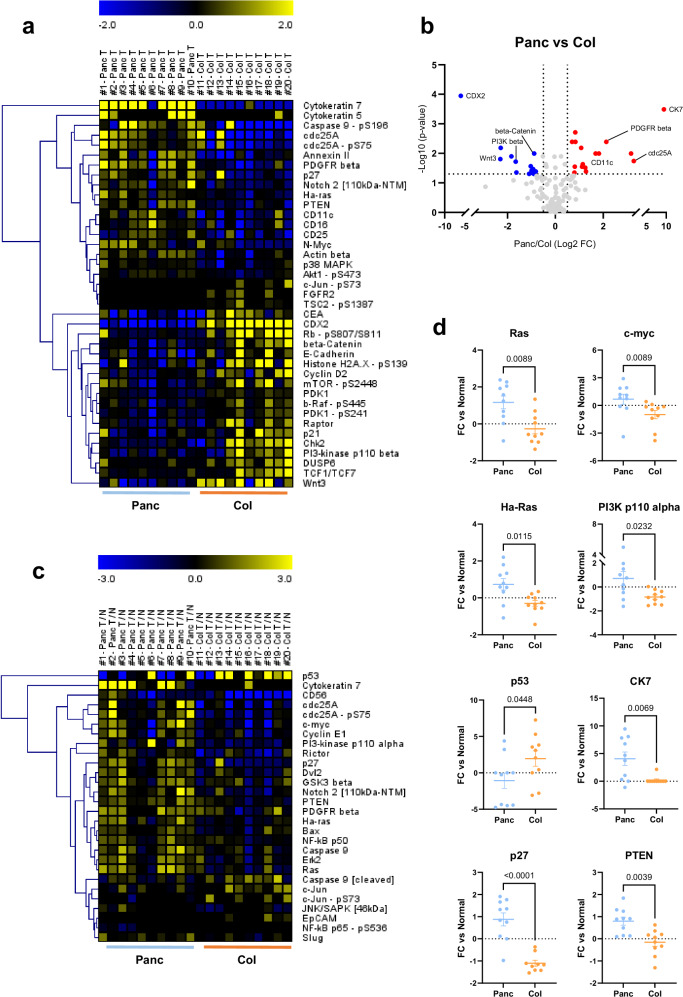 Figure 1
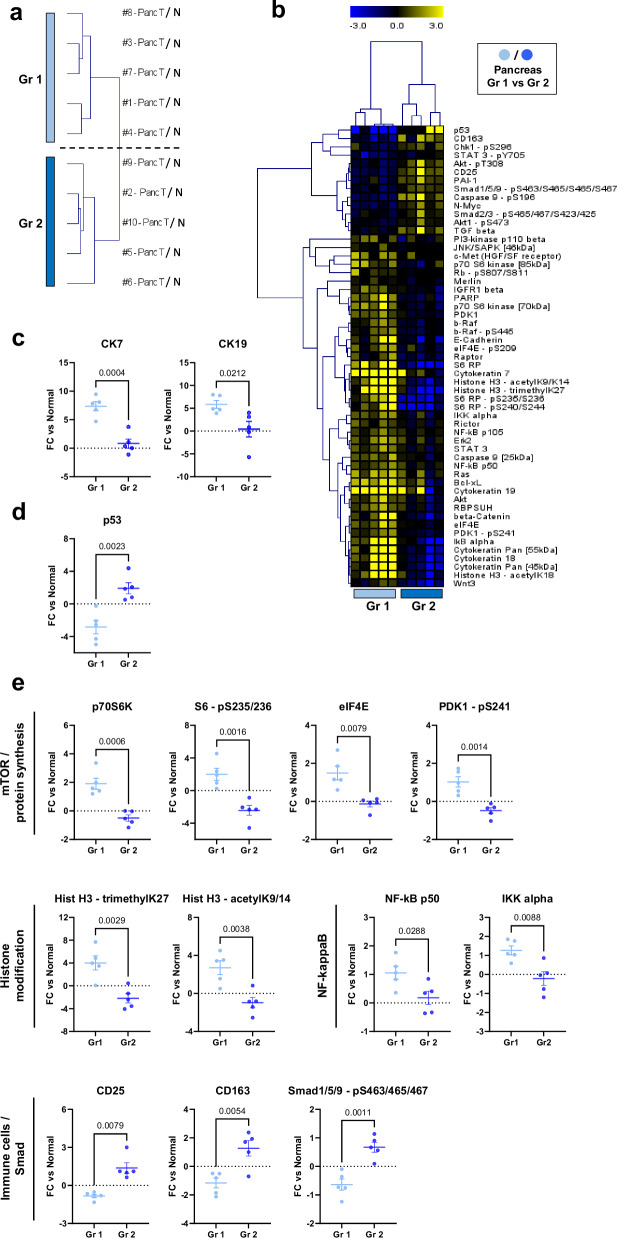 Figure 2
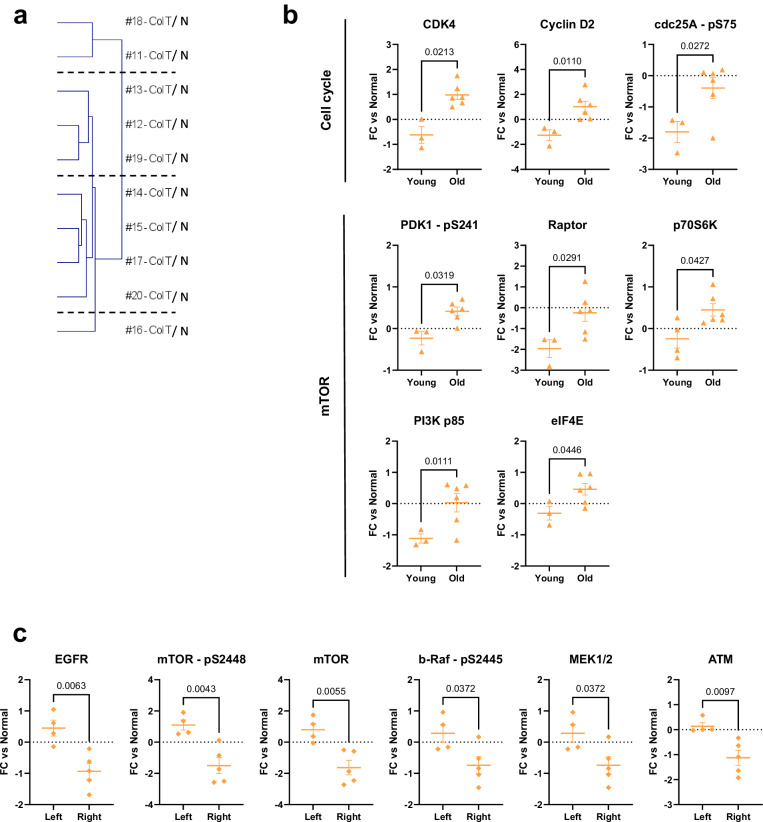 Figure 3
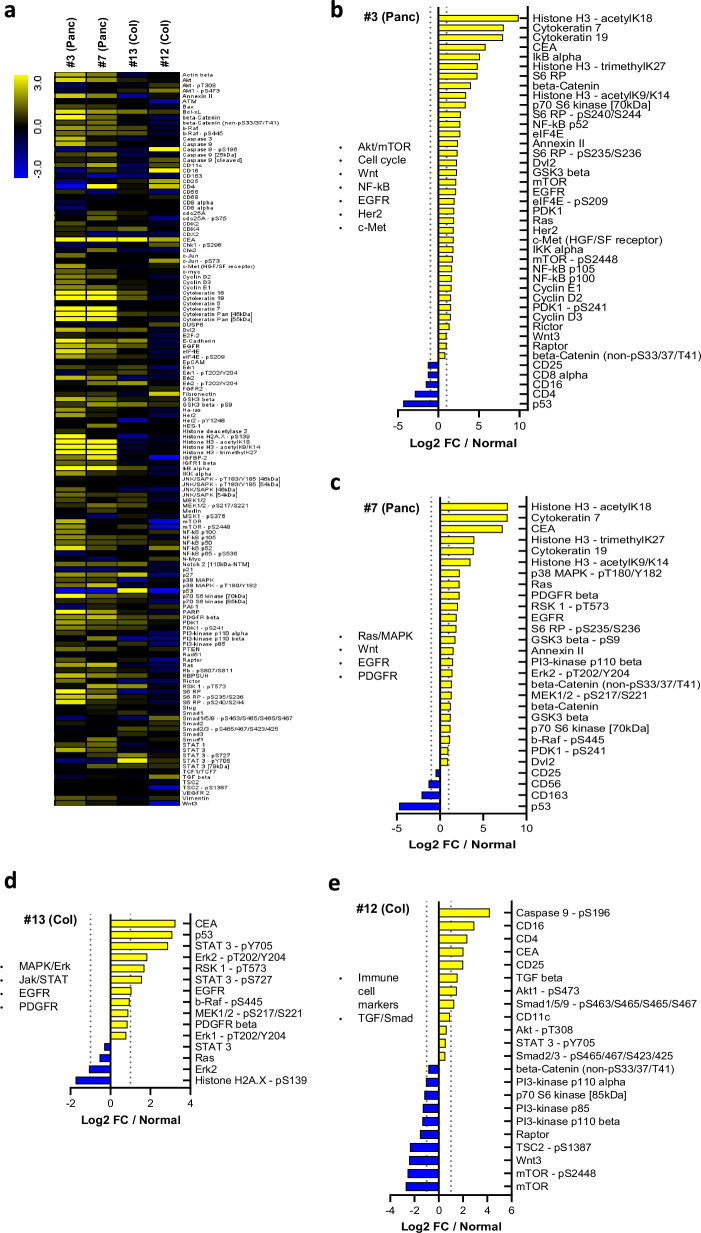 Figure 4
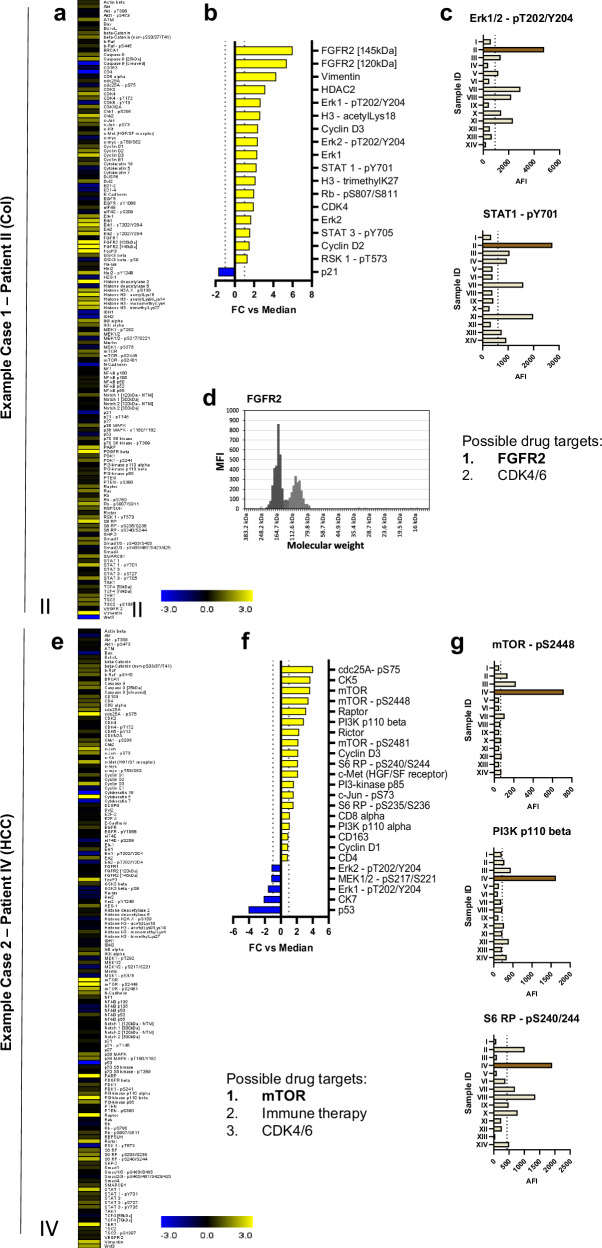 Figure 5
Peer Reviews
No public reviews on file for this paper yet. If you reviewed it on a platform where reviews are public (OpenReview, ICLR, NeurIPS, ICML), you can paste yours below so the community can read it here.
Videos
No videos yet. Explain this paper in a talk, walkthrough, or lecture? Add one.
Taxonomy
TopicsCancer Genomics and Diagnostics · Cancer Cells and Metastasis · Pancreatic and Hepatic Oncology Research