Bicarbonate buffer enhances functional sperm selection compared to Zwitterionic buffers in sperm preparation
Huidrom Yaiphaba Meitei, Dhakshanya Predheepan, Shubhashree Uppangala, Vani Lakshmi R, Guruprasad Kalthur, Stefan Schlatt, Satish Kumar Adiga

TL;DR
Bicarbonate buffer improves sperm quality more than zwitterionic buffers like HEPES and MOPS during sperm preparation for fertility treatments.
Contribution
This study demonstrates that bicarbonate buffer outperforms zwitterionic buffers in selecting functionally superior spermatozoa for ART.
Findings
Bicarbonate-buffered media significantly increased sperm motility and mitochondrial activity in both normozoospermic and non-normozoospermic samples.
Zwitterionic buffers like HEPES and MOPS were linked to reduced motility, poor kinematic parameters, and lower mitochondrial potential.
Bicarbonate buffer supports better sperm selection compared to zwitterionic buffers in assisted reproductive technology.
Abstract
Sperm preparation media used in assisted reproductive technology (ART) laboratories typically contain single or combined buffers to maintain pH and support spermatozoa homeostasis. Concerns exist that zwitterionic buffers, such as 4-(2-hydroxyethyl)-1-piperazine ethane sulfonic acid (HEPES) and 3-(N-morpholino) propane sulfonic acid (MOPS), may negatively affect intrinsic cellular functions. Hence, this prospective study evaluated the impact of various buffers on sperm selection by swim up from fifty-four sub-fertile men, which were then divided into normozoospermic samples (n = 27) and non-normozoospermic (n = 27) cohorts. Each ejaculate was split into six aliquots, and swim-up was performed with media buffered by bicarbonate, HEPES, MOPS, bicarbonate + HEPES, or bicarbonate + MOPS. Post-swim-up spermatozoa were assessed for motility, morphology, kinematics, acrosome reaction,…
Genes, proteins, chemicals, diseases, species, mutations and cell lines named across the full text — each resolved to its canonical identifier and authoritative record.
Click any figure to enlarge with its caption.
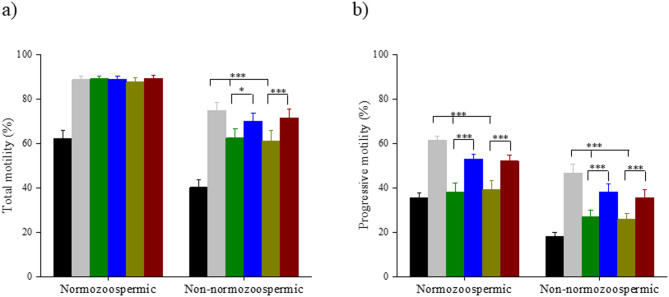 Figure 1
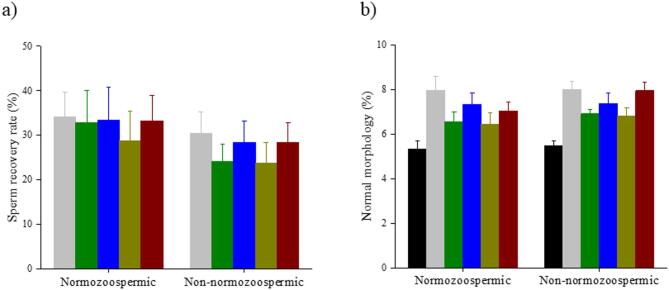 Figure 2
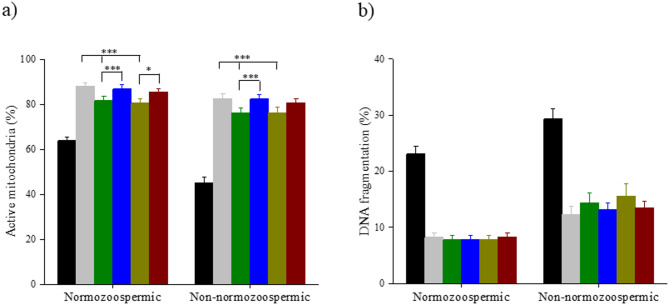 Figure 3
Peer Reviews
No public reviews on file for this paper yet. If you reviewed it on a platform where reviews are public (OpenReview, ICLR, NeurIPS, ICML), you can paste yours below so the community can read it here.
Videos
No videos yet. Explain this paper in a talk, walkthrough, or lecture? Add one.
Taxonomy
TopicsSperm and Testicular Function · Reproductive biology and impacts on aquatic species · Reproductive Biology and Fertility