An equivariant pretrained transformer for unified 3D molecular representation learning
Rui Jiao, Xiangzhe Kong, Li Zhang, Ziyang Yu, Fangyuan Ren, Wenjuan Tan, Wenbing Huang, Yang Liu

TL;DR
This paper introduces a 3D molecular model that learns from multiple domains to predict molecular properties and help discover antiviral compounds.
Contribution
The novel contribution is an equivariant transformer model for unified 3D molecular representation across domains.
Findings
The model achieves strong performance in ligand binding affinity prediction.
It performs competitively in predicting properties of proteins and small molecules.
The model identifies potential antiviral compounds against the main protease of the COVID-19 virus.
Abstract
Pretraining on a large number of unlabeled 3D molecules has showcased superiority in various scientific applications. However, prior efforts typically focus on pretraining models in a specific domain, missing the opportunity to leverage cross-domain knowledge. To mitigate this gap, we introduce Equivariant Pretrained Transformer, an all-atom foundation model that can be pretrained from multiple domain 3D molecules. Built upon an E(3)-equivariant transformer, the model learns both atom-level interactions and graph-level structural features (e.g. residuals in proteins), allowing it to generalize across diverse tasks. The model achieves strong gains in ligand binding affinity prediction, while also performing competitively in predicting properties of proteins and small molecules. We further show that the model can help identify potential antiviral compounds against the main protease of the…
Genes, proteins, chemicals, diseases, species, mutations and cell lines named across the full text — each resolved to its canonical identifier and authoritative record.
Click any figure to enlarge with its caption.
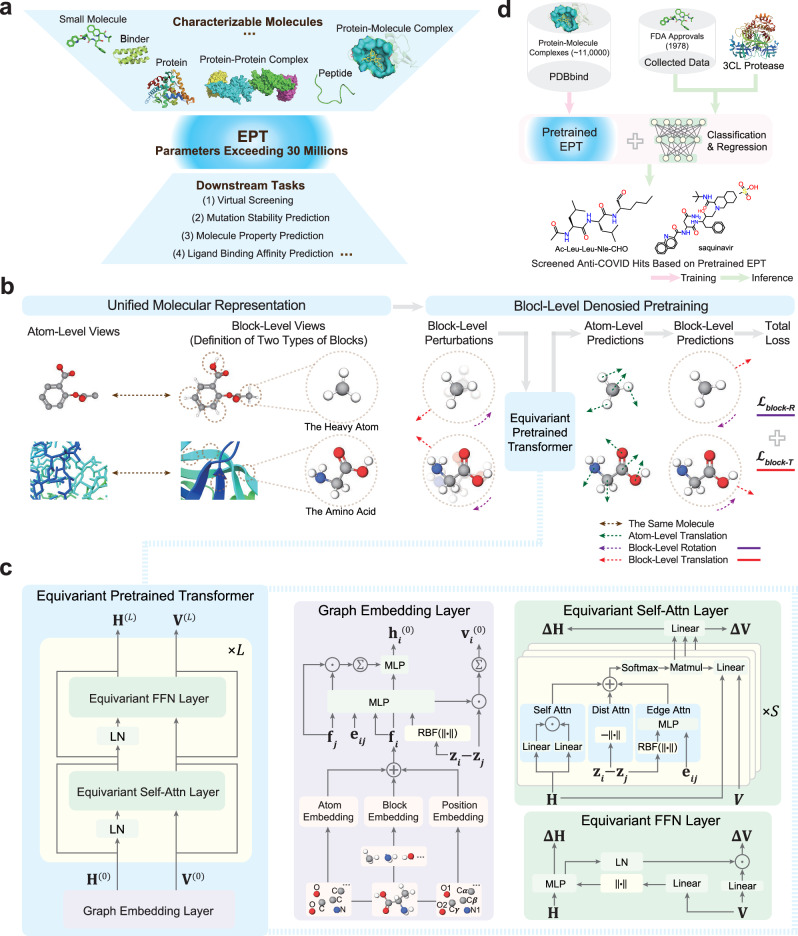 Figure 1
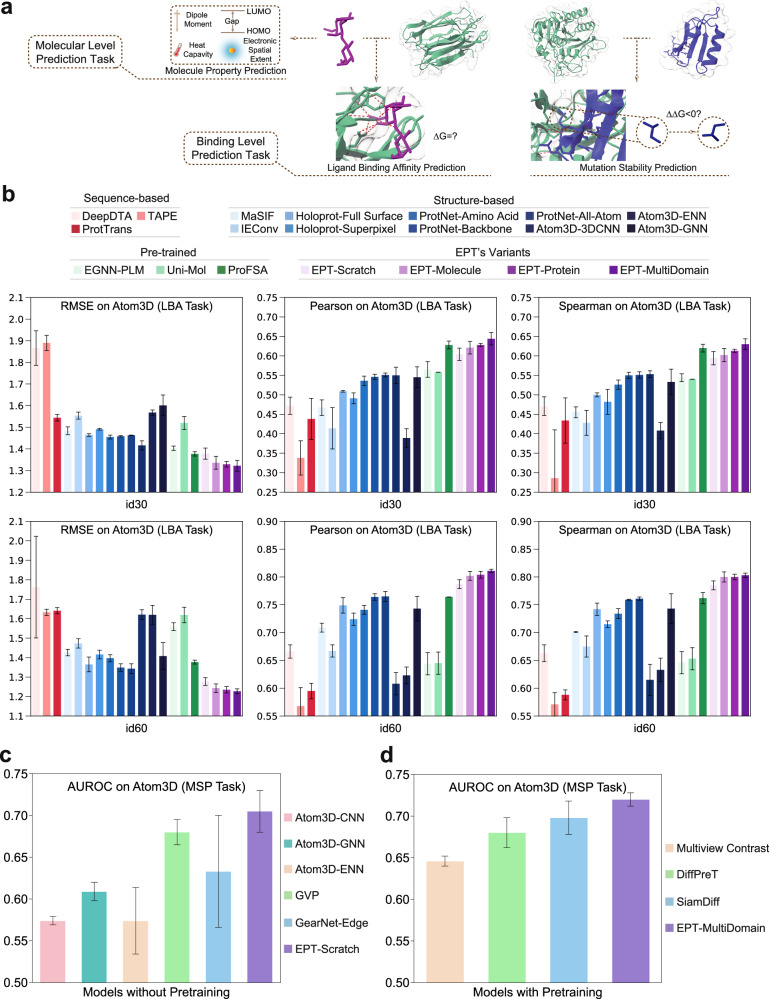 Figure 2
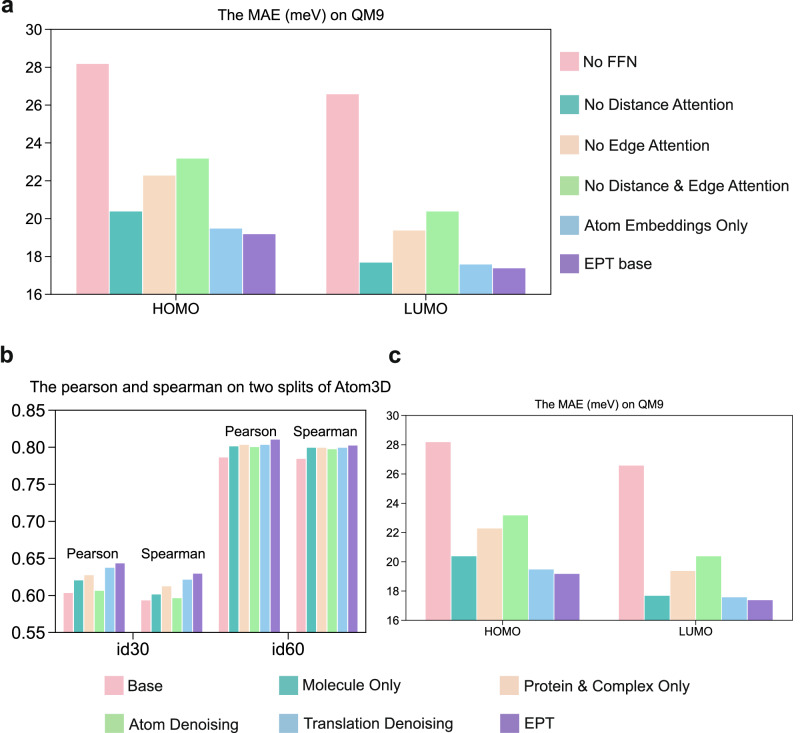 Figure 3
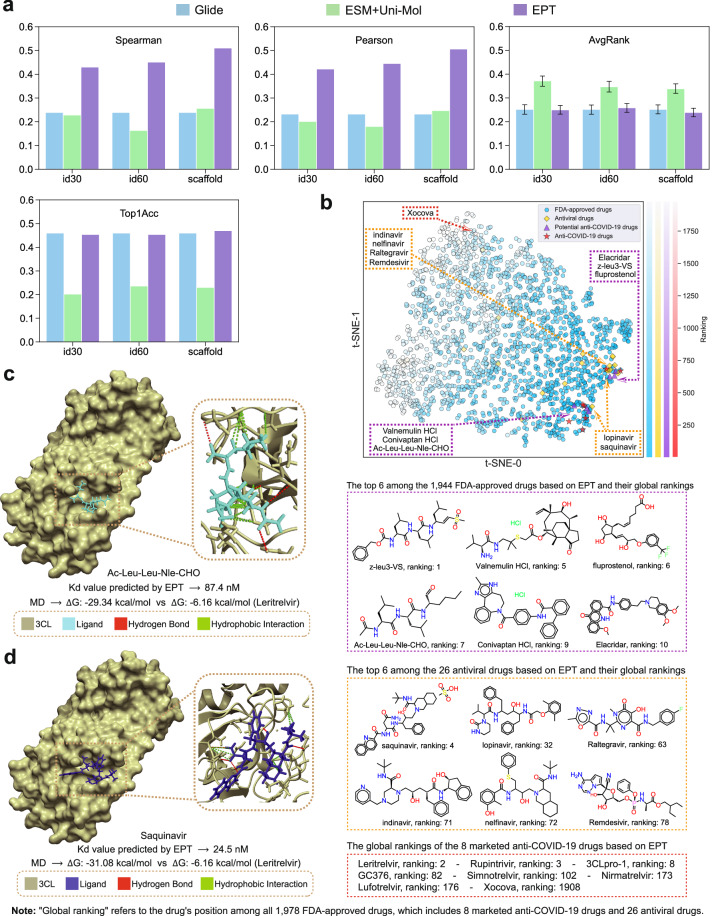 Figure 4
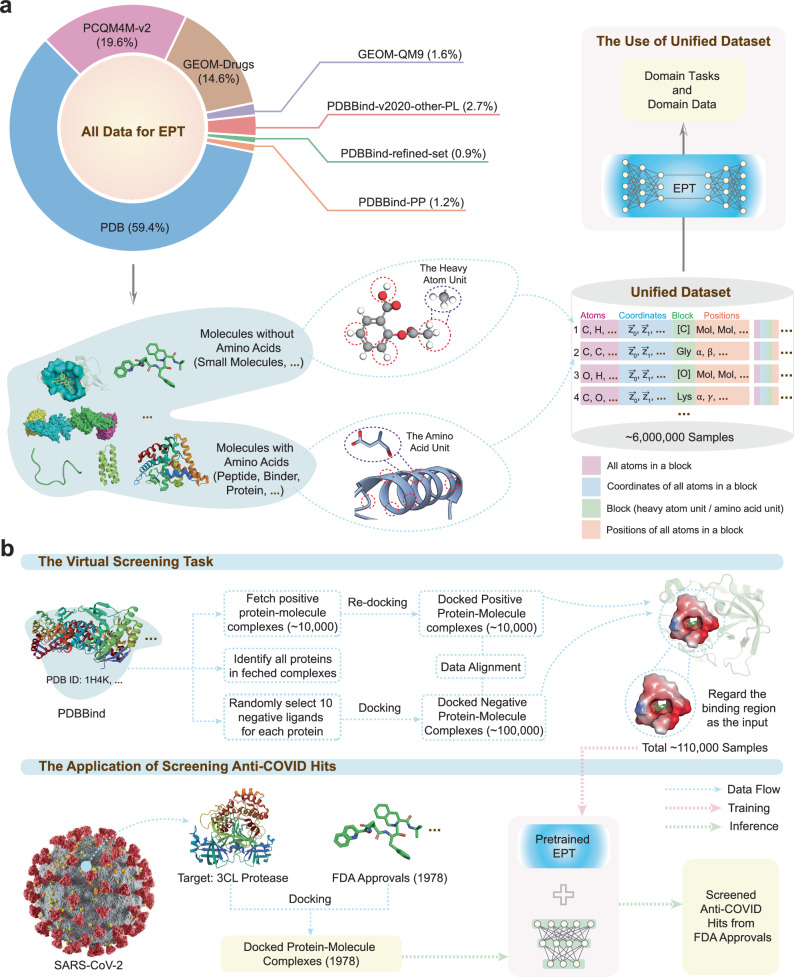 Figure 5
Peer Reviews
No public reviews on file for this paper yet. If you reviewed it on a platform where reviews are public (OpenReview, ICLR, NeurIPS, ICML), you can paste yours below so the community can read it here.
Videos
No videos yet. Explain this paper in a talk, walkthrough, or lecture? Add one.
Taxonomy
TopicsMachine Learning in Materials Science · Computational Drug Discovery Methods · Advanced Graph Neural Networks