A potential of serum anti-C1P IgG antibodies as biomarkers in differential diagnosis of relapsing-remitting multiple sclerosis
Justyna Chojdak-Lukasiewicz, Anna Jakubiak-Augustyn, Zdzislaw M. Szulc, Jerzy Gubernator, Pawel Blazej, Anna Pokryszko-Dragan, Slawomir Budrewicz, Maria Podbielska

TL;DR
This study explores the potential of anti-C1P IgG antibodies as biomarkers for diagnosing relapsing-remitting multiple sclerosis.
Contribution
The study identifies specific anti-C1P IgG antibodies that show significant differences in MS patients compared to healthy and other neurological disease groups.
Findings
Anti-C18:0-C1P and anti-C24:1-C1P IgG levels were significantly higher in RRMS patients compared to healthy subjects.
Anti-C16:0-C1P and anti-C24:0-C1P IgG levels were significantly lower in RRMS compared to other neurological diseases.
Anti-C1P IgG panels demonstrated good discriminatory performance in distinguishing RRMS from other groups.
Abstract
There is a growing interest in the role of sphingolipids in the background of multiple sclerosis (MS). The goal of this study was to evaluate the serum levels of antibodies against ceramide-1-phosphate (C1P) subclasses and their relationships with clinical status in MS. The study groups comprised 39 patients with relapsing-remitting MS (RRMS), 26 patients with other neurological diseases (OND) and 12 healthy subjects (HS). Anti-C1P IgG levels in serum were determined using ELISA test. Levels of anti-C18:0-C1P and anti-C24:1-C1P IgG were significantly increased (p = 0.003; p < 0.0001, respectively) in RRMS compared to HS, while anti-C16:0-C1P and anti-C24:0-C1P IgG – significantly lower p < 0.0001 in RRMS compared to OND, with large effect size (r ≥ 0.5) in all above cases. In both settings the acceptable discriminatory performance for RRMS subtype from HS (AUC = 78.1%, 95% CI 66.1–90.4…
Genes, proteins, chemicals, diseases, species, mutations and cell lines named across the full text — each resolved to its canonical identifier and authoritative record.
Click any figure to enlarge with its caption.
 Figure 1
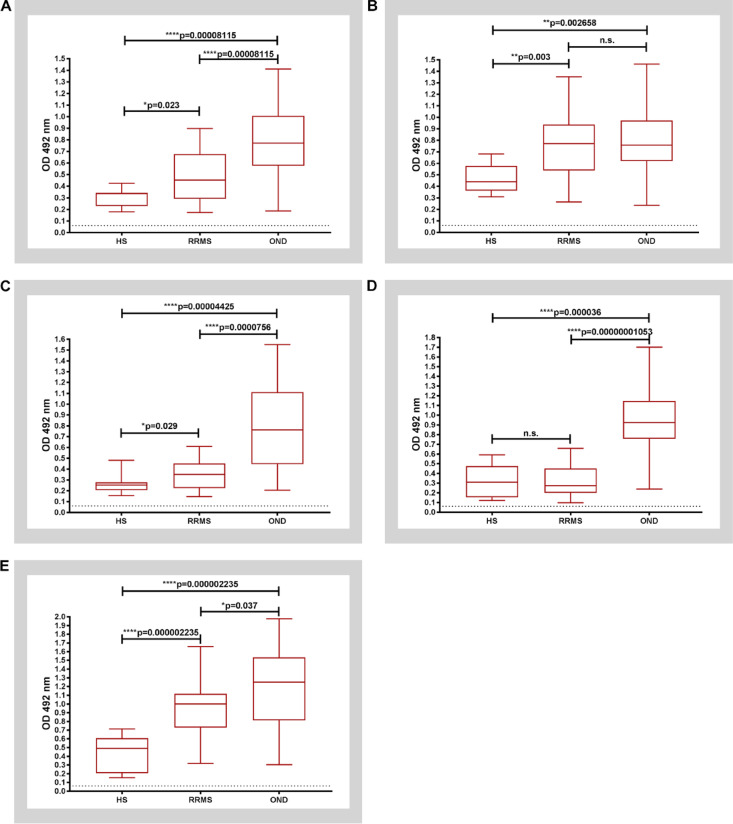 Figure 2
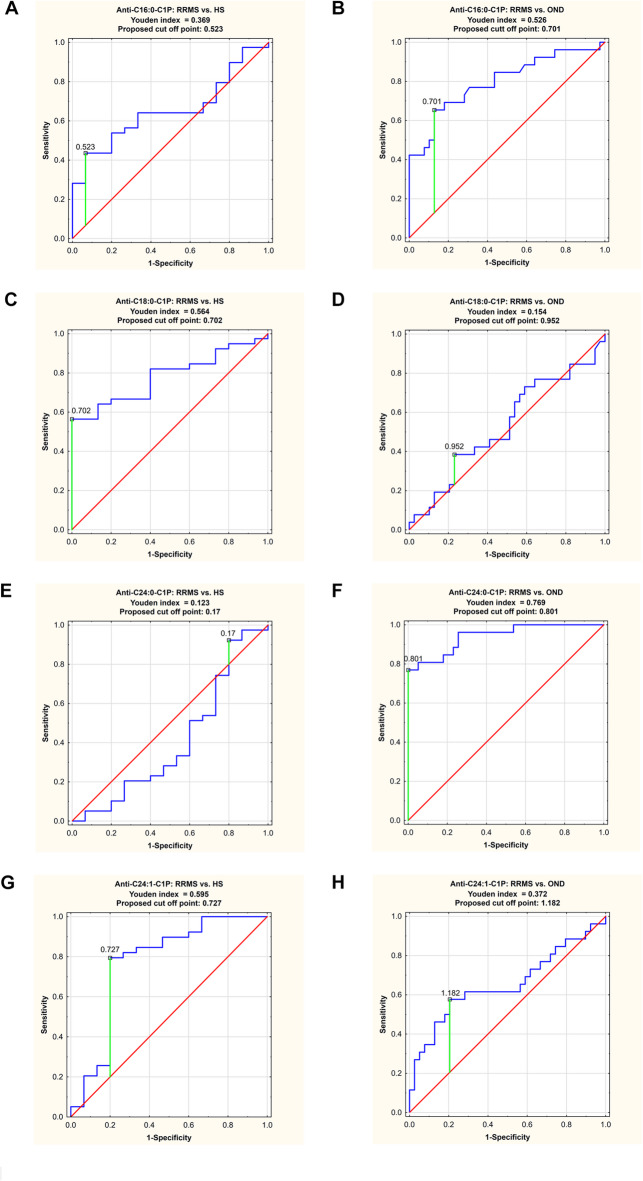 Figure 3
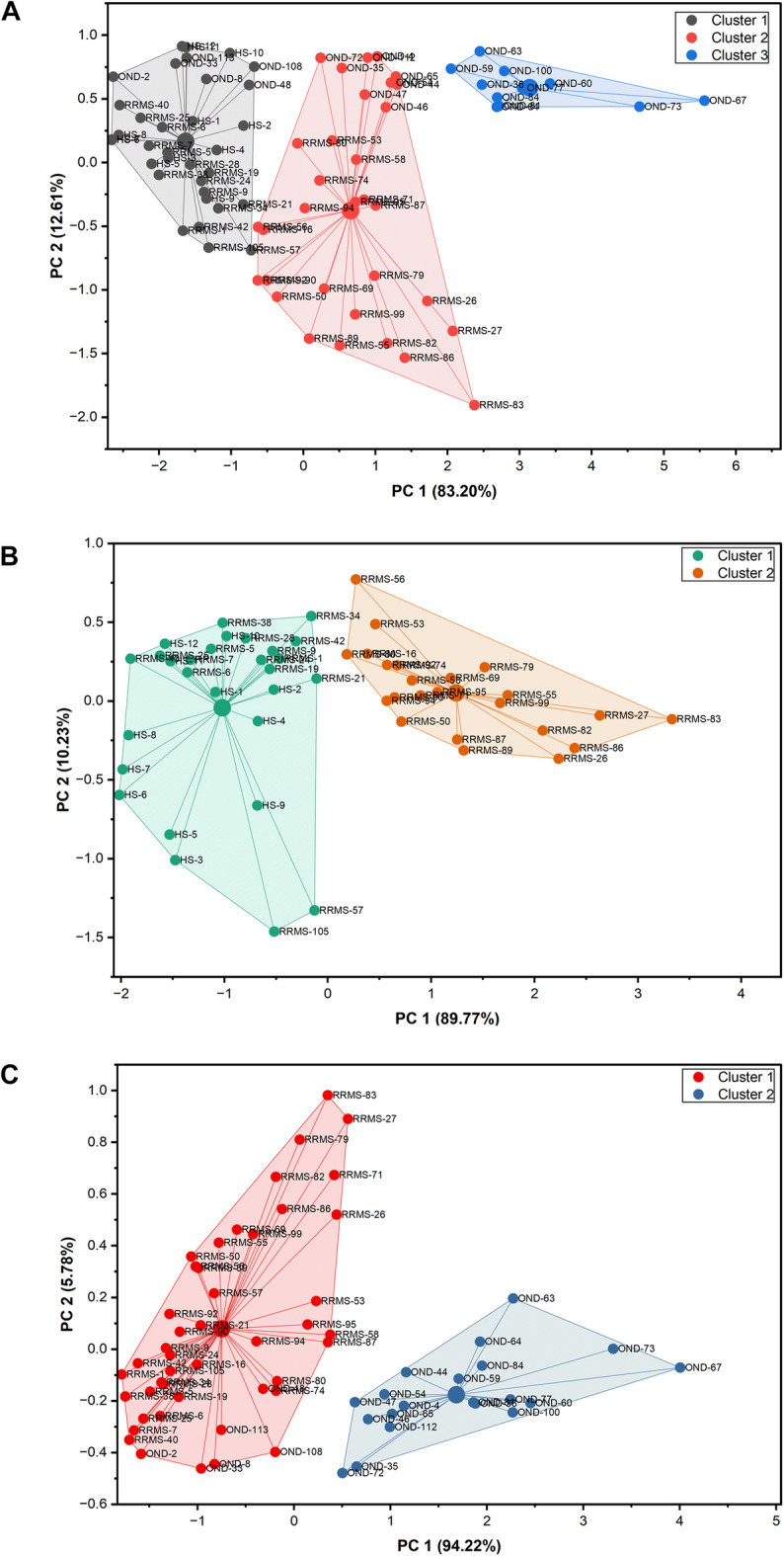 Figure 4
Peer Reviews
No public reviews on file for this paper yet. If you reviewed it on a platform where reviews are public (OpenReview, ICLR, NeurIPS, ICML), you can paste yours below so the community can read it here.
Videos
No videos yet. Explain this paper in a talk, walkthrough, or lecture? Add one.
Taxonomy
TopicsSphingolipid Metabolism and Signaling · Spondyloarthritis Studies and Treatments · Multiple Sclerosis Research Studies