Validated comprehensive RP HPLC approach for separation and quantification of solifenacin and mirabegron in the presence of their degradation products
Ebraam B. Kamel, Mohamed Badrawy, Israa M. Nour

TL;DR
This paper presents a validated HPLC method to separate and quantify solifenacin and mirabegron, along with their impurities and metabolites, for quality control and safety assessment.
Contribution
A new validated HPLC method is introduced for simultaneous separation and quantification of solifenacin, mirabegron, and their degradation products.
Findings
The HPLC method achieved excellent resolution of solifenacin succinate, mirabegron, and their impurities/metabolites within 10.5 minutes.
The method showed good precision (RSD < 2%) and accuracy across linearity ranges of 1–100 µg/mL for solifenacin and mirabegron.
Abstract
A rapid and efficient High-Performance Liquid Chromatography (HPLC) method was developed and optimized for the separation and quantification of solifenacin succinate (SOL), mirabegron (MIR), solifenacin impurities A (SOL IMP A), I (SOL IMP I) and mirabegron metabolite (MIR MET) using a C18 column. Solifenacin succinate is a muscarinic receptor antagonist used in the treatment of overactive bladder (OAB) by reducing bladder muscle contractions, while mirabegron, a β3-adrenergic agonist, works by relaxing the bladder smooth muscle to improve storage capacity and reduce symptoms of OAB. However, the presence of impurities and metabolites, such as solifenacin impurities A, I, and E, can negatively impact the safety and efficacy of these drugs, potentially causing adverse effects such as increased toxicity, altered pharmacodynamics, or diminished therapeutic effectiveness. The method…
Genes, proteins, chemicals, diseases, species, mutations and cell lines named across the full text — each resolved to its canonical identifier and authoritative record.
Click any figure to enlarge with its caption.
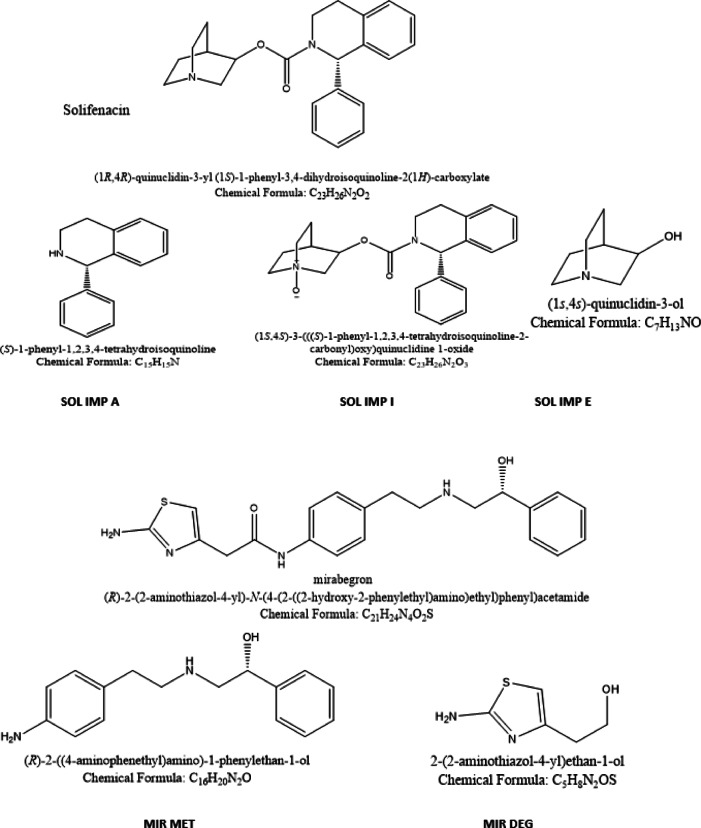 Figure 1
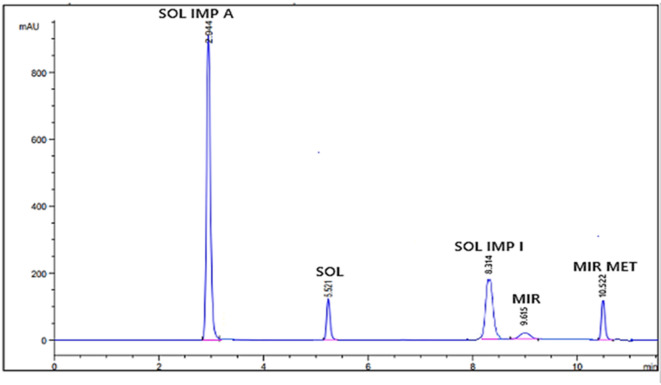 Figure 2
Peer Reviews
No public reviews on file for this paper yet. If you reviewed it on a platform where reviews are public (OpenReview, ICLR, NeurIPS, ICML), you can paste yours below so the community can read it here.
Videos
No videos yet. Explain this paper in a talk, walkthrough, or lecture? Add one.
Taxonomy
TopicsPesticide Residue Analysis and Safety · Analytical Methods in Pharmaceuticals · Urinary Bladder and Prostate Research