Genetic co-regulation of neopterin and Parkinson’s disease
Valeria Orrù, Michele Marongiu, Maristella Steri, Mara Marongiu, Carlo Sidore, Valentina Serra, Mauro Pala, Stefania Olla, Noemi Toggia, Matteo Floris, Monia Lobina, Maria Grazia Piras, Antonella Mulas, Andrea Maschio, Mariano Dei, Marina Parolini, Cinzia Dellanoce

TL;DR
Neopterin levels are genetically linked to Parkinson's disease through the GCH1 gene, suggesting a potential new target for understanding and treating the disease.
Contribution
The study identifies genetic signals in GCH1 associated with neopterin and Parkinson’s disease, revealing a potential mechanism involving GCH1 isoforms and dopamine metabolism.
Findings
Neopterin levels rise with aging and correlate with neurodegeneration and inflammation markers.
Two genetic signals in GCH1 are associated with neopterin levels and Parkinson’s disease risk.
A shorter, inactive GCH1 isoform is linked to Parkinson’s disease predisposition and reduced GCH1 stability.
Abstract
Neopterin is a pro-inflammatory molecule upregulated in several diseases; however, its role in pathophysiology is unclear and its genetic regulation is unexplored. We observed that neopterin levels increase during senescence (P-value = 1.88×10⁻¹³, beta = 0.96) and positively correlate with age-related neurodegeneration and inflammation markers. The heritability estimation of neopterin variation was 35%. We then conducted a genome-wide association study on 999 Sardinians, identifying two signals in the GTP cyclohydrolase (GCH1) gene that were suggestively associated with neopterin levels. The first signal, led by rs140884539-C (P-value = 7.05×10-08, beta = 0.59), was in strong linkage disequilibrium with variants associated with predisposition to rheumatoid arthritis, decrease in dopamine, increased levels of GCH1 transcript, dopamine metabolites, and galectin-3. The second signal,…
Genes, proteins, chemicals, diseases, species, mutations and cell lines named across the full text — each resolved to its canonical identifier and authoritative record.
Click any figure to enlarge with its caption.
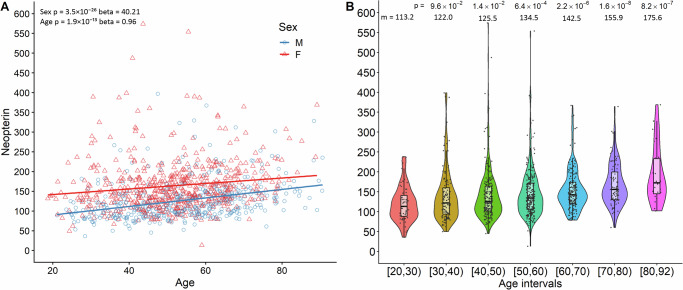 Figure 1
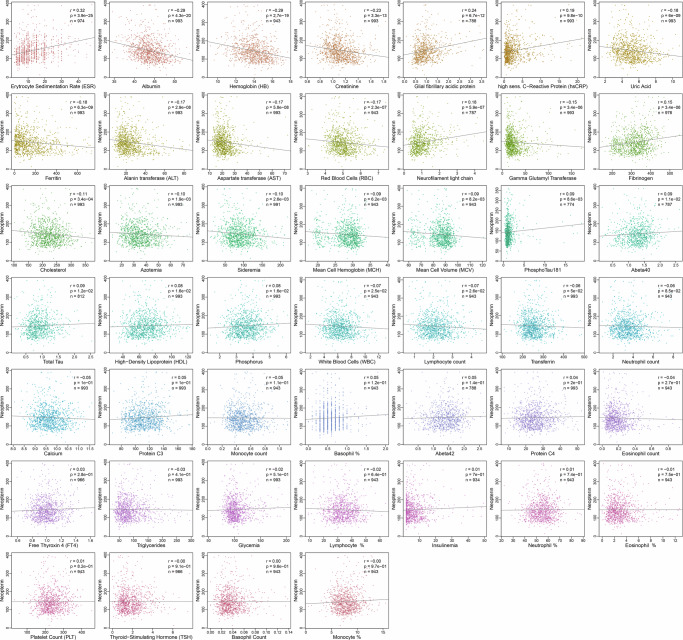 Figure 2
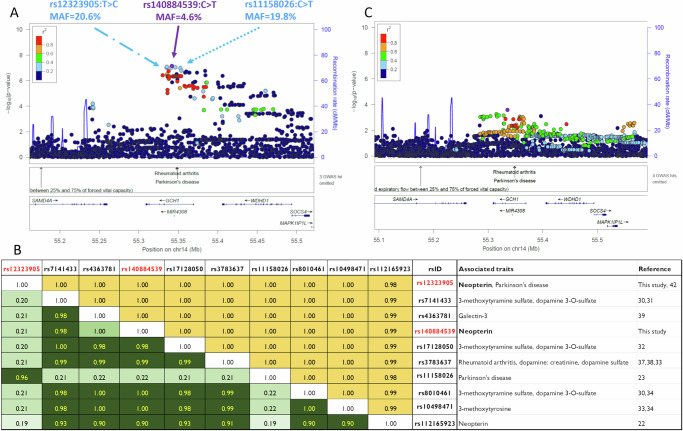 Figure 3
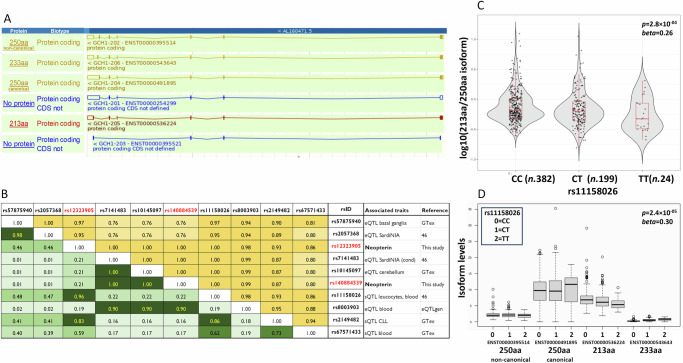 Figure 4
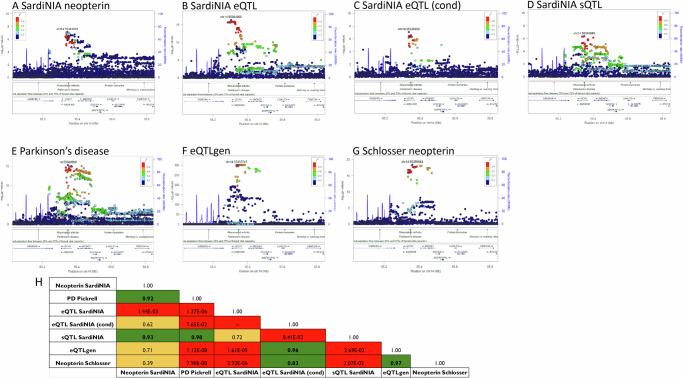 Figure 5
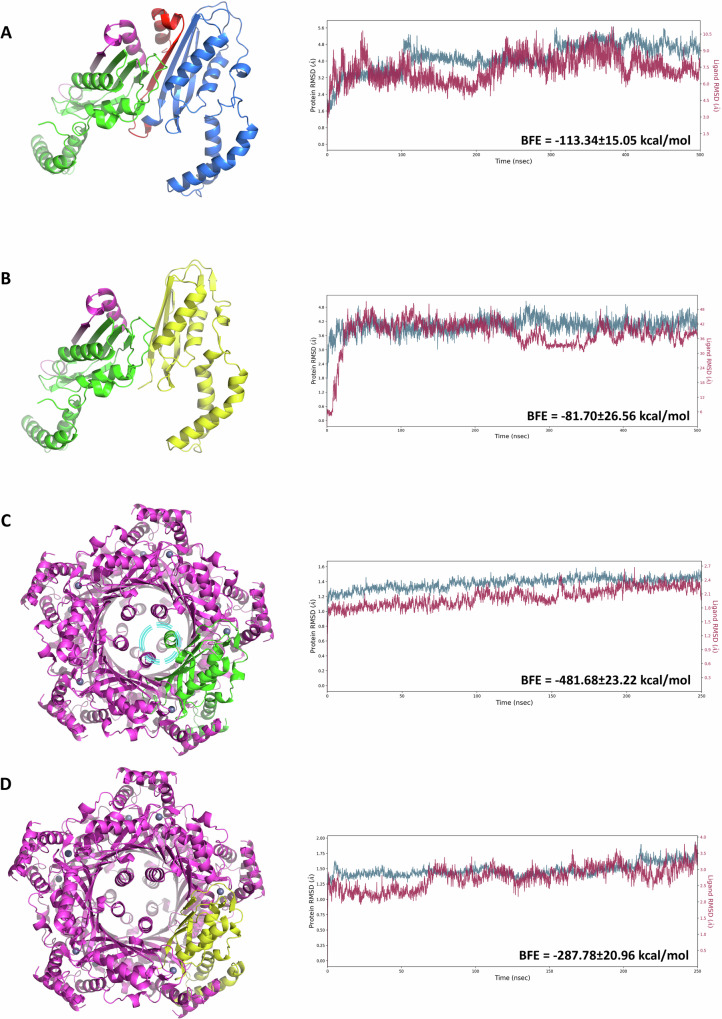 Figure 6
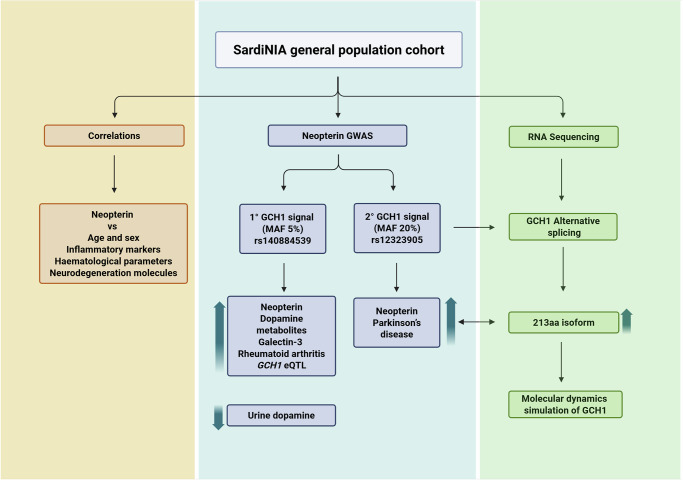 Figure 7
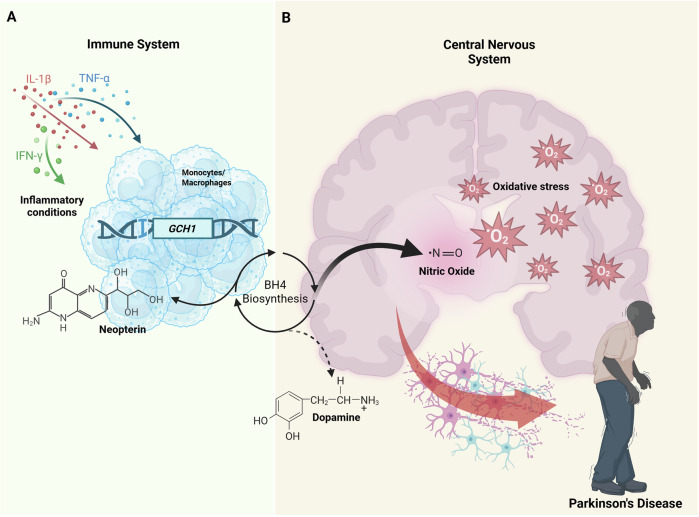 Figure 8
Peer Reviews
No public reviews on file for this paper yet. If you reviewed it on a platform where reviews are public (OpenReview, ICLR, NeurIPS, ICML), you can paste yours below so the community can read it here.
Videos
No videos yet. Explain this paper in a talk, walkthrough, or lecture? Add one.
Taxonomy
TopicsParkinson's Disease Mechanisms and Treatments · Metabolism and Genetic Disorders · Neurological diseases and metabolism