Liquid biopsies in precision oncology for older adults with cancer
Yue Zhao, Jaime O. Herrera-Caceres, Jennifer Nobes, ZiCheng Lyu, Marcus Vetter, Claire Falandry, Valentin Goede, Nina Rosa Neuendorff, Kah Poh Loh, Beverly Canin, Hans Wildiers, Nicolò Matteo Luca Battisti

TL;DR
Liquid biopsies could improve cancer care for older adults by offering non-invasive detection and monitoring.
Contribution
This review emphasizes the potential of liquid biopsies in geriatric oncology for better treatment outcomes.
Findings
Liquid biopsies enable early cancer detection in older adults.
They allow real-time monitoring and identification of therapeutic targets.
Integration into routine care may improve quality of life for elderly cancer patients.
Abstract
As the global population ages, innovative strategies for cancer management in older adults are urgently needed. Liquid biopsy, a non-invasive tool, offers great promise for this demographic by enabling early detection, real-time monitoring, and therapeutic target identification. This review highlights the clinical utility, feasibility, and safety of liquid biopsies in geriatric oncology, emphasizing their potential integration into routine care to improve treatment outcomes and quality of life for older patients.
Genes, proteins, chemicals, diseases, species, mutations and cell lines named across the full text — each resolved to its canonical identifier and authoritative record.
Click any figure to enlarge with its caption.
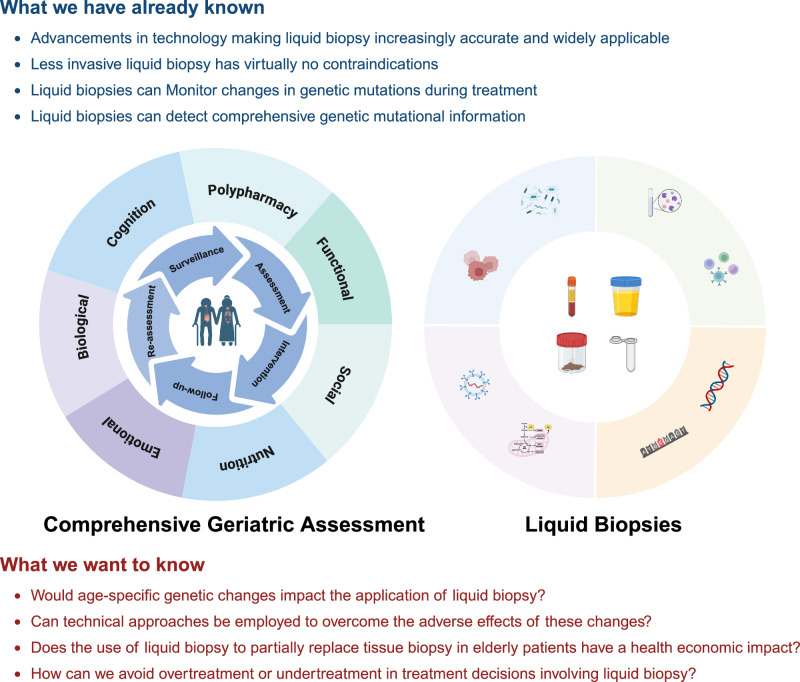 Figure 1
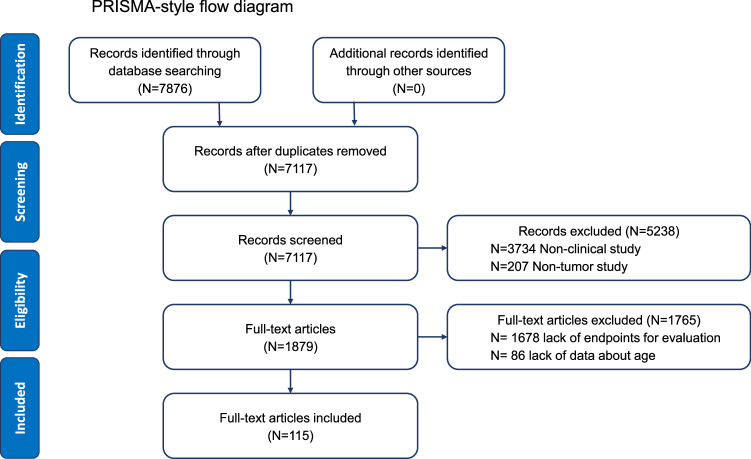 Figure 2
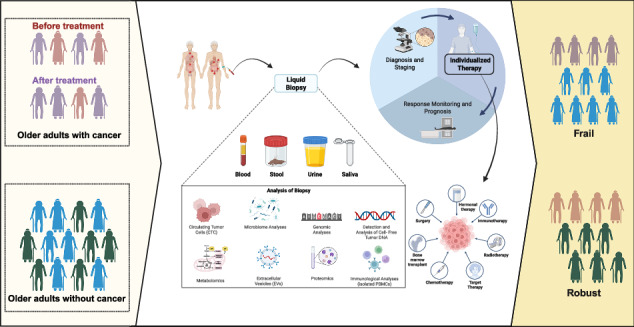 Figure 3
Peer Reviews
No public reviews on file for this paper yet. If you reviewed it on a platform where reviews are public (OpenReview, ICLR, NeurIPS, ICML), you can paste yours below so the community can read it here.
Videos
No videos yet. Explain this paper in a talk, walkthrough, or lecture? Add one.
Taxonomy
TopicsCancer Genomics and Diagnostics · Frailty in Older Adults · Lung Cancer Treatments and Mutations