CRISPR1-mediated virulence and erythromycin resistance stabilization drives regional dominance of Streptococcus agalactiae ST10 in China
Xiaohui Qiao, Ke Dai, Jilong Su, Yimeng Zhang, Yuxi Bai, Xinhua Zhang, Li Zhang

TL;DR
This study finds that the CRISPR1 system helps a specific strain of Streptococcus agalactiae dominate in China by stabilizing virulence and antibiotic resistance.
Contribution
The study identifies CRISPR1 as a novel factor contributing to the regional dominance of ST10 Streptococcus agalactiae in China.
Findings
ST10 was the most common sequence type in both invasive and colonizing isolates from Shanxi, China.
CRISPR1 was strongly associated with key virulence genes and stable erythromycin resistance in ST10 strains.
CRISPR1 may enhance ST10 fitness by stabilizing virulence and resistance traits and limiting plasmid acquisition.
Abstract
Streptococcus agalactiae (Group B Streptococcus, GBS) is a major pathogen of neonatal infections worldwide, with significant geographical variation in its prevalent sequence types (STs). In Shanxi, China, ST10 has emerged as the dominant lineage in perinatal infections, yet the mechanisms underlying its regional dominance remain unclear. This study aimed to investigate the molecular epidemiological basis for the predominance of ST10 in this region. We analyzed 55 clinical Streptococcus agalactiae isolates (21 invasive, 34 colonizing) collected from a hospital in Shanxi, China. Multilocus sequence typing (MLST) was performed to determine sequence types. Virulence genes and the CRISPR1 (clustered regularly interspaced short palindromic repeats, CRISPR) system were detected by polymerase chain reaction (PCR). Statistical analyses were conducted to assess associations between ST10,…
Genes, proteins, chemicals, diseases, species, mutations and cell lines named across the full text — each resolved to its canonical identifier and authoritative record.
Click any figure to enlarge with its caption.
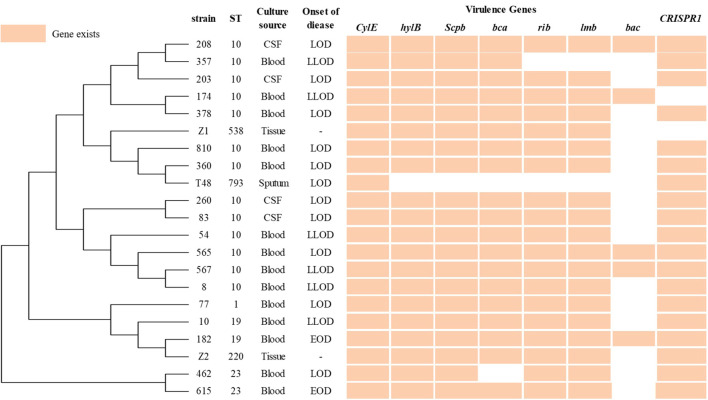 Figure 1
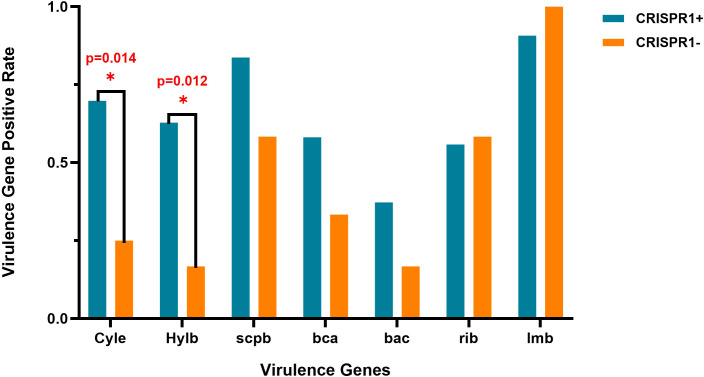 Figure 2
Peer Reviews
No public reviews on file for this paper yet. If you reviewed it on a platform where reviews are public (OpenReview, ICLR, NeurIPS, ICML), you can paste yours below so the community can read it here.
Videos
No videos yet. Explain this paper in a talk, walkthrough, or lecture? Add one.
Taxonomy
TopicsNeonatal and Maternal Infections · Preterm Birth and Chorioamnionitis · Reproductive tract infections research