Linking microbes to in situ methane oxidation rates in a eutrophic freshwater lake
Jennifer A. Baily, Zachary W. Hudspeth, Joshua L. Morningstar, Howard P. Mendlovitz, Christopher S. Martens, Karen G. Lloyd

TL;DR
This study links specific microbes to methane oxidation rates in a freshwater lake using a new in situ incubation method.
Contribution
A novel in situ incubation device (iBag) was used to measure methane oxidation rates and link them to microbial communities.
Findings
Methylococcaceae strongly correlate with in situ methane oxidation rates despite not always being the most abundant group.
Non-methanotrophic methylotrophs and facultative methanotrophs are more abundant but do not correlate with methane or oxygen.
High oxygen levels may suppress Methylococcaceae activity independently of methane concentration.
Abstract
Aerobic methanotrophs and non-methanotrophic methylotrophs drive methane cycling in oxic freshwater lakes. Most knowledge about biological aerobic methane oxidation (MOx) comes from ex situ rate experiments, laboratory cultures, and static measurements of natural abundances. We investigated the link between MOx rate constants measured with a novel in situ incubation device and the microbial community in Jordan Lake, a methane-rich freshwater lake in NC, USA. We coupled relative abundances of 16S rRNA genes and quantitative PCR of particulate methane monooxygenase subunit A (pmoA) to methane, oxygen, temperature, and in situ MOx rate constants, all collected using the novel iBag in situ incubation system. In 16 incubations spread across 13 months, Methylococcaceae, whose cultured members are obligate aerobic methanotrophs, strongly and inversely correlate with naturally-varying oxygen…
Genes, proteins, chemicals, diseases, species, mutations and cell lines named across the full text — each resolved to its canonical identifier and authoritative record.
Click any figure to enlarge with its caption.
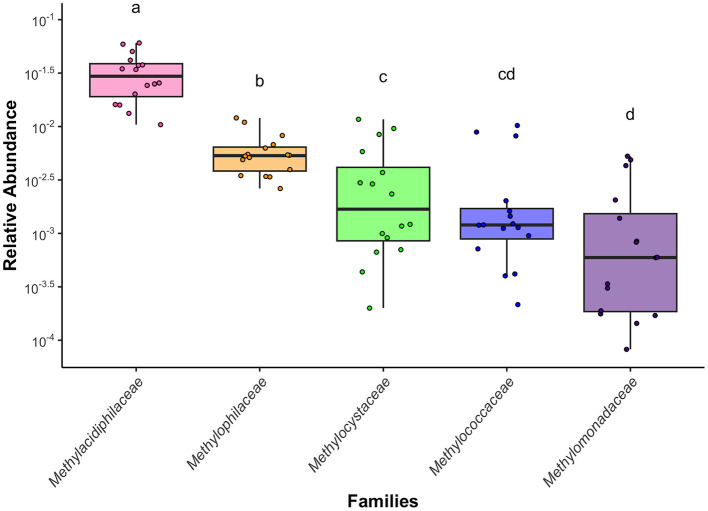 Figure 1
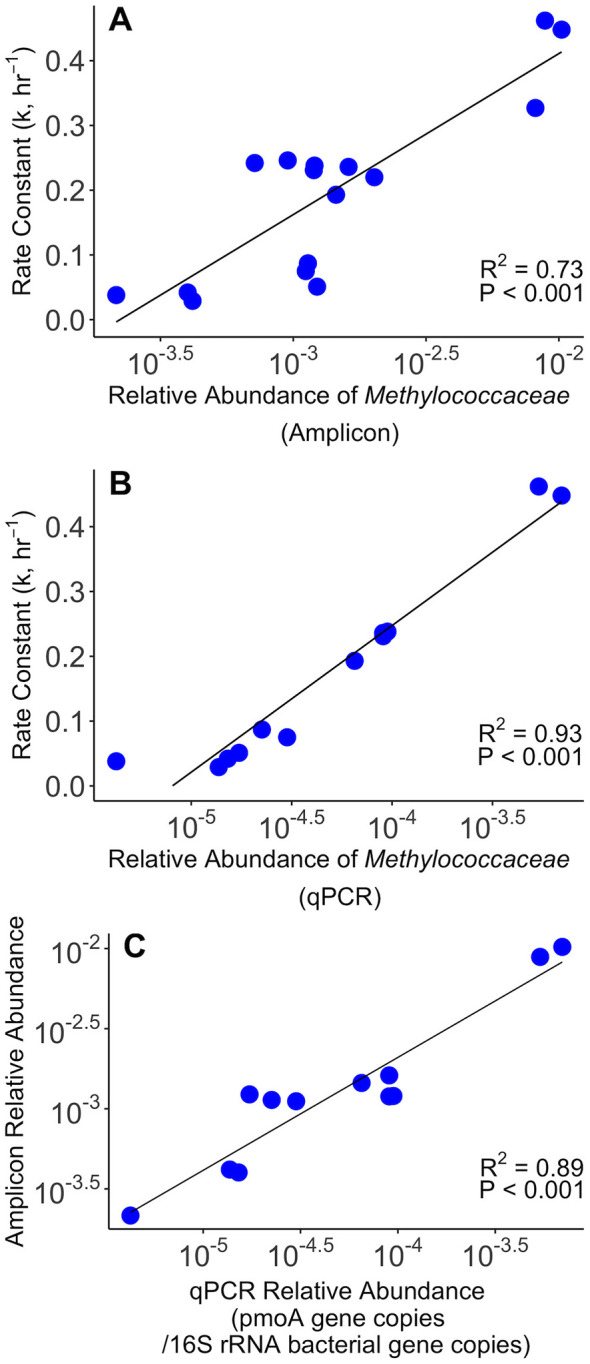 Figure 2
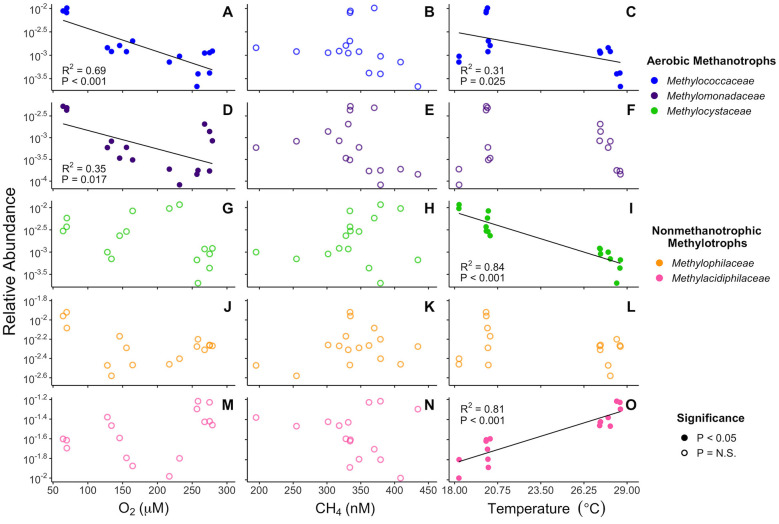 Figure 3
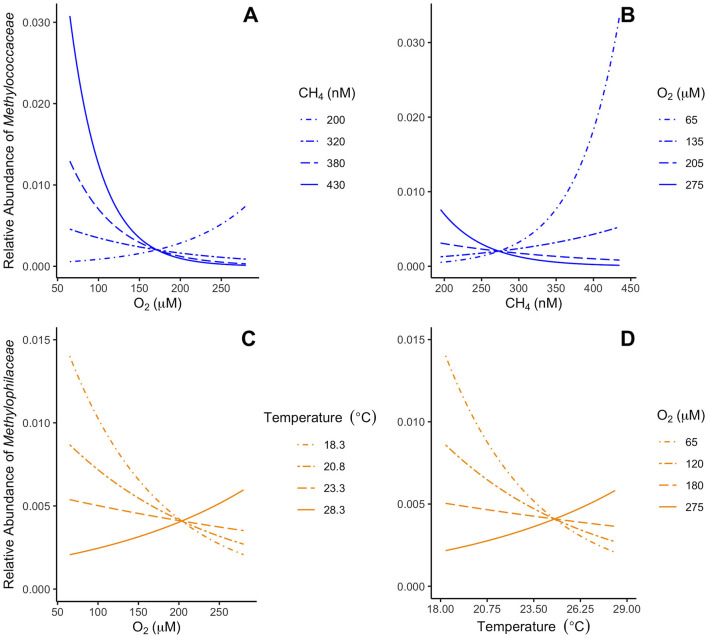 Figure 4
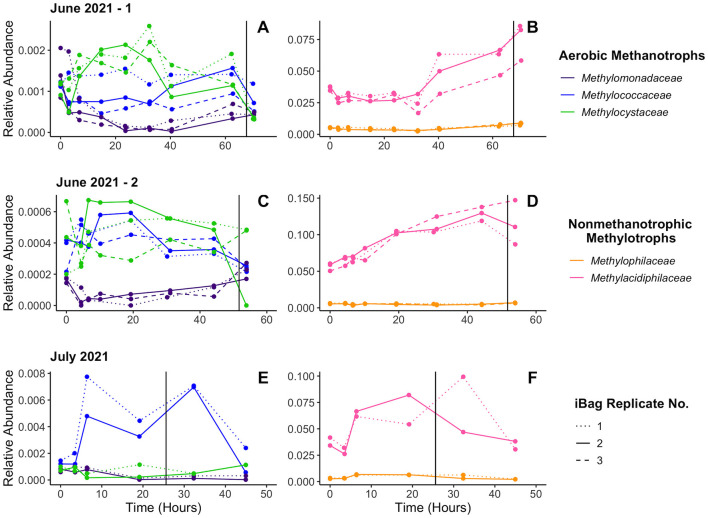 Figure 5
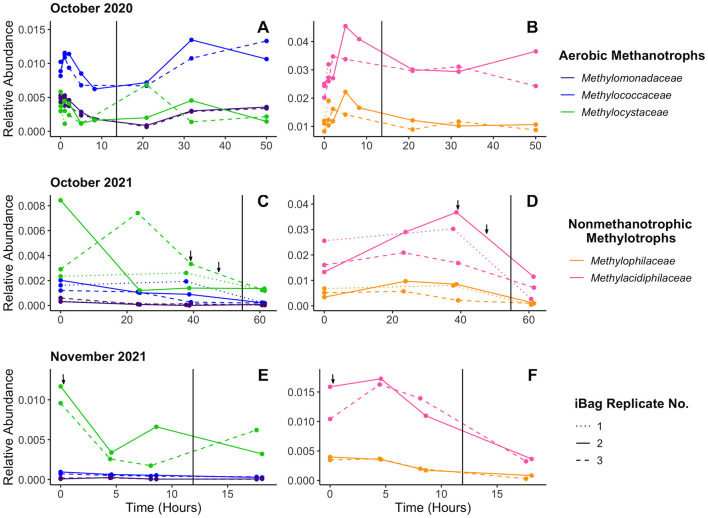 Figure 6
Peer Reviews
No public reviews on file for this paper yet. If you reviewed it on a platform where reviews are public (OpenReview, ICLR, NeurIPS, ICML), you can paste yours below so the community can read it here.
Videos
No videos yet. Explain this paper in a talk, walkthrough, or lecture? Add one.
Taxonomy
TopicsMicrobial metabolism and enzyme function · Microbial Community Ecology and Physiology · Anaerobic Digestion and Biogas Production