Transcriptome-based analysis of oil accumulation pattern and key gene screening in Gardenia jasminoides fruits
Liu Su, Jiwu Cao, Yunzhu Chen, Peiwang Li, Jingzhen Chen, Changzhu Li, Qiang Liu, Zhihong Xiao, Huifang Cao, Ding Kuang, Aihong Wu, Yudong Lu, Xiao Zhou, Yan Yang

TL;DR
This study explores how Gardenia jasminoides fruits accumulate oil and identifies key genes involved in the process, offering insights for improving oil yield and quality.
Contribution
The study identifies key candidate genes for oil biosynthesis in Gardenia jasminoides through transcriptomic analysis.
Findings
Oil content in G. jasminoides fruits follows an S-shaped growth pattern, peaking at 16.7% at 180 DAF.
Linoleic acid and oleic acid are the dominant fatty acids in mature fruits, with unsaturated fatty acids making up 75.8%.
Key candidate genes ACC, SAD, FATA, FAD2, DGAT2, and LACS2 were identified as involved in oil biosynthesis.
Abstract
Gardenia jasminoides fruit is a highly promising woody oil resource, characterized by high oil content and a lipid profile enriched in unsaturated fatty acids with pharmacological activities such as cholesterol-lowering and antioxidant effects. To elucidate the molecular mechanisms underlying its oil accumulation, we systematically investigated fruit morphology, oil content, fatty acid composition, and oil body structure during development, and performed transcriptomic analyses at five key stages: 15, 45, 75, 105, and 150 DAF. These analyses revealed the developmental progression of the fruit, the patterns of oil accumulation, and the dynamic changes in fatty acid composition. DEGs analysis further elucidated the oil biosynthesis pathway and identified several key candidate genes. The results showed that G. jasminoides fruit development comprises three major stages: a rapid expansion…
Genes, proteins, chemicals, diseases, species, mutations and cell lines named across the full text — each resolved to its canonical identifier and authoritative record.
Click any figure to enlarge with its caption.
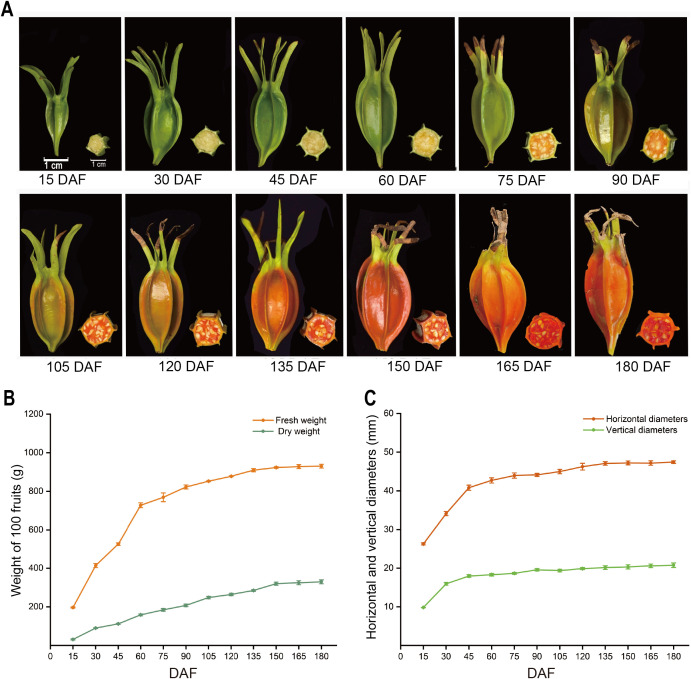 Figure 1
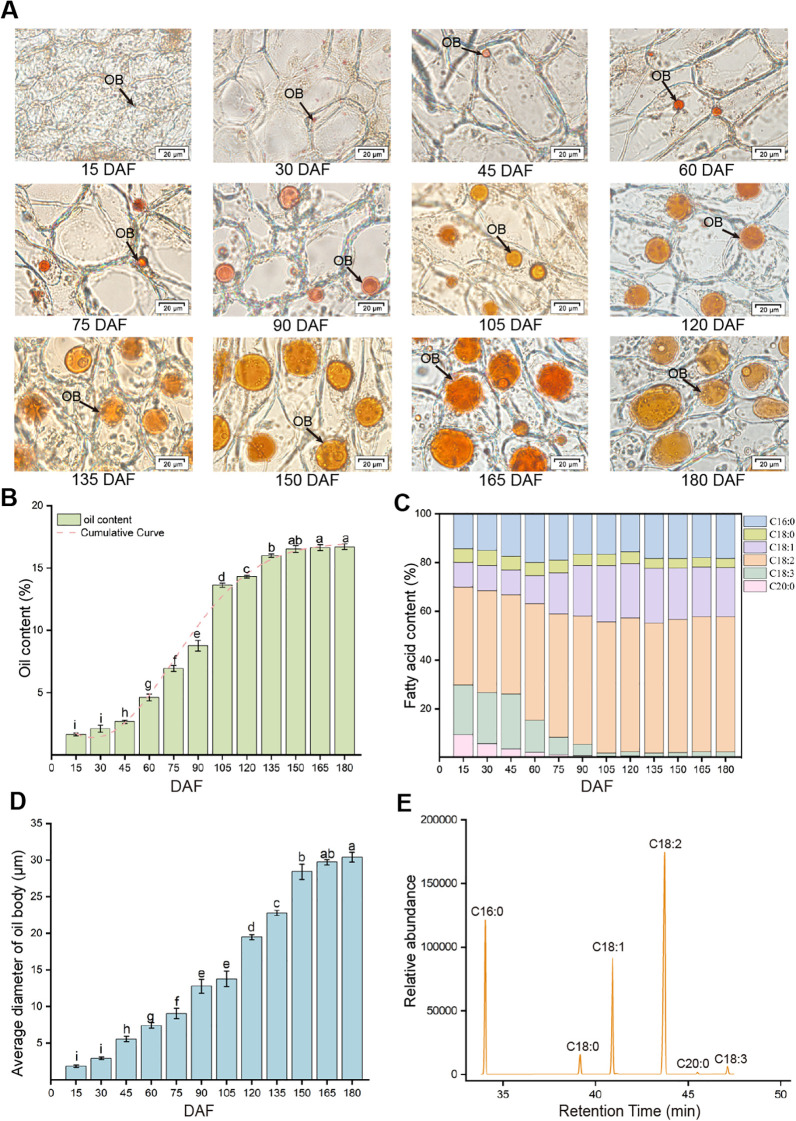 Figure 2
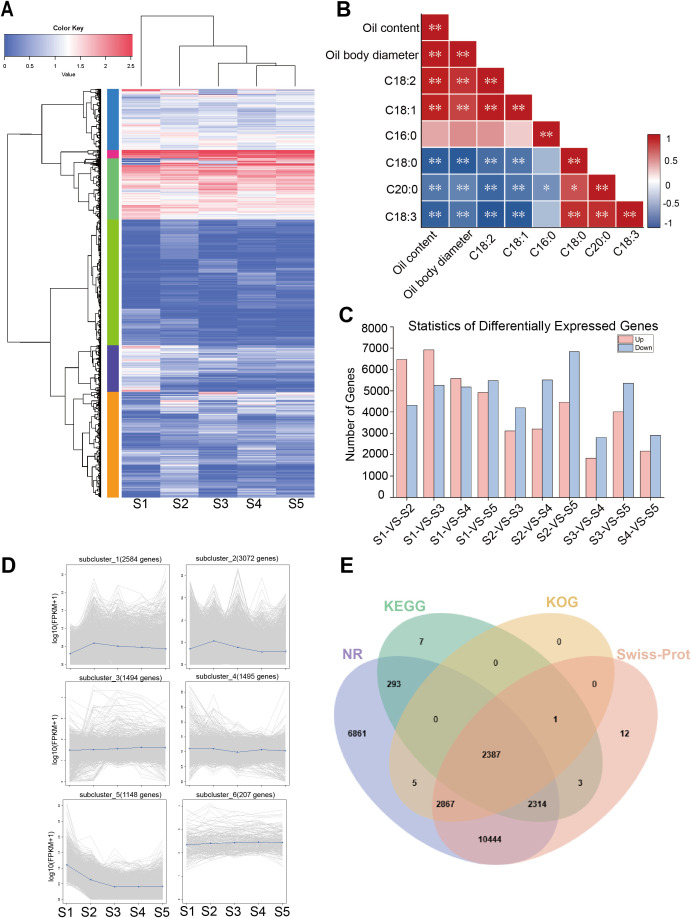 Figure 3
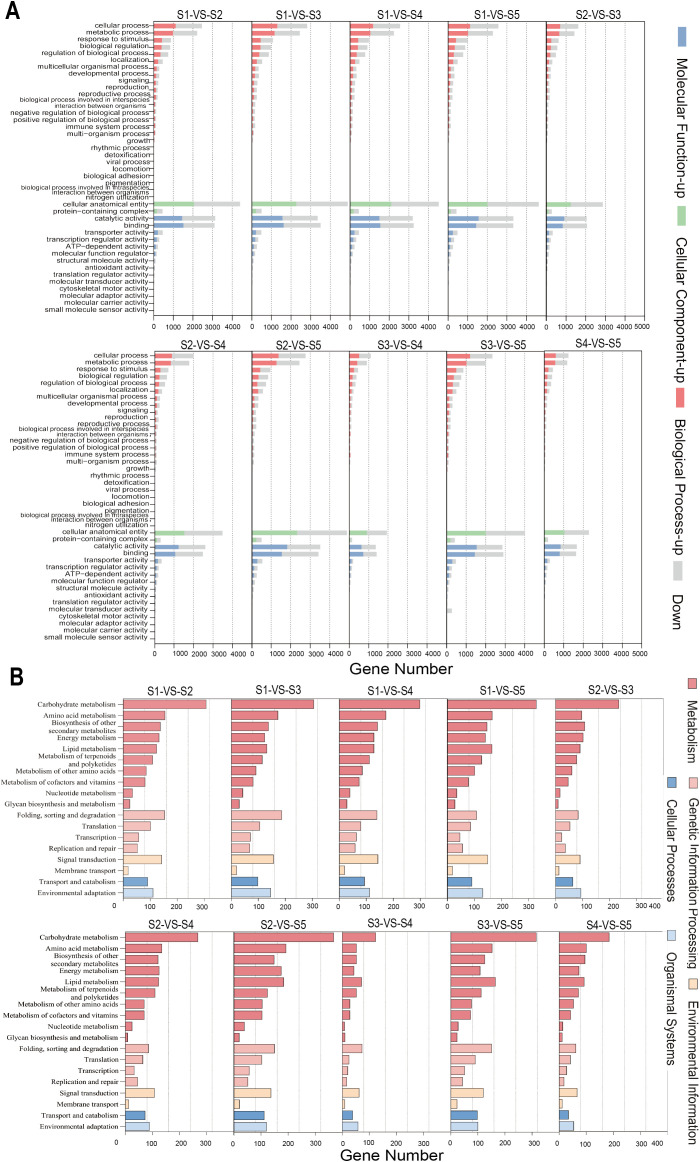 Figure 4
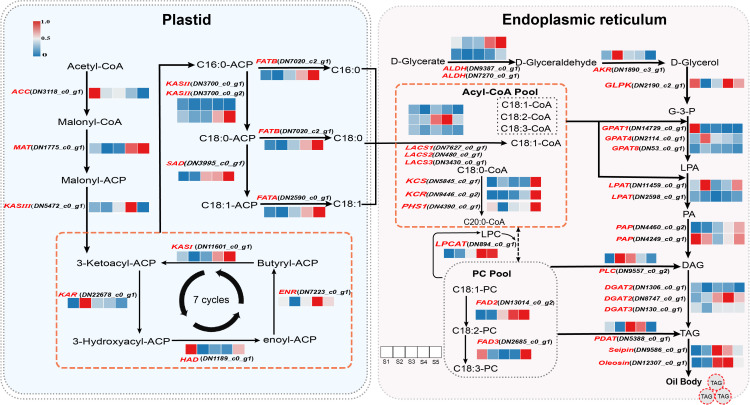 Figure 5
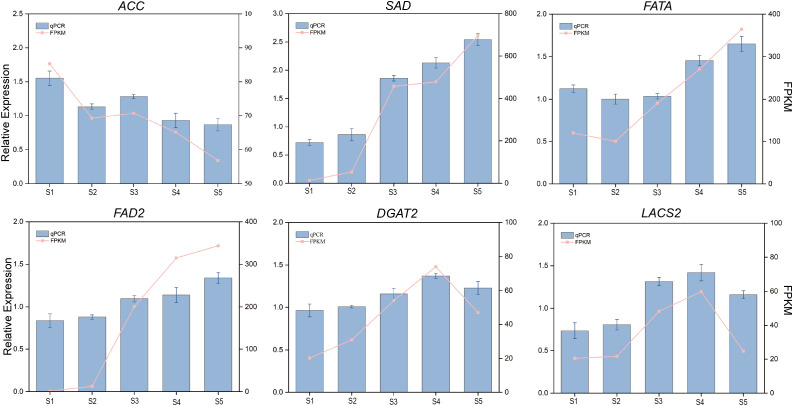 Figure 6
Peer Reviews
No public reviews on file for this paper yet. If you reviewed it on a platform where reviews are public (OpenReview, ICLR, NeurIPS, ICML), you can paste yours below so the community can read it here.
Videos
No videos yet. Explain this paper in a talk, walkthrough, or lecture? Add one.
Taxonomy
TopicsSaffron Plant Research Studies · Edible Oils Quality and Analysis · Nuts composition and effects