Development of a predictive model for in-hospital new-onset atrial fibrillation in older adults with hypertension and acute myocardial infarction, enhanced by SHAP interpretability: a retrospective cohort study
Xue Ge, Yang Tao, Lin Zhang, Jiali Cao, Xingmei Dong, Lixiang Ma

TL;DR
This study creates a predictive model for new-onset atrial fibrillation in older adults with hypertension and heart attacks, using machine learning and an online tool for real-time risk assessment.
Contribution
The study introduces an interpretable predictive model and an online tool for real-time NOAF risk assessment in a specific high-risk population.
Findings
The model identified eight key predictors with strong discrimination (AUC 0.895 in training, 0.883 in validation).
An interactive web-based tool was developed for real-time NOAF risk prediction and clinical use.
SHAP values improved model interpretability and clinical relevance for high-risk patient management.
Abstract
Acute myocardial infarction (AMI) remains a leading cause of mortality, particularly among older adults with hypertension, who are at a heightened risk for complications such as new-onset atrial fibrillation (NOAF). Despite existing research, predictive models for NOAF in this population are limited in both scope and clinical utility, often lacking interpretability, which hinders their use in clinical practice. This study aims to develop and validate a predictive model for NOAF in older adults with hypertension who have experienced AMI, incorporating machine learning techniques and SHapley Additive exPlanations (SHAP) value to enhance the model’s interpretability and clinical utility. A retrospective cohort study was conducted on 2,140 older hypertensive adults hospitalized with AMI at the First Hospital of Qinhuangdao. Key features were selected using Boruta, LASSO regression, and…
Genes, proteins, chemicals, diseases, species, mutations and cell lines named across the full text — each resolved to its canonical identifier and authoritative record.
Click any figure to enlarge with its caption.
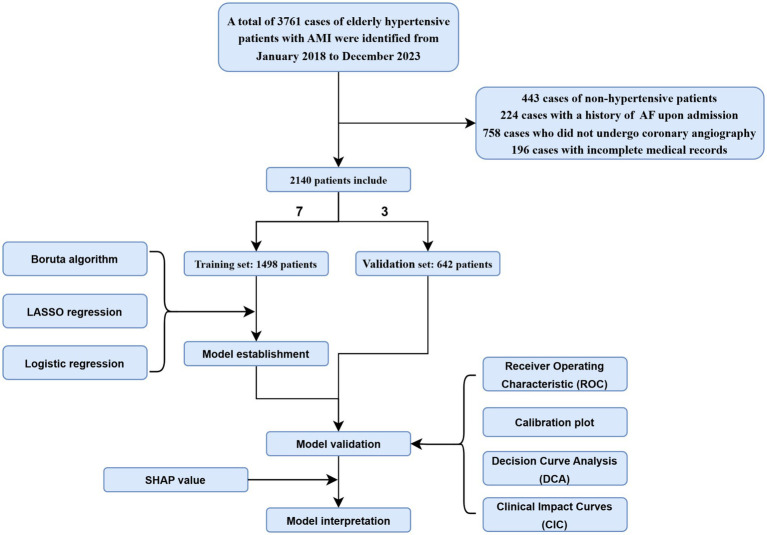 Figure 1
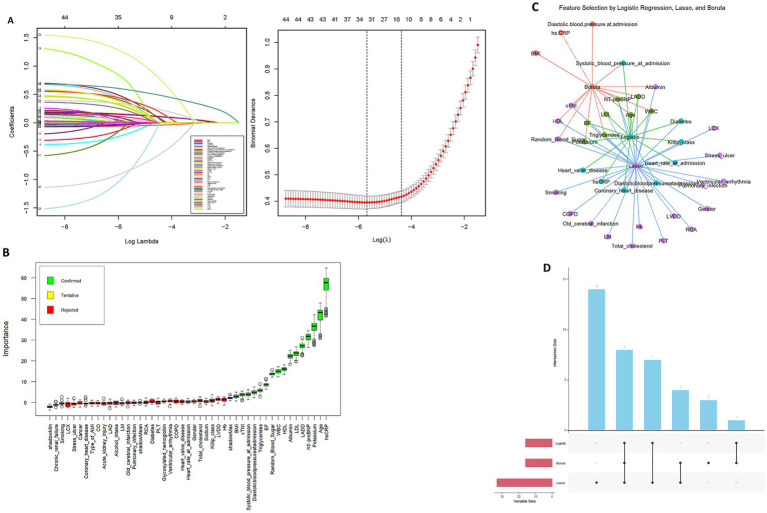 Figure 2
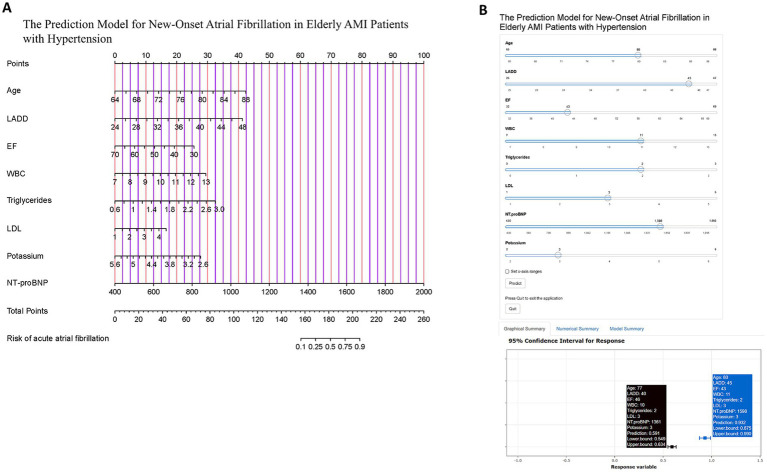 Figure 3
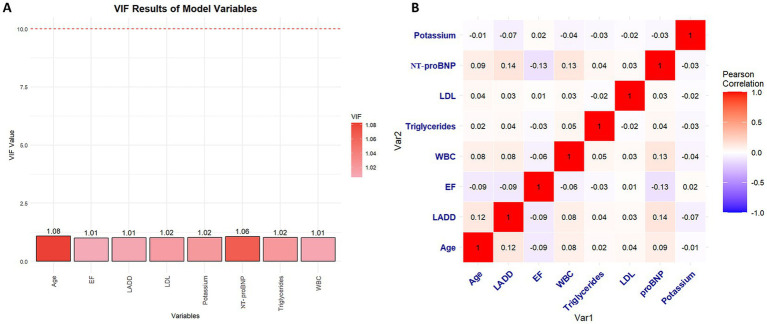 Figure 4
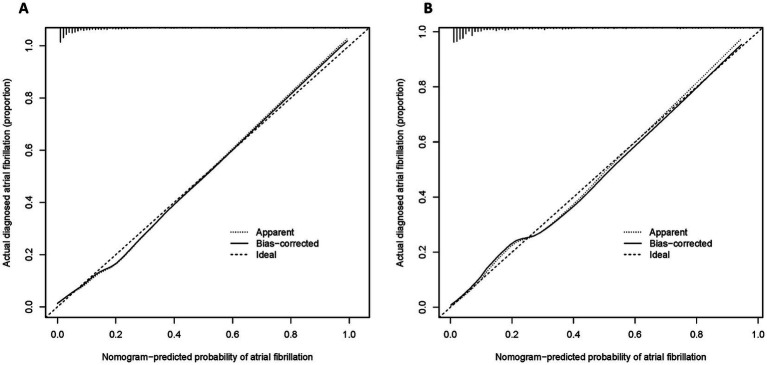 Figure 5
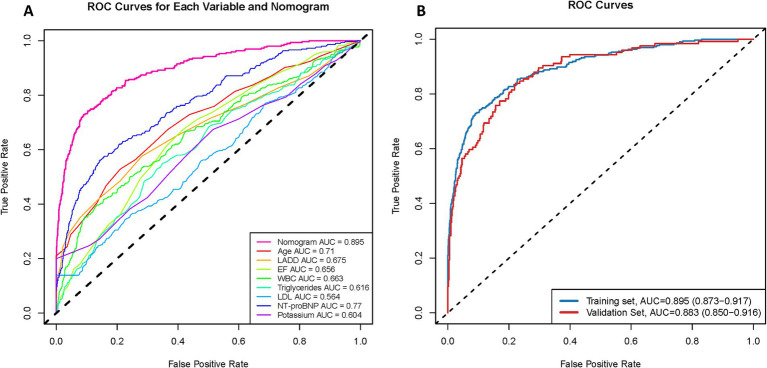 Figure 6
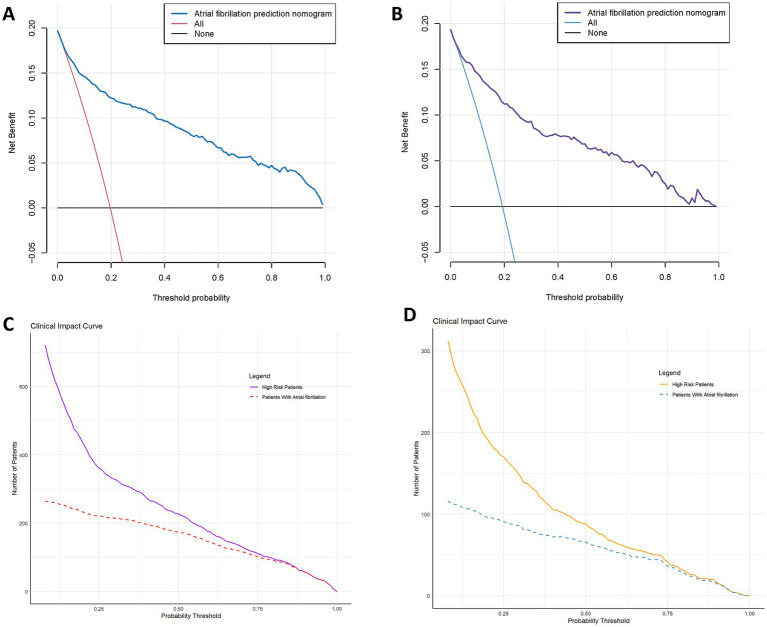 Figure 7
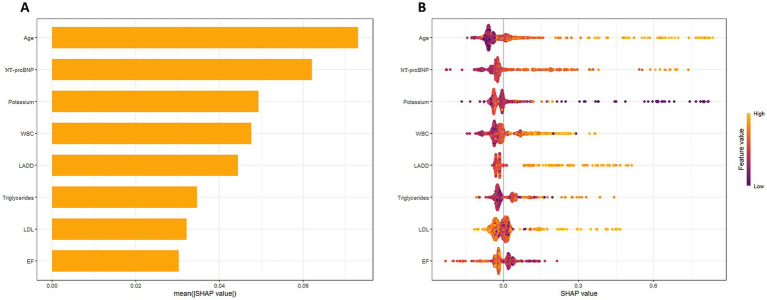 Figure 8
Peer Reviews
No public reviews on file for this paper yet. If you reviewed it on a platform where reviews are public (OpenReview, ICLR, NeurIPS, ICML), you can paste yours below so the community can read it here.
Videos
No videos yet. Explain this paper in a talk, walkthrough, or lecture? Add one.
Taxonomy
TopicsAtrial Fibrillation Management and Outcomes · Heart Failure Treatment and Management · ECG Monitoring and Analysis