Two decades of mucormycosis: molecular epidemiology and antifungal susceptibility trends in Türkiye
Ayşen İkkan, Osman Merdan, Seçil Ak-Aksoy, Zeinep Chavouz Ametoglou, İmran Sağlık, Hazel Öztürk-Belik, Büşra Çalışır, Özlem Saraydaroğlu, Samet Kızıl, Beyhan Bülbül, Esra Kazak, Beyza Ener

TL;DR
This study analyzed 20 years of mucormycosis cases in Türkiye, revealing trends in infection types, underlying conditions, and antifungal drug effectiveness.
Contribution
The study provides the most comprehensive data on mucormycosis in Türkiye, emphasizing molecular surveillance for antifungal treatment guidance.
Findings
Rhino-cerebral infection was the most common form of mucormycosis, followed by pulmonary disease.
Posaconazole showed greater in vitro activity than amphotericin B against Mucorales fungi.
Cunninghamella species exhibited elevated amphotericin B minimum inhibitory concentrations.
Abstract
Mucormycosis is a life-threatening invasive fungal infection that mainly affects individuals with weakened immune systems. Despite its clinical importance, data from Türkiye on the epidemiology and antifungal susceptibility of fungi belonging to the order Mucorales are scarce. This study aimed to describe the clinical, epidemiological, and mycological features of mucormycosis over a twenty-year period at a tertiary care hospital. All cases of mucormycosis diagnosed between 2003 and 2022 at Bursa Uludağ University Hospital were retrospectively evaluated. Cases were classified as proven or probable according to international definitions. Molecular identification was based on internal transcribed spacer sequencing. Large subunit ribosomal DNA region sequencing and whole-genome sequencing were performed when necessary. Antifungal susceptibility testing for amphotericin B and posaconazole…
Genes, proteins, chemicals, diseases, species, mutations and cell lines named across the full text — each resolved to its canonical identifier and authoritative record.
Click any figure to enlarge with its caption.
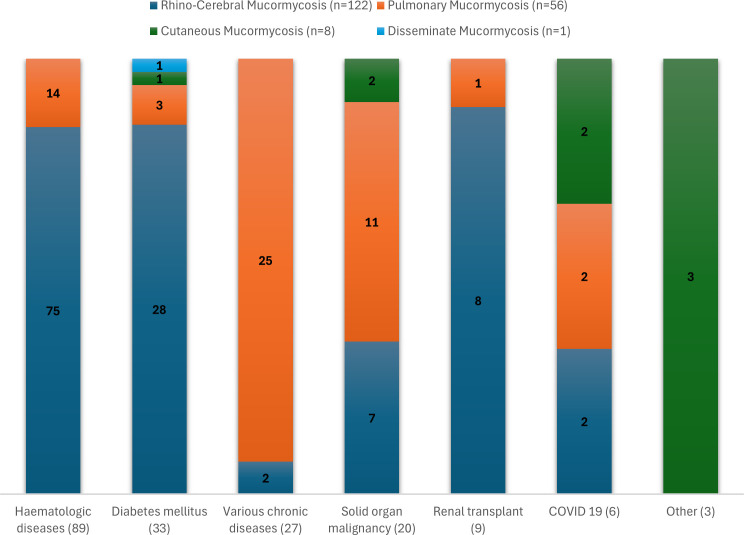 Figure 1
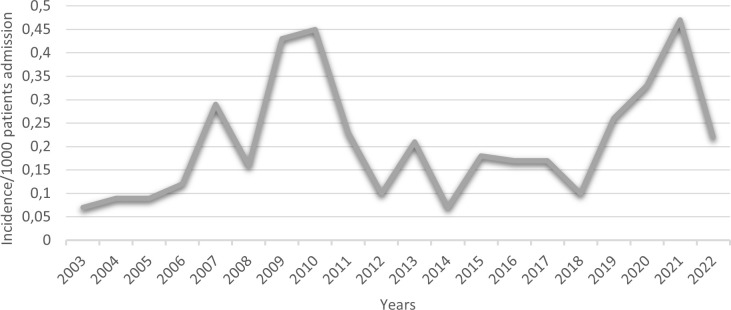 Figure 2
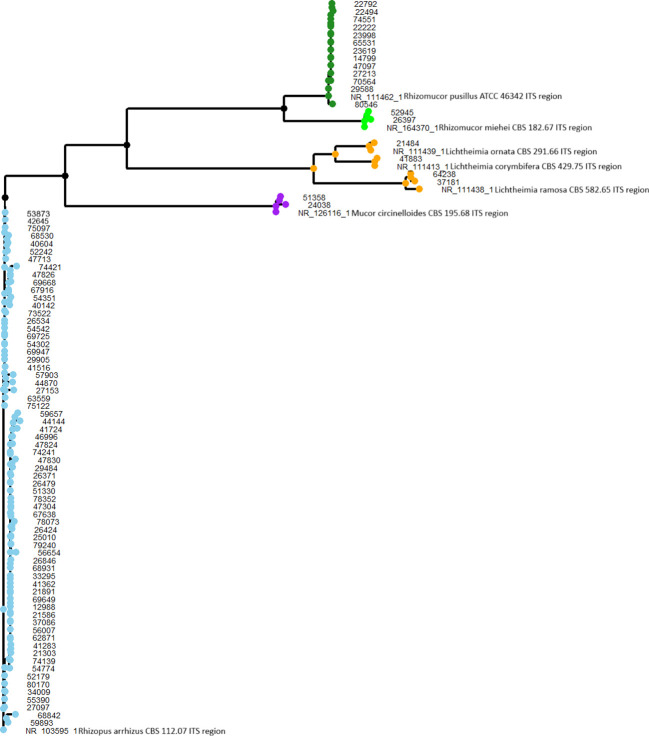 Figure 3
Peer Reviews
No public reviews on file for this paper yet. If you reviewed it on a platform where reviews are public (OpenReview, ICLR, NeurIPS, ICML), you can paste yours below so the community can read it here.
Videos
No videos yet. Explain this paper in a talk, walkthrough, or lecture? Add one.
Taxonomy
TopicsAntifungal resistance and susceptibility · Fungal Infections and Studies · Neutrophil, Myeloperoxidase and Oxidative Mechanisms