One-year outcomes of the RESILIA balloon-expandable transcatheter valve: survival, hemodynamics, and hypoattenuated leaflet thickening
Kazuki Suruga, Vivek Patel, Yuchao Guo, Hidemasa Shitan, Daniel Ng, Takashi Nagasaka, Jaideep Menda, Adishwar Singh, Mitch Gheorghiu, Dhairya Patel, Aakriti Gupta, Tarun Chakravarty, Wen Cheng, Yuito Okada, Hasan Jilaihawi, Mamoo Nakamura, Raj R. Makkar

TL;DR
A new heart valve (S3UR) shows better survival and performance than older models after one year, with less leaflet thickening.
Contribution
The study provides first-year clinical and hemodynamic outcomes of the RESILIA valve compared to prior models in TAVR patients.
Findings
The S3UR valve was associated with lower all-cause mortality at one year compared to S3/S3U valves.
S3UR demonstrated better hemodynamic performance, including lower gradients and reduced prosthesis-patient mismatch.
The S3UR group had a significantly lower incidence of hypoattenuated leaflet thickening at 30 days.
Abstract
Performance evaluation of the latest fifth-generation SAPIEN 3 Ultra RESILIA (S3UR) valve in patients who underwent transcatheter aortic valve replacement (TAVR) is limited. The aim of this study was to compare the 1-year clinical outcomes, including valve performance, in patients undergoing TAVR with the S3UR compared to the SAPIEN 3 or SAPIEN 3 Ultra (S3/S3U). Patients with severe native aortic stenosis who underwent TAVR with either the S3UR or the S3/S3U valve were matched using propensity scores. Predictors of 1-year outcomes were identified. A subgroup analysis of patients who underwent post-TAVR CT was conducted. Among 4,908 patients, 312 matched pairs were assessed. At 1-year, compared to the S3/S3U group, the S3UR group exhibited lower all-cause mortality (HR: 0.42; 95% CI: 0.18–0.96; p = 0.041). The S3UR group demonstrated superior hemodynamic performance, including lower…
Genes, proteins, chemicals, diseases, species, mutations and cell lines named across the full text — each resolved to its canonical identifier and authoritative record.
Click any figure to enlarge with its caption.
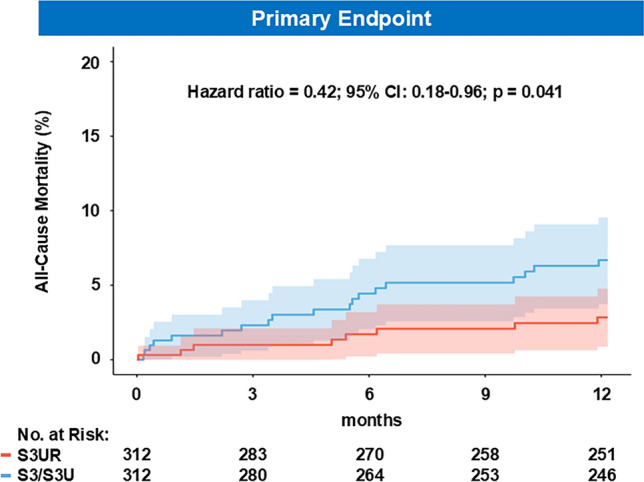 Figure 1
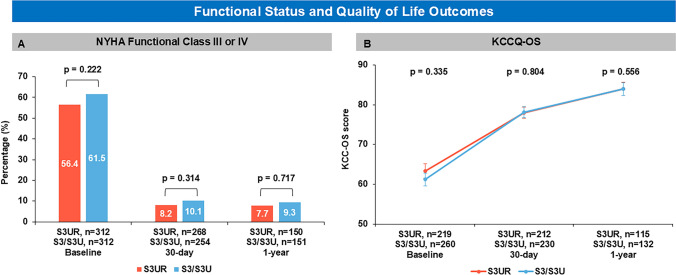 Figure 2
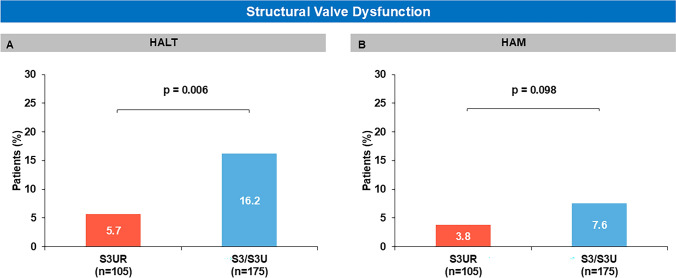 Figure 3
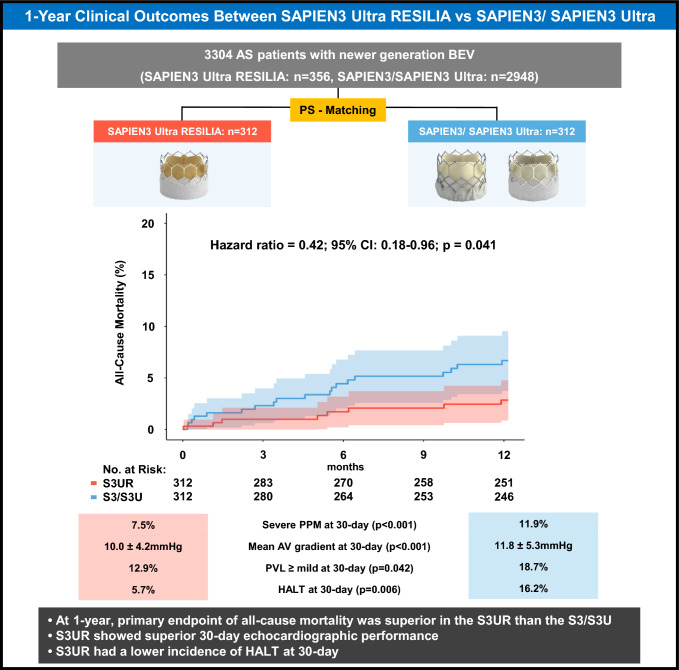 Figure 4
Peer Reviews
No public reviews on file for this paper yet. If you reviewed it on a platform where reviews are public (OpenReview, ICLR, NeurIPS, ICML), you can paste yours below so the community can read it here.
Videos
No videos yet. Explain this paper in a talk, walkthrough, or lecture? Add one.
Taxonomy
TopicsCardiac Valve Diseases and Treatments · Cardiovascular Function and Risk Factors · Aortic Disease and Treatment Approaches