Differential captivity and experiential conditions and its impact on the behaviour and cognition of Picasso triggerfish (Rhinecanthus aculeatus)
James Cordery, Nick A. R. Jones, Cait Newport

TL;DR
This study shows that captivity affects the behavior and cognition of Picasso triggerfish, with wild-caught fish being more exploratory but also more neophobic.
Contribution
The study introduces the Emergence Test as a practical tool for tracking captivity-induced behavioral changes in fish.
Findings
Recently caught fish were more exploratory and responsive to novel stimuli but showed object-specific neophobia.
Long-term captive fish exhibited greater variability in responses and some showed evidence of inhibitory control.
The Emergence Test was identified as the most practical assay for tracking captivity effects due to its sensitivity and simplicity.
Abstract
In this study, we compared performance across four behavioural tasks in the same fish species (Rhinecanthus aculeatus), with one group held in long-term laboratory captivity and the other recently caught and temporarily housed at a field station laboratory. The aims of this study were twofold: first, to test whether captivity conditions influence performance in commonly used behavioural and cognitive assays; and second, to evaluate whether any of these tasks could serve as a practical tool for screening behavioural changes over time. The four tests used were a Novel Object Test, Puzzle Preference Test, Emergence Test, and Cylinder Test. We found that recently caught fish were generally more exploratory and more responsive to novel stimuli; however, their responses were object-specific, with increased neophobia towards some objects. Long-term captive fish were more variable in their…
Genes, proteins, chemicals, diseases, species, mutations and cell lines named across the full text — each resolved to its canonical identifier and authoritative record.
Click any figure to enlarge with its caption.
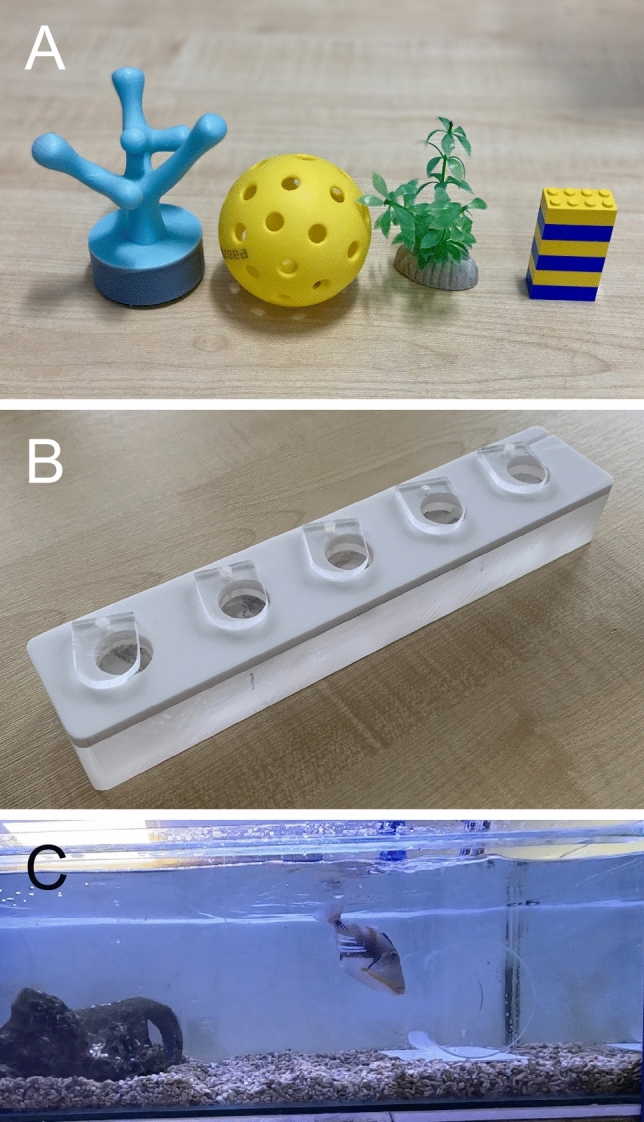 Figure 1
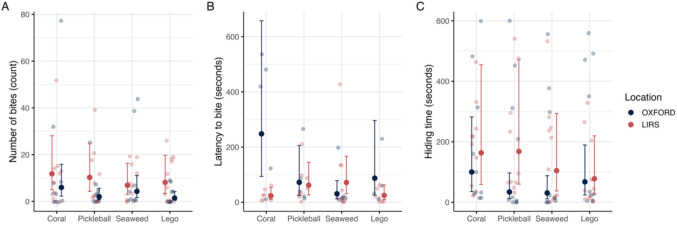 Figure 2
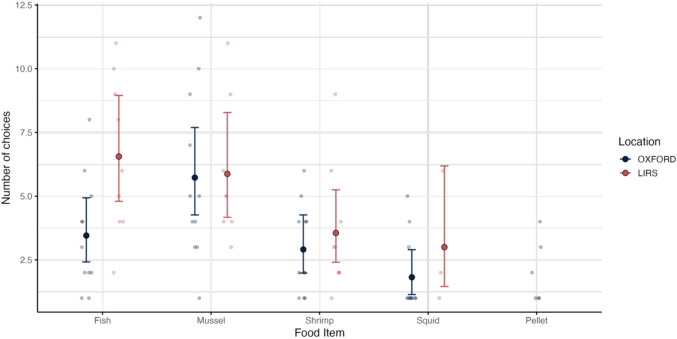 Figure 3
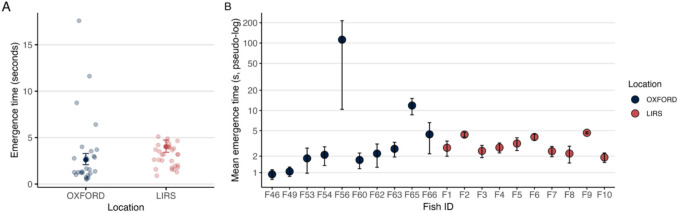 Figure 4
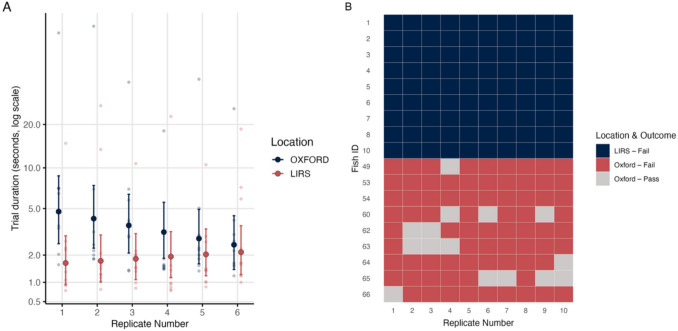 Figure 5
Peer Reviews
No public reviews on file for this paper yet. If you reviewed it on a platform where reviews are public (OpenReview, ICLR, NeurIPS, ICML), you can paste yours below so the community can read it here.
Videos
No videos yet. Explain this paper in a talk, walkthrough, or lecture? Add one.
Taxonomy
TopicsAnimal Behavior and Reproduction · Zebrafish Biomedical Research Applications · Fish biology, ecology, and behavior