Association of Serum Lipids with 10-Year CVD and All-Cause Mortality in Iranian Adults: A Prospective Cohort Study
Maryam Saberi-Karimian, Maryam Mohammadi-Bajgiran, Niloofar Shabani, Farima Farsi, Sara Saffar Soflaei, Farnaz Farrokhzadeh, Hanieh Keikhay Moghadam, Habibollah Esmaily, Mohsen Moohebati, Gordon A. Ferns, Mahmoud Ebrahimi, Majid Ghayour-Mobarhan

TL;DR
Higher HDL-C levels are linked to lower risk of death from cardiovascular and other causes in Iranian adults over 10 years.
Contribution
This study identifies HDL-C as a significant predictor of mortality risk in a large Iranian cohort, particularly in older and high-risk individuals.
Findings
Higher HDL-C levels were associated with reduced all-cause and cardiovascular mortality risk.
Inverse correlation between elevated HDL-C and mortality was stronger in older people and those with hypertension or diabetes.
LDL-C levels showed no significant association with mortality after adjustment.
Abstract
Individuals with abnormal serum lipid levels are at an augmented risk of atherosclerotic cardiovascular diseases (CVDs). The purpose of this study was to evaluate the significance of serum lipid concentrations as determinants for the risk of CVD and all-cause mortality (ACM). This prospective cohort study involved individuals who were part of the Mashhad stroke and heart atherosclerotic disorder (MASHAD) study initiated in 2007. A total of 9704 individuals aged 35- 65 years were involved in the current study. The participants were monitored for about a decade to track mortality and its underlying causes. Multivariable Cox proportional hazards models were applied to estimate hazard ratios (HRs) for serum levels of LDL-C, HDL-C, non-HDL-C, and triglycerides (TG), analyzed both as continuous variables and categorized into tertiles. Three models were developed: Model 1 (unadjusted), Model…
Genes, proteins, chemicals, diseases, species, mutations and cell lines named across the full text — each resolved to its canonical identifier and authoritative record.
Click any figure to enlarge with its caption.
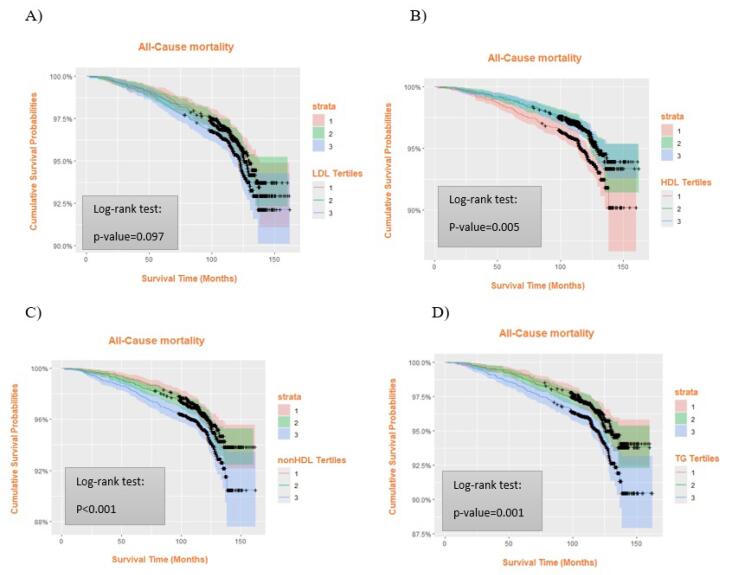 Figure 1
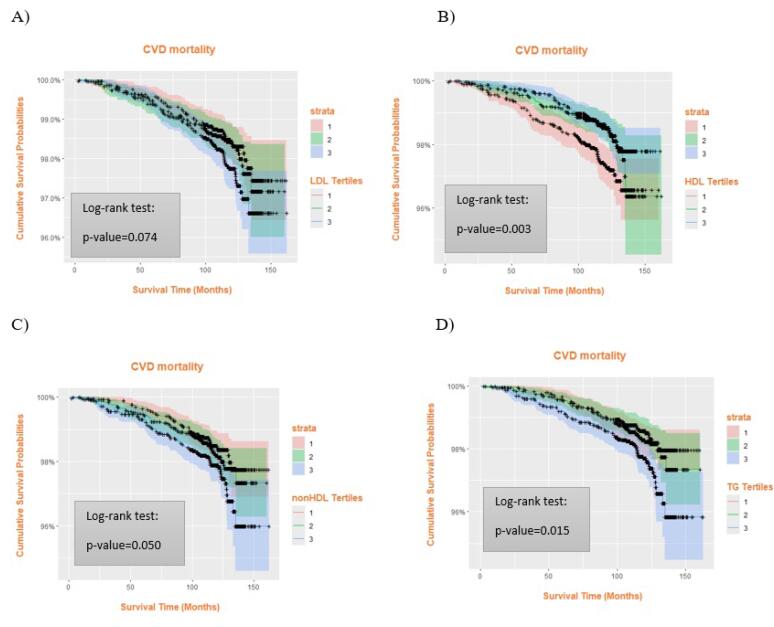 Figure 2
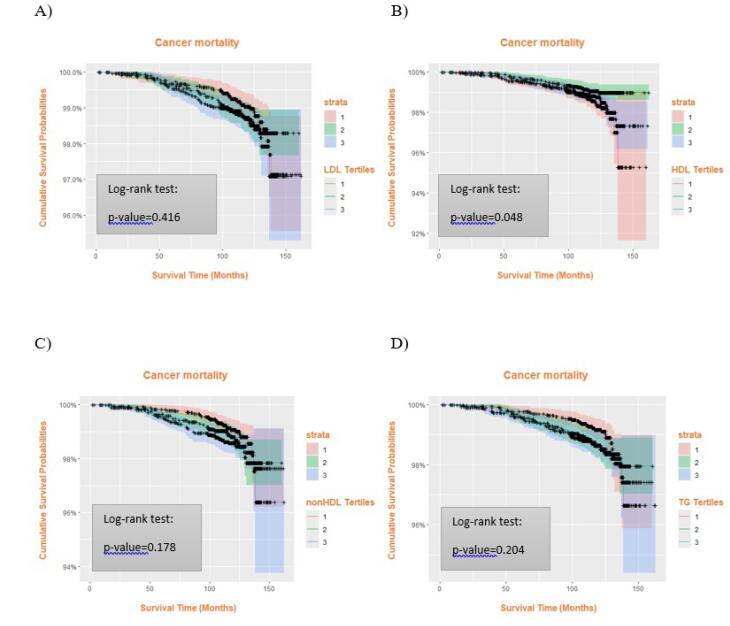 Figure 3
Peer Reviews
No public reviews on file for this paper yet. If you reviewed it on a platform where reviews are public (OpenReview, ICLR, NeurIPS, ICML), you can paste yours below so the community can read it here.
Videos
No videos yet. Explain this paper in a talk, walkthrough, or lecture? Add one.
Taxonomy
TopicsDiabetes, Cardiovascular Risks, and Lipoproteins · Lipoproteins and Cardiovascular Health · Paraoxonase enzyme and polymorphisms