Dream content and slow waves benefit prey against predator in a video game confrontation
Daniel S. Brandão, Rafael N. B. Scott, Ernesto S. Soares, Natália B. Mota, Sidarta Ribeiro

TL;DR
This study explores how sleep and dreams help people perform better in stressful situations resembling being prey in a video game.
Contribution
The study shows that slow wave sleep and game-related dreams improve performance in prey-like scenarios.
Findings
Prey participants' scores improved with slow wave activity during naps.
Dreams related to the game predicted better performance in prey roles.
Heart rate variability during the first round correlated with score gains in prey participants.
Abstract
Every studied animal species exhibits some form of sleep, a state evolved under the sustained influence of prey and predator behaviors. Dreams have been proposed to have evolved as offline mental simulations able to warn against impending threats from the environment, such as predators. To assess how the ecological roles of prey and predator interact with sleep and dreaming, we used a first-person shooter game as a proxy for predator-prey confrontations. Electroencephalographic (EEG) and electrocardiographic (ECG) signals were simultaneously recorded from 30 human adult pairs while (1) playing a video game round against each other, (2) taking a nap, (3) reporting dreams and/or thoughts, and (4) playing another round. We found that the participants in the prey role were highly affected by sleep and dreaming. Their score gains were positively correlated with slow wave activity during the…
Genes, proteins, chemicals, diseases, species, mutations and cell lines named across the full text — each resolved to its canonical identifier and authoritative record.
Click any figure to enlarge with its caption.
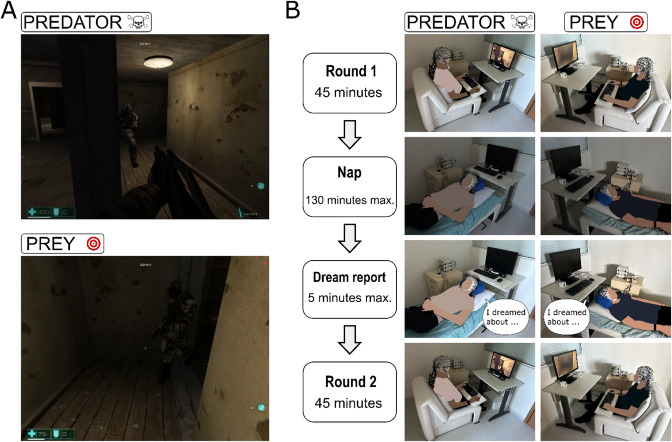 Figure 1
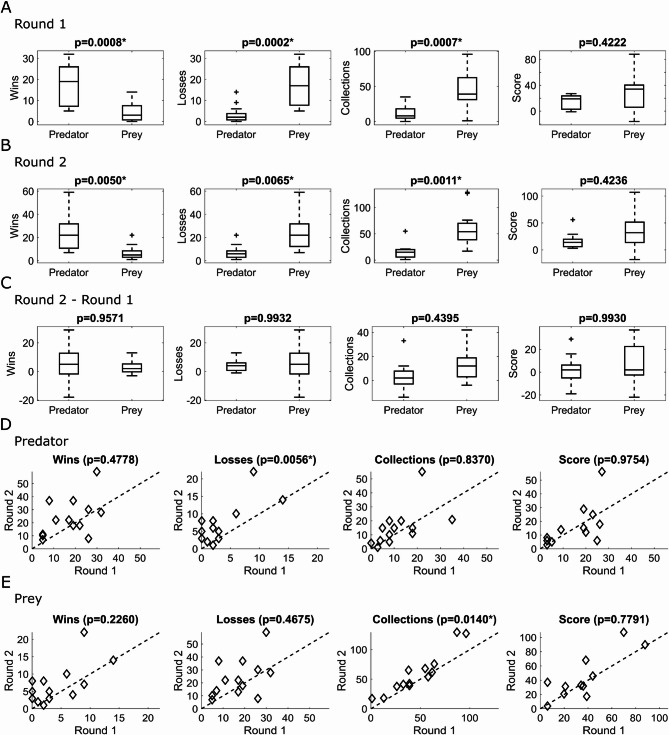 Figure 2
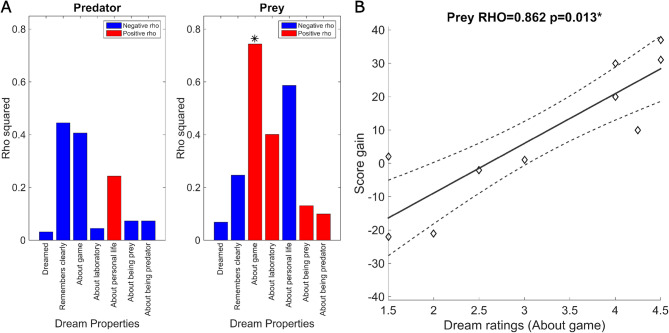 Figure 3
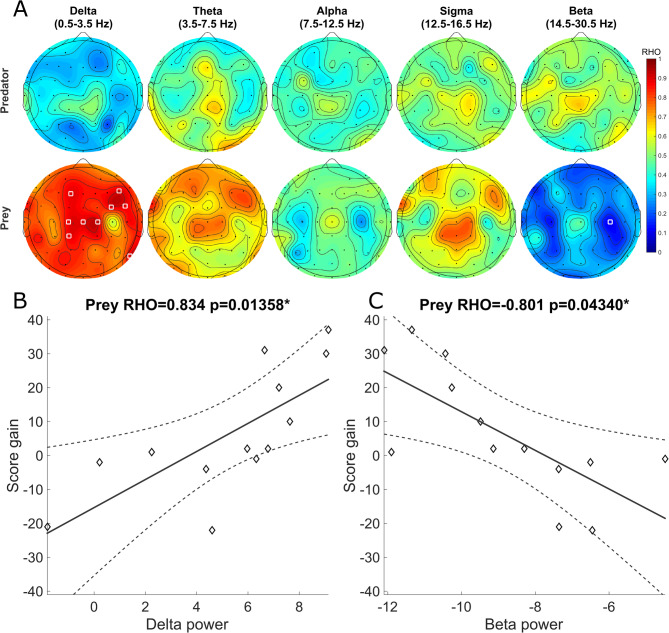 Figure 4
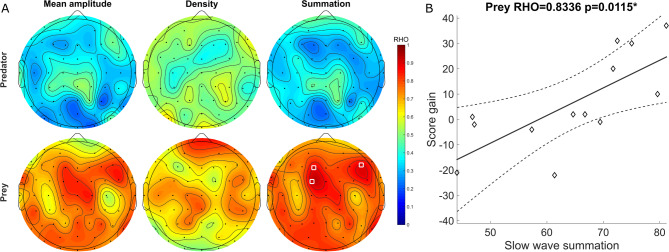 Figure 5
Peer Reviews
No public reviews on file for this paper yet. If you reviewed it on a platform where reviews are public (OpenReview, ICLR, NeurIPS, ICML), you can paste yours below so the community can read it here.
Videos
No videos yet. Explain this paper in a talk, walkthrough, or lecture? Add one.
Taxonomy
TopicsSleep and Wakefulness Research · Sleep and related disorders · EEG and Brain-Computer Interfaces