The efficacy of rimegepant for the acute treatment of vestibular migraine
Heling Chu, Jingwei Pan, Chuyi Huang

TL;DR
This study shows that rimegepant, a CGRP receptor antagonist, effectively and safely reduces symptoms of vestibular migraine within hours.
Contribution
This is the first study to demonstrate the efficacy of rimegepant for acute treatment of vestibular migraine.
Findings
Rimegepant 75 mg significantly reduced VM symptoms within 2 hours, with full recovery by 24 hours for most symptoms.
No adverse events were reported, indicating the drug is safe and well-tolerated.
Symptoms like vertigo, nausea, and photophobia showed rapid improvement after treatment.
Abstract
This study aimed to observe the efficacy and safety of rimegepant, a small-molecule calcitonin gene-related peptide (CGRP) receptor antagonist, for the acute treatment of vestibular migraine (VM). Patients meeting the diagnostic criteria for VM or probable VM received rimegepant 75 mg for acute attacks. They rated the severity of five prominent VM symptoms (vertigo, unsteadiness or dizziness, nausea or vomiting, photophobia or phonophobia, and headache) on a 0–3 scale. Assessments were recorded at baseline, 30 min, 1 h, 2 h, 4 h, 24 h, and 48 h post-treatment. Efficacy outcomes included the percentage of patients with symptom recovery (from moderate/severe to absent/mild), moderate/severe symptoms, and freedom from symptoms at various time points. 18 VM patients were included. All symptom scores showed a decreasing trend from 30 min after rimegepant treatment. Scores for all symptoms…
Genes, proteins, chemicals, diseases, species, mutations and cell lines named across the full text — each resolved to its canonical identifier and authoritative record.
Click any figure to enlarge with its caption.
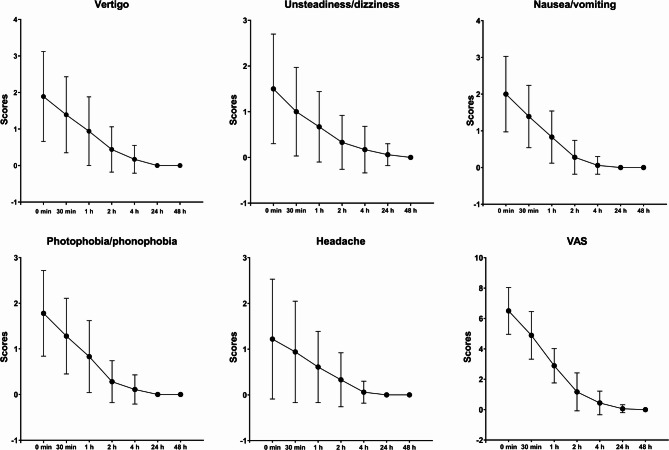 Figure 1
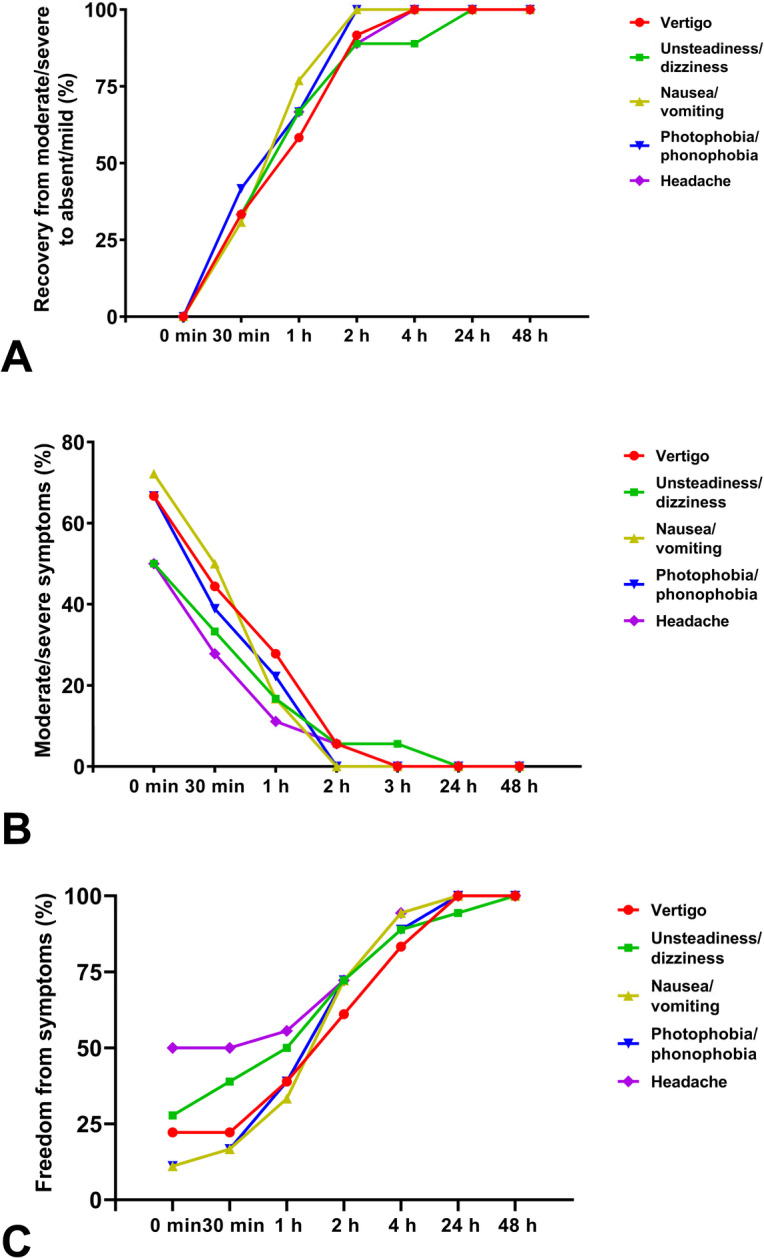 Figure 2
Peer Reviews
No public reviews on file for this paper yet. If you reviewed it on a platform where reviews are public (OpenReview, ICLR, NeurIPS, ICML), you can paste yours below so the community can read it here.
Videos
No videos yet. Explain this paper in a talk, walkthrough, or lecture? Add one.
Taxonomy
TopicsVestibular and auditory disorders · Hearing, Cochlea, Tinnitus, Genetics · Migraine and Headache Studies