Camouflaged object detection via context and texture-aware hierarchical interaction
Zhi Wang, Yangyang Deng, Chenxing Shen, Miaohui Zhang, Xiaoxia Lu

TL;DR
This paper introduces a new network for detecting camouflaged objects by combining context and texture information, achieving better performance than existing methods.
Contribution
The novel CTHINet uses texture labels and hierarchical interaction modules to enhance detection accuracy in camouflaged object detection.
Findings
CTHINet outperforms state-of-the-art methods on benchmark COD datasets like CAMO, COD10K, and NC4K.
The model's performance on the polyp segmentation dataset suggests its potential for broader applications.
Hierarchical interaction modules improve the integration of texture and context cues for accurate detection.
Abstract
In the field of camouflaged object detection (COD), effectively distinguishing the intrinsic similarity between objects and their backgrounds is a critical factor for improving detection performance. Existing approaches typically leverage boundary constraints to provide additional auxiliary information during the training phase. To capture more discriminative detailed cues, we introduce texture labels as supervisory signals and propose a context- and texture-aware hierarchical interaction network (CTHINet) for COD. In the coding phase, the network is divided into two separate branches, a context and a texture encoder. Specifically, a context encoder is employed to generate contextual information. Subsequently, the features at different scales are refined by implementing a Multi-head Feature Aggregation Module (MFAM). The diversity of features is subsequently enhanced by leveraging the…
Genes, proteins, chemicals, diseases, species, mutations and cell lines named across the full text — each resolved to its canonical identifier and authoritative record.
Click any figure to enlarge with its caption.
 Figure 1
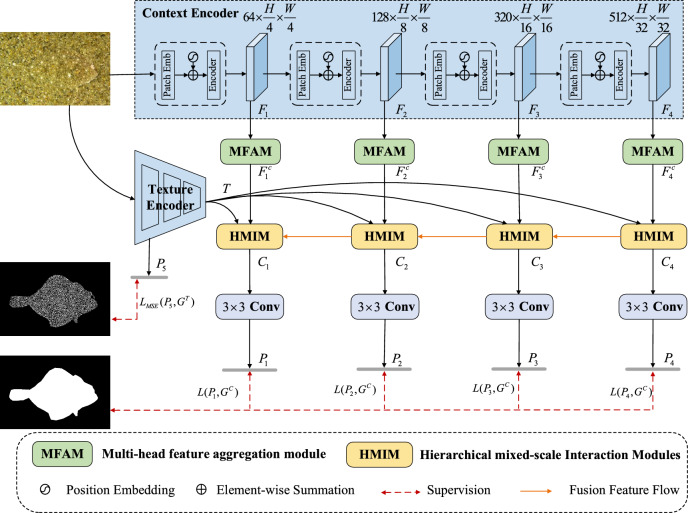 Figure 2
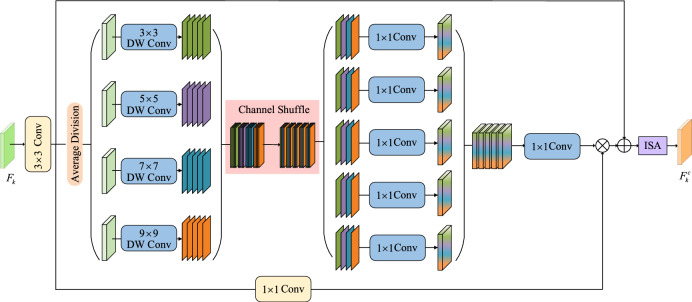 Figure 3
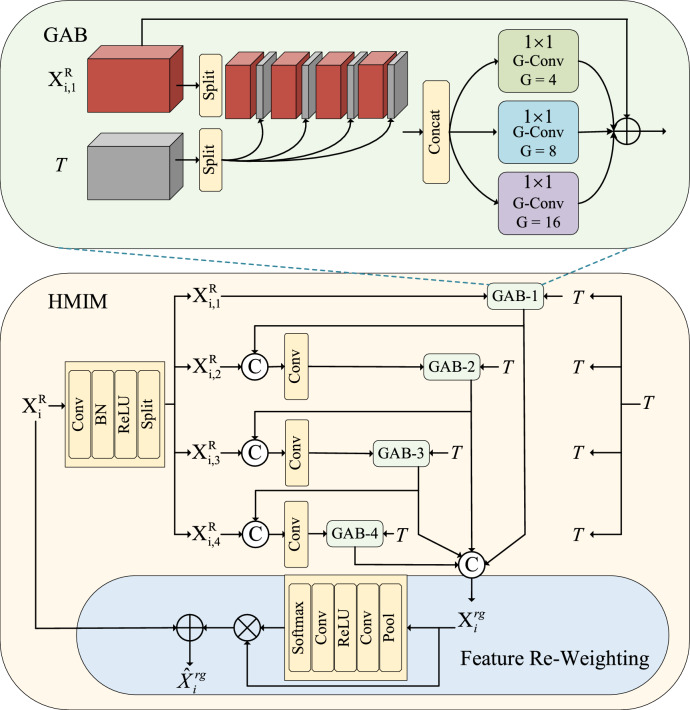 Figure 4
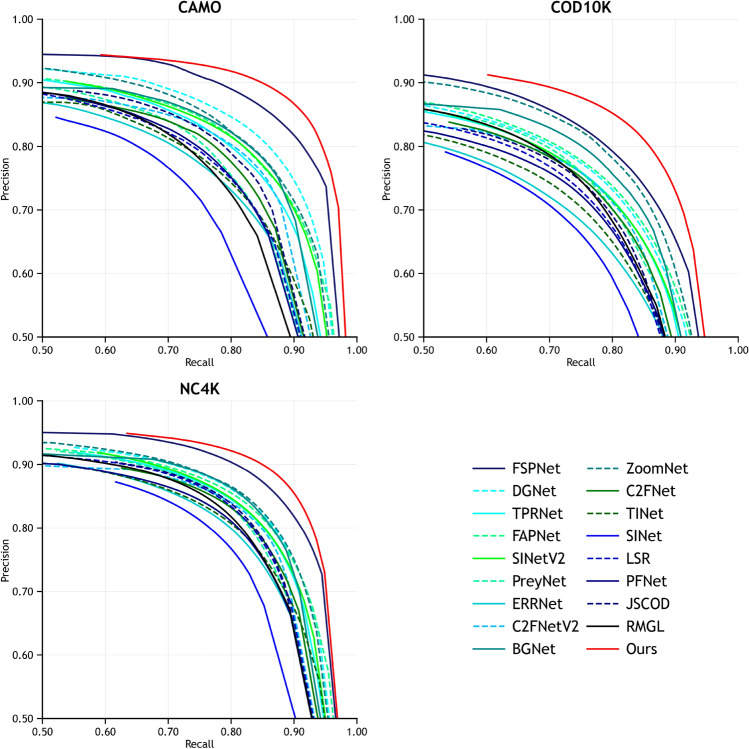 Figure 5
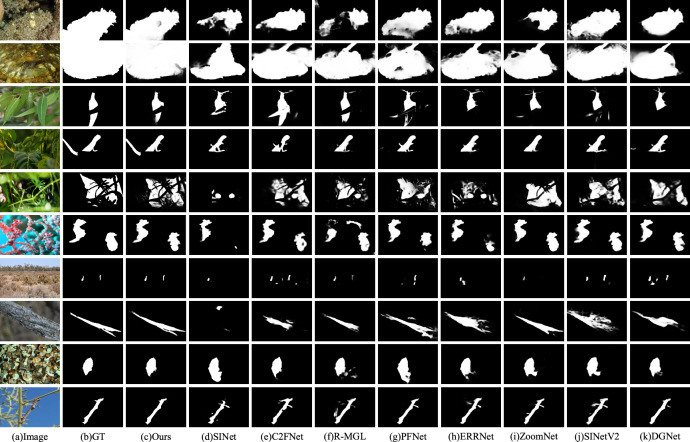 Figure 6
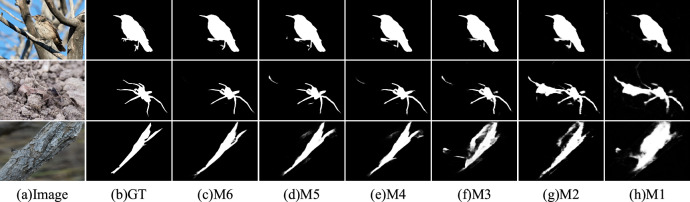 Figure 7
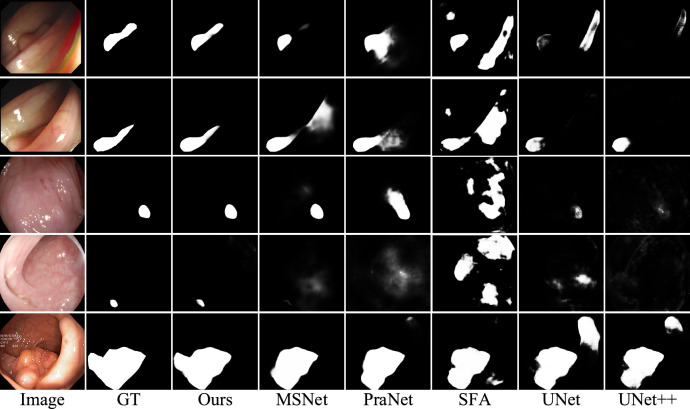 Figure 8
Peer Reviews
No public reviews on file for this paper yet. If you reviewed it on a platform where reviews are public (OpenReview, ICLR, NeurIPS, ICML), you can paste yours below so the community can read it here.
Videos
No videos yet. Explain this paper in a talk, walkthrough, or lecture? Add one.
Taxonomy
TopicsVisual Attention and Saliency Detection · Ocular Surface and Contact Lens · Olfactory and Sensory Function Studies