Latent transition analysis for longitudinal studies of post-acute infection syndromes
Roy Gusinow, Anna Górska, Lorenzo Maria Canziani, Iris Lopes-Rafegas, Carolina Alvarez Garavito, Adriana Tami, Elisa Gentilotti, Elisa Sicuri, Cédric Laouénan, Jade Ghosn, Aline-Marie Florence, Nadhem Lahfej, Fulvia Mazzaferri, Lidia Del Piccolo, Maddalena Giannella

TL;DR
This paper introduces a new framework using latent transition analysis to study post-acute infection syndromes by identifying disease phenotypes and patient transitions over time.
Contribution
The novel contribution is a generalizable framework for analyzing longitudinal PAIS data using latent transition analysis with covariate integration.
Findings
The framework identifies distinct PCC phenotypes in the ORCHESTRA dataset.
Patient trajectories are influenced by age and sex according to the model results.
The method enhances interpretability of complex clinical data for personalized monitoring.
Abstract
Post-Acute Infectious Syndromes (PAIS) refer to the symptoms persisting months after initial infection. Clinical research studies on this topic often collect rich, multi-modal datasets. Yet, the complexity of the datasets and the lack of a precise clinical case definition pose difficulties in creating comprehensive analyses. Here, we present a generalisable framework for analysing data from longitudinal studies of PAIS using Latent Transition Analysis (LTA). It enables the identification of disease phenotypes and the patient-level analysis of transitions between them, without relying on predefined clinical categorisations. Furthermore, we introduce a method for incorporating covariate information, which enables exploration of how patient characteristics influence disease trajectories. We apply this methodology to the ORCHESTRA dataset, composed of individuals affected by SARS-CoV-2…
Genes, proteins, chemicals, diseases, species, mutations and cell lines named across the full text — each resolved to its canonical identifier and authoritative record.
Click any figure to enlarge with its caption.
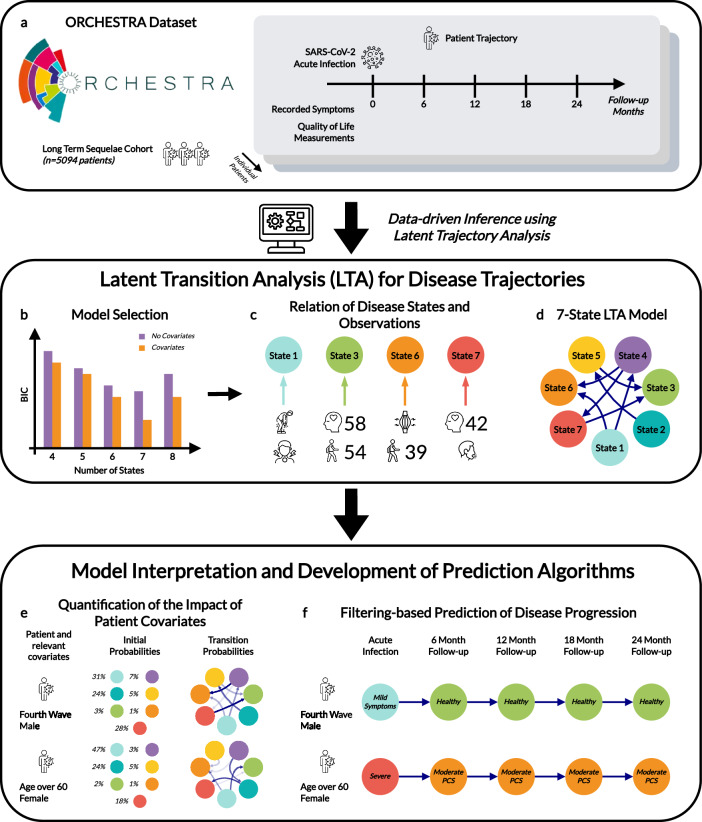 Figure 1
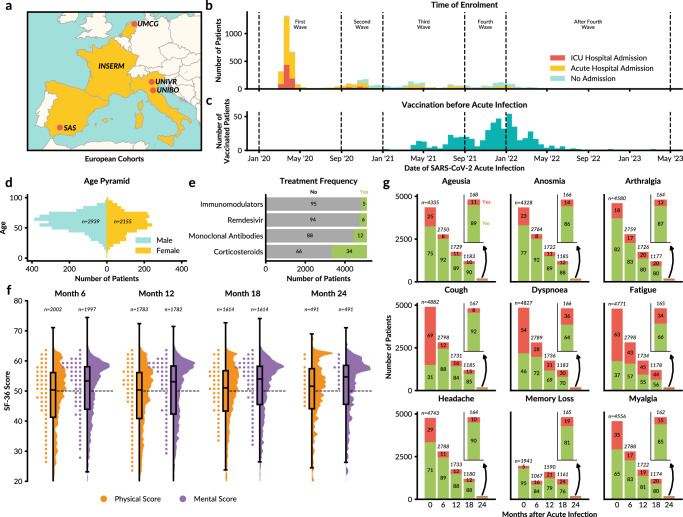 Figure 2
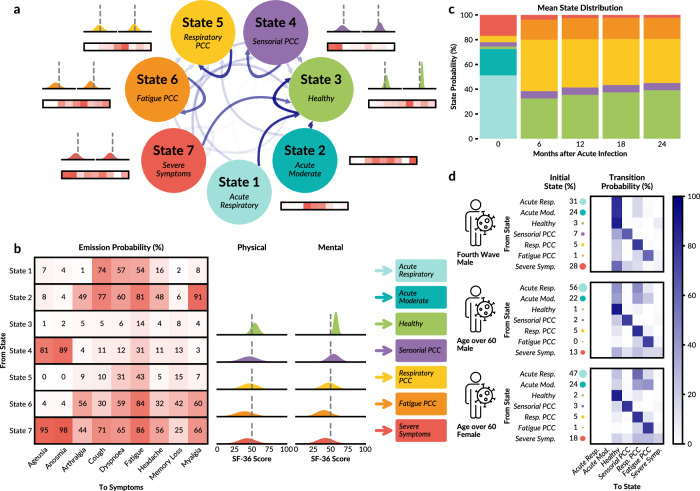 Figure 3
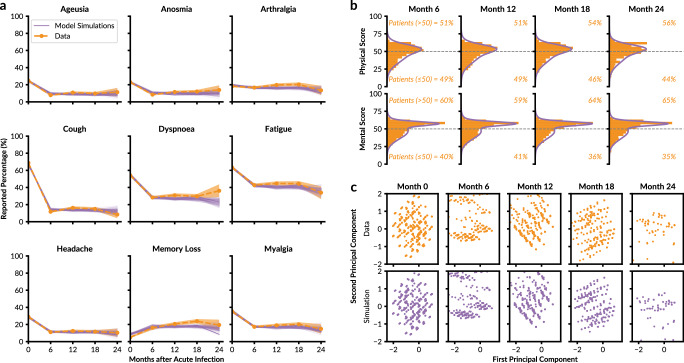 Figure 4
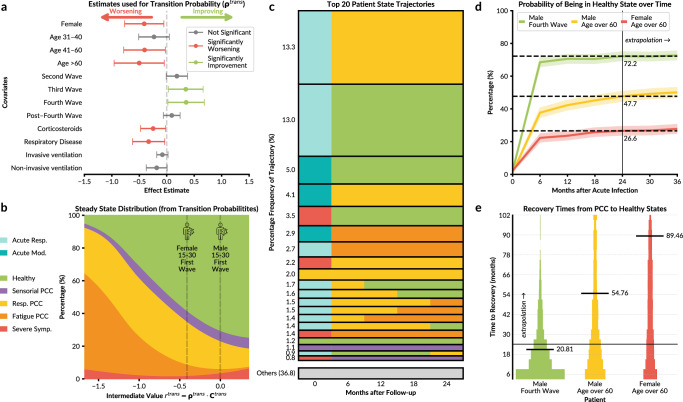 Figure 5
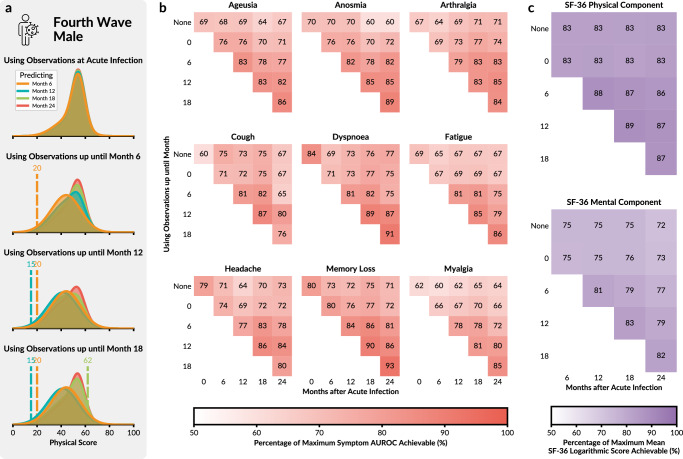 Figure 6
Peer Reviews
No public reviews on file for this paper yet. If you reviewed it on a platform where reviews are public (OpenReview, ICLR, NeurIPS, ICML), you can paste yours below so the community can read it here.
Videos
No videos yet. Explain this paper in a talk, walkthrough, or lecture? Add one.
Taxonomy
TopicsMachine Learning in Healthcare · COVID-19 epidemiological studies · Long-Term Effects of COVID-19