Non-pterygium Escobar syndrome from compound-heterozygous CHRNG variants: genotype–phenotype insights
Jun Kido, Hiroe Ueno, Yohei Misumi, Keishin Sugawara, Suzuran Saito, Eriko Koshimizu, Naomichi Matsumoto, Mitsuharu Ueda, Kimitoshi Nakamura

TL;DR
A rare genetic disorder case shows varied symptoms without typical features, highlighting the need for genetic testing.
Contribution
Reports a novel compound-heterozygous CHRNG variant case with non-typical Escobar syndrome features.
Findings
Patient had CHRNG variants without pterygia, showing phenotypic variability.
Case highlights milder Escobar syndrome presentations with normal cognition.
Findings suggest clinicians should consider genetic testing beyond classic symptoms.
Abstract
Escobar syndrome is a rare congenital disorder characterized by contractures, pterygia and craniofacial anomalies. Here we report a school-age girl harboring compound-heterozygous CHRNG variants, NM_005199.5:c.[2T>C];[428C>G] p.[(Met1?)];[(Pro143Arg)]. She presented with neonatal asphyxia, congenital limb contractures and low-frequency hearing loss but without pterygia, maintaining normal cognition. This case underscores the phenotypic variability of CHRNG-related disease and alerts clinicians to recognize milder presentations that lack pterygia and to consider targeted genetic testin.
Genes, proteins, chemicals, diseases, species, mutations and cell lines named across the full text — each resolved to its canonical identifier and authoritative record.
Click any figure to enlarge with its caption.
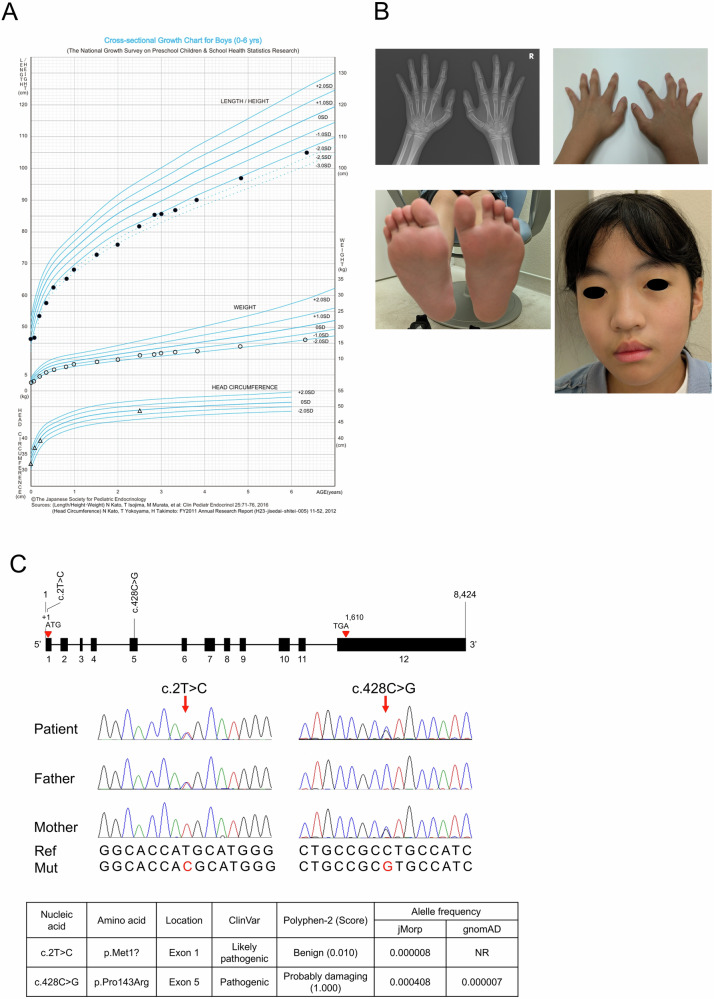 Figure 1
Peer Reviews
No public reviews on file for this paper yet. If you reviewed it on a platform where reviews are public (OpenReview, ICLR, NeurIPS, ICML), you can paste yours below so the community can read it here.
Videos
No videos yet. Explain this paper in a talk, walkthrough, or lecture? Add one.
Taxonomy
TopicsNeurogenetic and Muscular Disorders Research · Connective tissue disorders research · Skin and Cellular Biology Research