Rethinking ratio-based normalization towards model-based approaches in heart weight analysis
Manuela A. Oestereicher, Patricia da Silva-Buttkus, Valérie Gailus-Durner, Susan Marschall, Helmut Fuchs, Jason D. Heaney, Jason D. Heaney, Jacqueline K. White, Yann Herault, Masaru Tamura, Kent KC Lloyd, Je Kyung Seong, Lauryl MJ. Nutter, Martin Hrabě de Angelis

TL;DR
This paper shows that normalizing heart weight using ratios can lead to misleading results and suggests using model-based approaches instead.
Contribution
The study demonstrates the limitations of ratio-based normalization and proposes more robust model-based alternatives for heart weight analysis.
Findings
Heart weight, body weight, and tibia length showed negligible to weak correlations in mice.
Ratio-based normalization can produce spurious or reversed group differences when proportionality is violated.
Linear and allometric models offer more reliable frameworks for organ weight analysis.
Abstract
Heart weight (HW) is a critical parameter in cardiology and mouse research, commonly normalized to body weight (BW) or tibia length (TL) to account for size differences. Ratio-based normalization, however, assumes strict proportionality between variables, an assumption that is rarely tested and may bias group comparisons. We analysed HW, BW, and TL measurements from over 25,000 C57BL/6N wildtype mice generated by the International Mouse Phenotyping Consortium. Sex- and age-stratified analyses were combined with simulation-based modelling to evaluate empirical scaling relationships and the statistical behaviour of ratio-based normalization. Across all age and sex groups, correlations between HW, BW, and TL were negligible to weak, indicating substantial deviations from proportionality. Simulations demonstrated that ratio-based normalization can generate misleading results, including…
Genes, proteins, chemicals, diseases, species, mutations and cell lines named across the full text — each resolved to its canonical identifier and authoritative record.
Click any figure to enlarge with its caption.
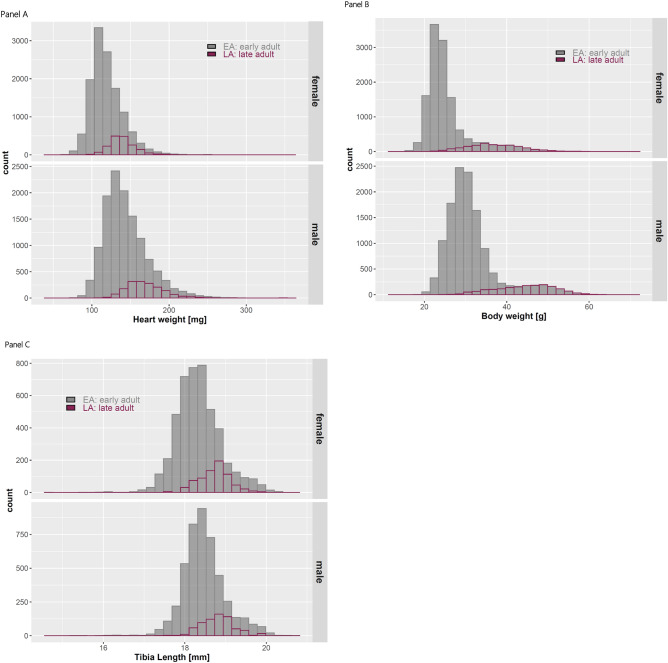 Figure 1
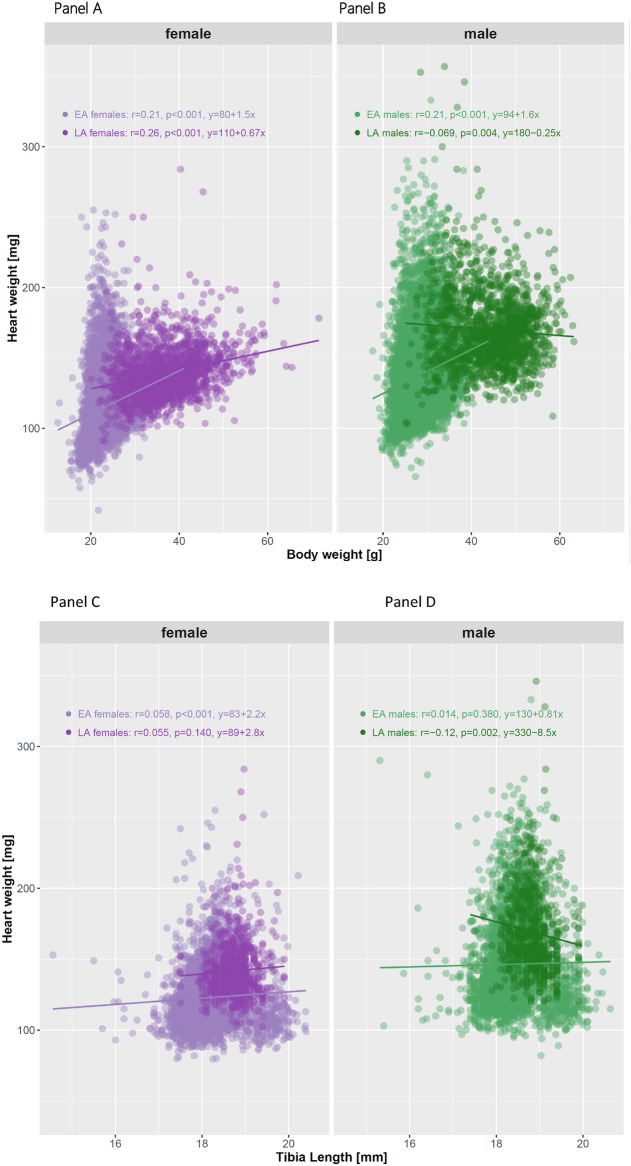 Figure 2
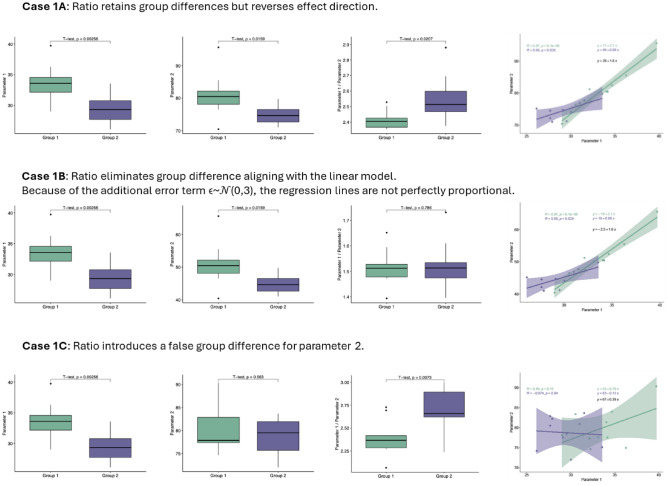 Figure 3
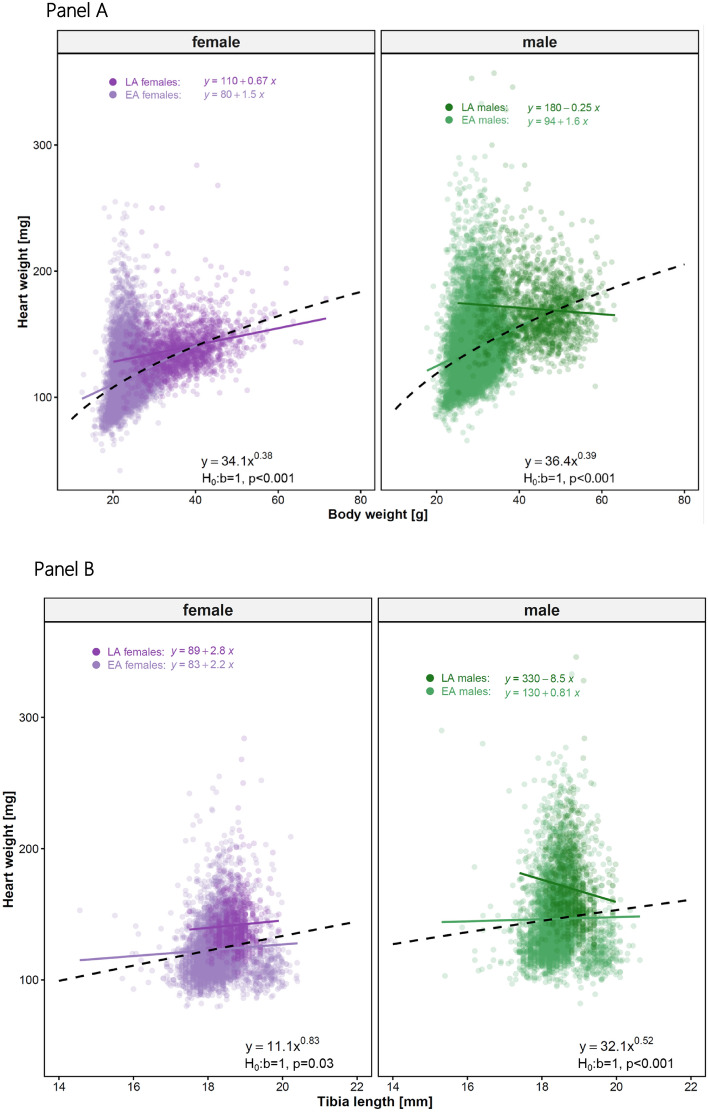 Figure 4
Peer Reviews
No public reviews on file for this paper yet. If you reviewed it on a platform where reviews are public (OpenReview, ICLR, NeurIPS, ICML), you can paste yours below so the community can read it here.
Videos
No videos yet. Explain this paper in a talk, walkthrough, or lecture? Add one.
Taxonomy
TopicsCardiovascular Function and Risk Factors · Heart Rate Variability and Autonomic Control · ECG Monitoring and Analysis