High-Speed, Pixel-Super-resolved Compressive Second Near-Infrared Fluorescence In Vivo Imaging
Zhen Pan, Dalong Qi, Hongxin Zhang, Jiali Yao, Long Cheng, Ning Xu, Chengyu Zhou, Wenzhang Lin, Hongmei Ma, Yunhua Yao, Yuecheng Shen, Lianzhong Deng, Fan Zhang, Zhenrong Sun, Shian Zhang

TL;DR
This paper introduces a new high-speed imaging technique that improves signal quality and captures fast biological processes in living organisms using advanced compressive imaging and AI.
Contribution
The novel contribution is a compressive imaging method (NIR-II COFI) that combines hardware and AI to enable high-speed, high-resolution in vivo imaging.
Findings
NIR-II COFI achieves 3.3 kiloframes per second with high fidelity and improved signal-to-noise ratio.
The method enables real-time visualization of murine intestinal peristalsis in both awake and anesthetized states.
Multicomponent phosphorescence lifetime imaging and high-speed motion tracking are demonstrated using 1,525-nm nanoparticle probes.
Abstract
Conventional second near-infrared (NIR-II; 1,000 to 1,700 nm) fluorescence imaging cannot simultaneously achieve a high signal-to-noise ratio and motion-artifact-free capture of rapid physiological dynamics. Here, we introduce NIR-II compressive fluorescence imaging (COFI), a high-speed, pixel-super-resolved compressive imaging technique that encodes dynamics into single frames using a high-speed spatial light modulator and a low-frame-rate NIR-II camera. A hybrid reconstruction algorithm integrating a denoising convolutional neural network with an enhanced super-resolution generative adversarial network subsequently restores high-fidelity videos. The system achieves 3.3 kiloframes per second with a space–bandwidth–time product of 4.22 × 108 pixels/s without compromising intrinsic sensitivity. Compared to conventional short-exposure imaging with the same duration of 500 μs, NIR-II COFI…
Genes, proteins, chemicals, diseases, species, mutations and cell lines named across the full text — each resolved to its canonical identifier and authoritative record.
Click any figure to enlarge with its caption.
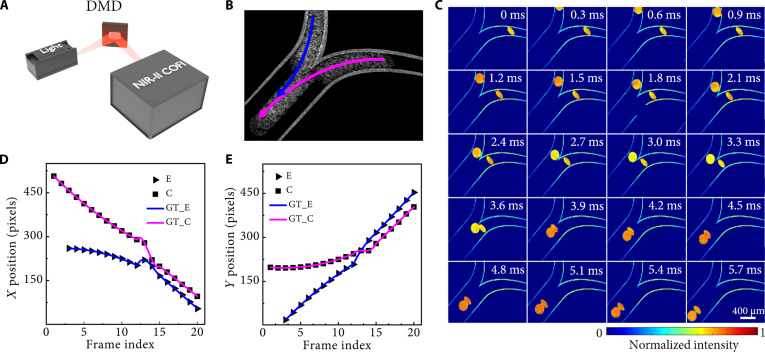 Figure 1
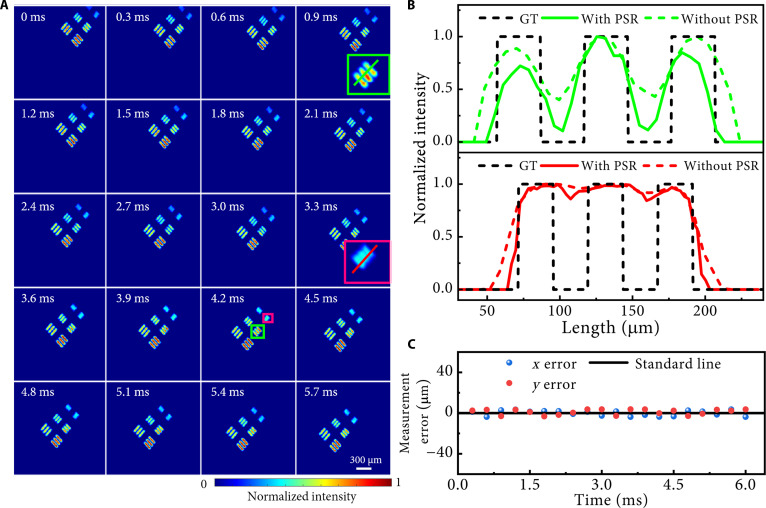 Figure 2
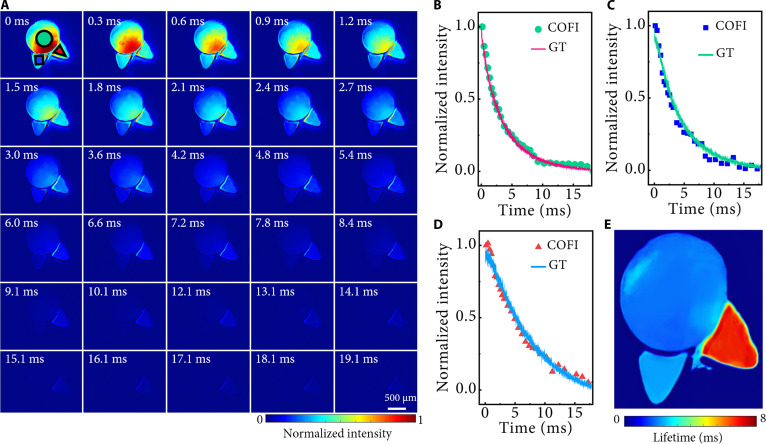 Figure 3
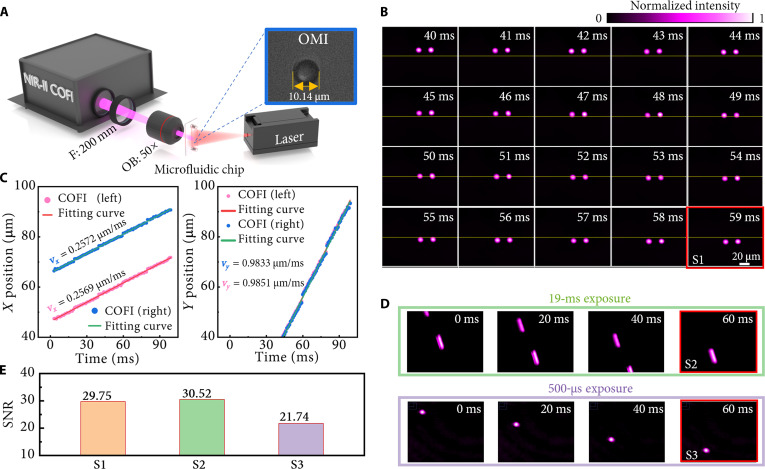 Figure 4
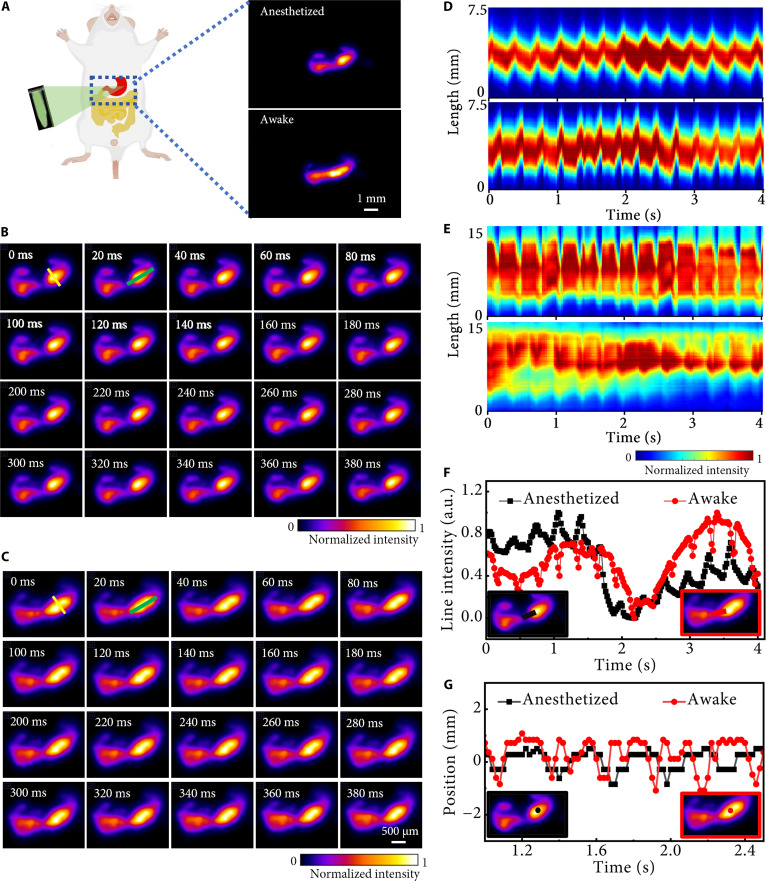 Figure 5
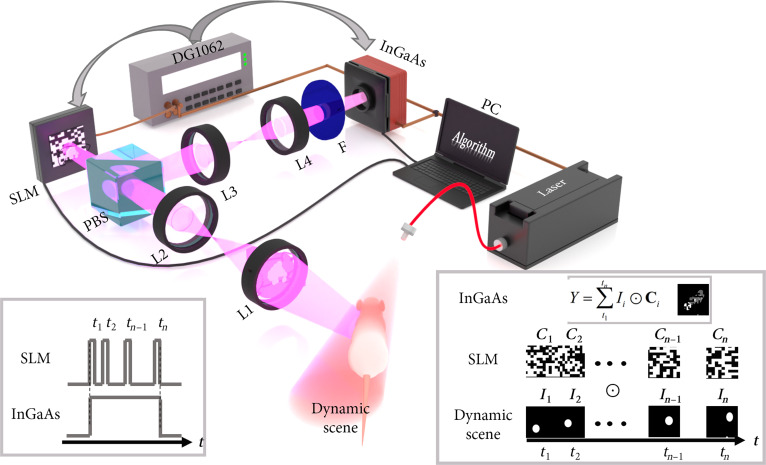 Figure 6
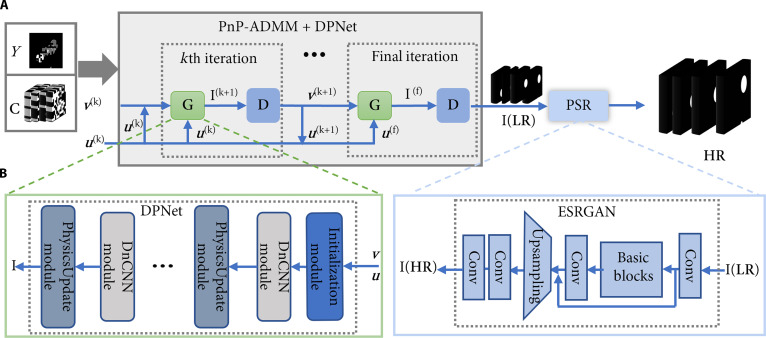 Figure 7
Peer Reviews
No public reviews on file for this paper yet. If you reviewed it on a platform where reviews are public (OpenReview, ICLR, NeurIPS, ICML), you can paste yours below so the community can read it here.
Videos
No videos yet. Explain this paper in a talk, walkthrough, or lecture? Add one.
Taxonomy
TopicsOptical Imaging and Spectroscopy Techniques · Nanoplatforms for cancer theranostics · Advanced Fluorescence Microscopy Techniques