Prediction-guided clustering for sepsis phenotyping: a retrospective cohort analysis
Paul A. Hilders, Lada Lijović, Martijn Otten, Laurens A. Biesheuvel, Floor Hiemstra, Marcel van der Kuil, Ameet R. Jagesar, P. J. Thoral, Ari Ercole, Paul W. G. Elbers

TL;DR
This study introduces a machine learning method to identify distinct sub-phenotypes of sepsis patients, which could lead to better personalized treatment strategies.
Contribution
A novel prediction-guided clustering approach that integrates deep learning with clinical outcomes to identify interpretable sepsis sub-phenotypes.
Findings
Six distinct sepsis sub-phenotypes with varying risk profiles and clinical presentations were identified.
The sub-phenotypes showed robust generalizability across different ICU datasets.
Reinforcement learning revealed different optimal treatment strategies for each sub-phenotype.
Abstract
Sepsis is a major cause of morbidity and mortality worldwide, with its heterogeneous and dynamically evolving clinical presentation complicating diagnosis, treatment, and prognosis. The identification of clinically meaningful sub-phenotypes within the sepsis population could help tailor interventions and improve outcomes. However, existing phenotyping studies have yielded inconsistent results with limited clinical utility. In this study, we propose a novel, guided machine-learning approach to identify clinically relevant sub-phenotypes within the sepsis condition by integrating deep representation learning with prediction-guided clustering to capture temporal disease trajectories. We trained a recurrent neural network-based encoder to generate compact, predictive representations of sepsis patients over time. During training, the encoder is guided by four auxiliary prediction objectives…
Genes, proteins, chemicals, diseases, species, mutations and cell lines named across the full text — each resolved to its canonical identifier and authoritative record.
Click any figure to enlarge with its caption.
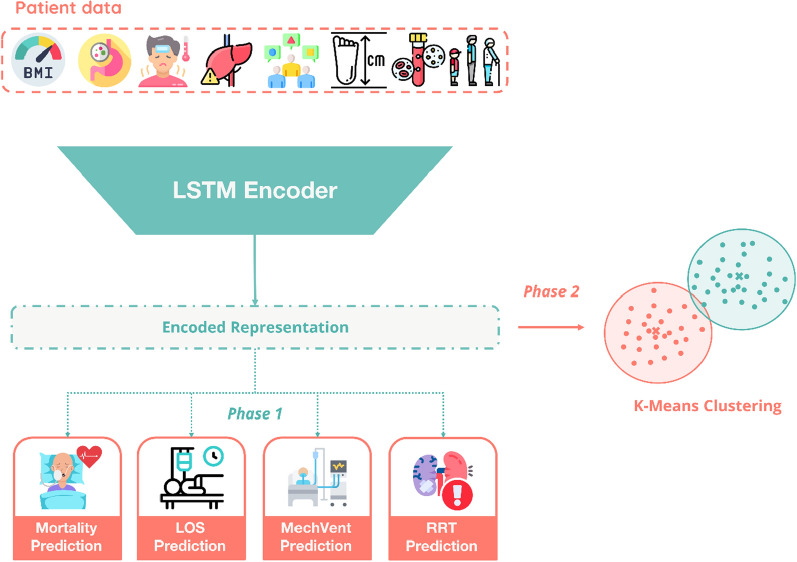 Figure 1
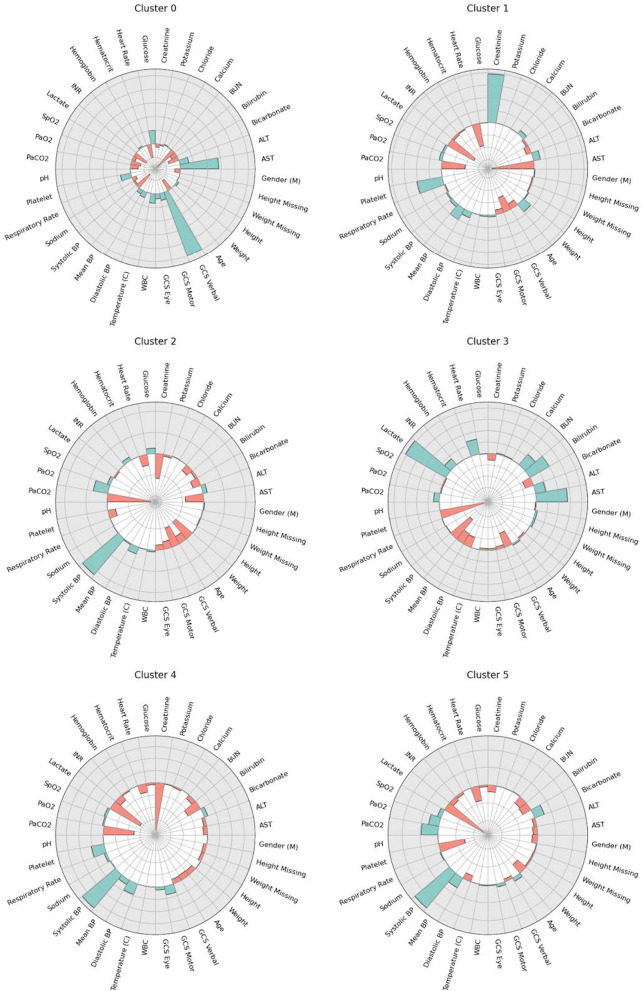 Figure 2
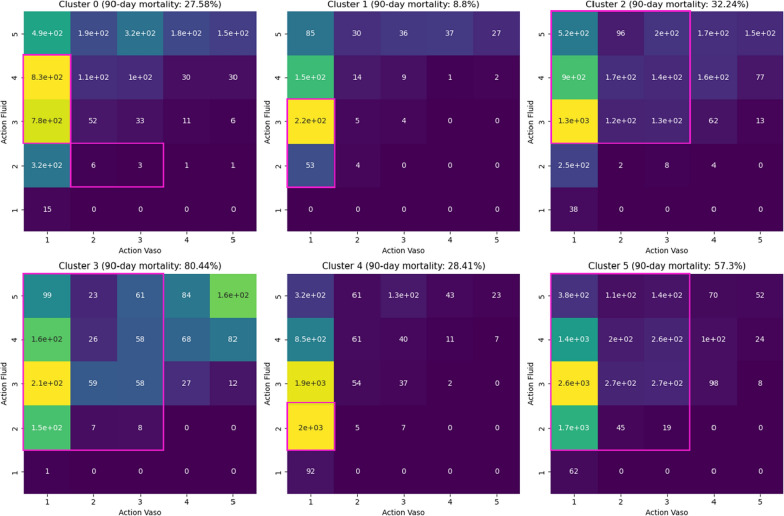 Figure 3
Peer Reviews
No public reviews on file for this paper yet. If you reviewed it on a platform where reviews are public (OpenReview, ICLR, NeurIPS, ICML), you can paste yours below so the community can read it here.
Videos
No videos yet. Explain this paper in a talk, walkthrough, or lecture? Add one.
Taxonomy
TopicsSepsis Diagnosis and Treatment · Machine Learning in Healthcare · Immune Response and Inflammation