Ultra-low-dose cone-beam CT for cleft and craniofacial deformity surgery: radiation reduction and clinical applicability
Pilvi Mäntynen, Juha Koivisto, Junnu Leikola, Touko Kaasalainen, Noemi Sipos, Arja Heliövaara, Jani Horelli, Jan Wolff, Niilo Lusila, Juho Suojanen

TL;DR
Ultra-low-dose CT scans can be used for surgical planning in craniofacial deformities without compromising accuracy, significantly reducing radiation exposure for patients.
Contribution
Demonstrates clinical viability of ultra-low-dose CBCT for virtual surgical planning in craniofacial surgery.
Findings
ULD CBCT significantly reduced effective radiation dose compared to standard-dose CBCT.
No significant differences in surgical implant fit between ULD and standard-dose CBCT.
Both protocols were clinically adequate for implant-based orthognathic planning.
Abstract
Patients with cleft lip and palate and other craniofacial deformities often require repeated imaging during growth, making radiation reduction a priority. Cone-beam computed tomography (CBCT) offers lower radiation exposure than conventional CT, and ultra-low-dose (ULD) protocols may further reduce dose while maintaining clinical usability for surgical planning. This retrospective cohort study evaluated whether ULD CBCT provides comparable clinical usability to standard-dose CBCT for virtual surgical planning (VSP) and patient-specific implant (PSI) design in children and young adults undergoing orthognathic surgery for pediatric-onset craniofacial conditions. Forty consecutive patients with pediatric-onset craniofacial anomalies (23 unilateral cleft lip and palate, 10 bilateral cleft lip and palate, and 7 other craniofacial deformities) who underwent PSI-based orthognathic surgery…
Genes, proteins, chemicals, diseases, species, mutations and cell lines named across the full text — each resolved to its canonical identifier and authoritative record.
Click any figure to enlarge with its caption.
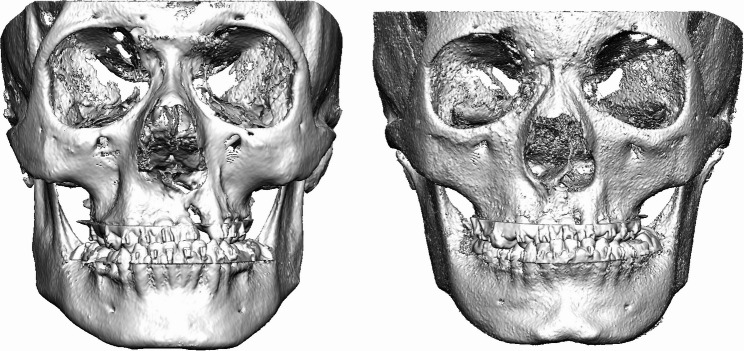 Figure 1
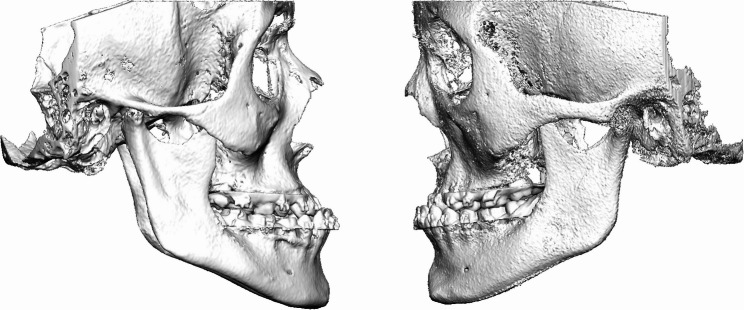 Figure 2
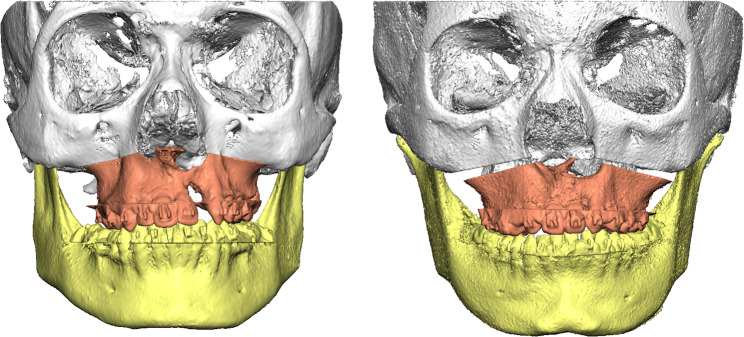 Figure 3
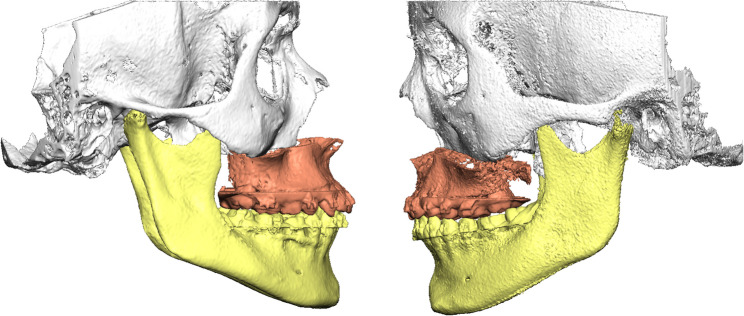 Figure 4
Peer Reviews
No public reviews on file for this paper yet. If you reviewed it on a platform where reviews are public (OpenReview, ICLR, NeurIPS, ICML), you can paste yours below so the community can read it here.
Videos
No videos yet. Explain this paper in a talk, walkthrough, or lecture? Add one.
Taxonomy
TopicsDental Radiography and Imaging · Radiation Dose and Imaging · Advanced X-ray and CT Imaging