Expediting Lithium Electrochemistry via a Bilayer for High-Rate Lithium Metal Batteries
Dongjoo Park, Dong-Wan Kim

TL;DR
A bilayer design for lithium metal batteries improves electrochemical stability and enables high-rate performance by preventing dendrite growth and ensuring smooth lithium deposition.
Contribution
The novel bilayer artificial solid-electrolyte interphase (ASEI) enables three-dimensional lithium plating and suppresses dendrite formation at high current densities.
Findings
The BL–Li anode achieves a low overpotential of ≈120 mV at 20 mA cm⁻² and 10 mAh cm⁻².
The bilayer design sustains smooth Li deposition and stripping for over 300 h under high-rate cycling.
The ASEI-enabled electrode demonstrates outstanding rate capability and long-term cyclability in full Li metal battery cells.
Abstract
The bilayer combines an electron‐conductive framework and an ion‐conductive layer that facilitates Li⁺ transport, effectively separating charge pathways for enhanced electrochemical stability.Porous fibers with uniformly dispersed Ag nanoparticles provide nucleation sites for uniform Li plating and a 3D network that suppresses dendrite growth.The BL–Li anode shows a low overpotential of ≈120 mV at 20 mA cm⁻² and 10 mAh cm⁻², sustaining smooth Li deposition and stripping for over 300 h under high‐rate cycling. The bilayer combines an electron‐conductive framework and an ion‐conductive layer that facilitates Li⁺ transport, effectively separating charge pathways for enhanced electrochemical stability. Porous fibers with uniformly dispersed Ag nanoparticles provide nucleation sites for uniform Li plating and a 3D network that suppresses dendrite growth. The BL–Li anode shows a low…
Genes, proteins, chemicals, diseases, species, mutations and cell lines named across the full text — each resolved to its canonical identifier and authoritative record.
Click any figure to enlarge with its caption.
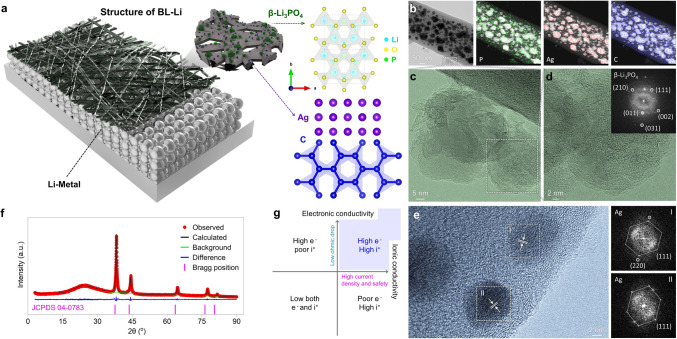 Figure 1
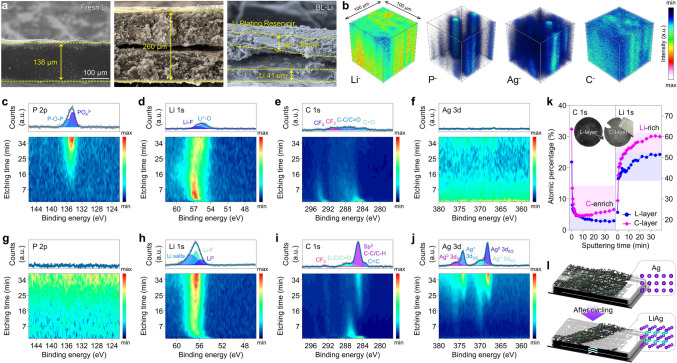 Figure 2
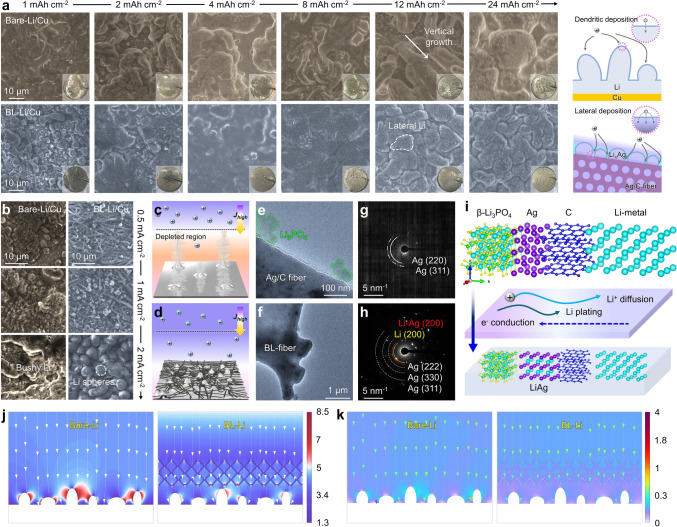 Figure 3
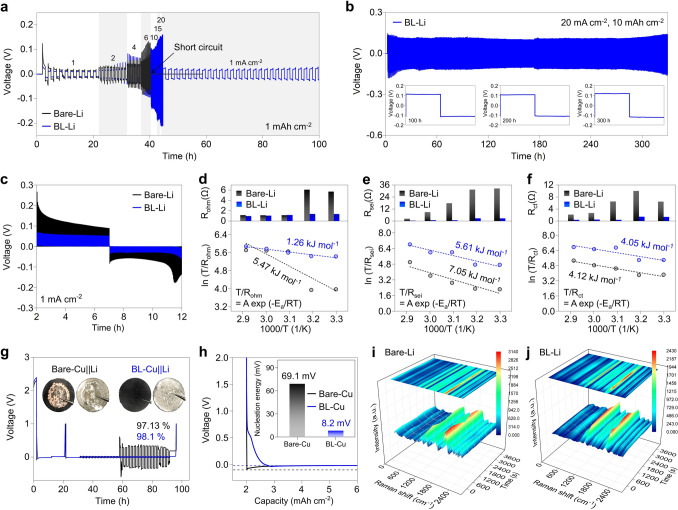 Figure 4
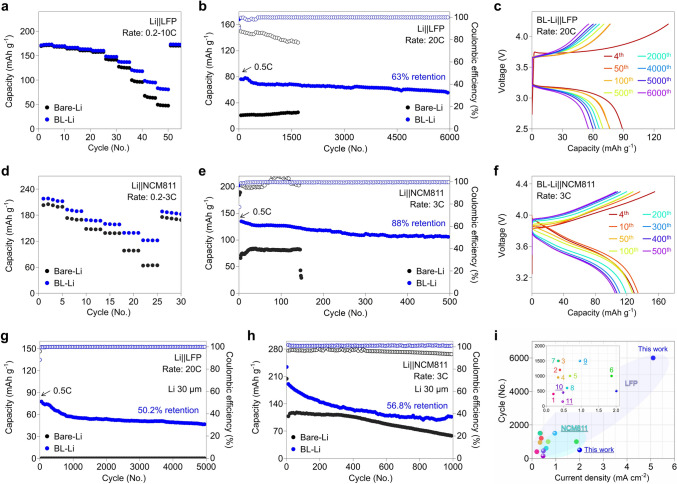 Figure 5
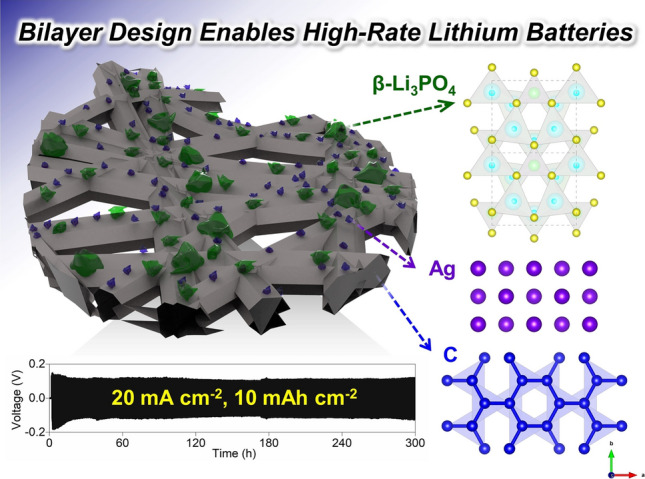 Figure 6
Peer Reviews
No public reviews on file for this paper yet. If you reviewed it on a platform where reviews are public (OpenReview, ICLR, NeurIPS, ICML), you can paste yours below so the community can read it here.
Videos
No videos yet. Explain this paper in a talk, walkthrough, or lecture? Add one.
Taxonomy
TopicsAdvanced Battery Materials and Technologies · Advancements in Battery Materials · Advanced Battery Technologies Research