Changes in abdominal muscles’ thickness from rest to pelvic floor isolated contraction in healthy women
Bruna Bohrer Mozzaquatro, Francesca Chaida Sonda, Fábio Juner Lanferdini, Amanda Zanella de Mello, Suzana Mallmann, Andriéli Aparecida Salbego Lançanova, Luciana Laureano Paiva, Marco Aurélio Vaz, José Geraldo Lopes Ramos

TL;DR
This study shows that contracting pelvic floor muscles significantly thickens the transversus abdominis muscle in healthy women.
Contribution
The novel finding is that PFM contraction reliably activates the transversus abdominis but not other abdominal muscles.
Findings
Transversus abdominis muscle thickness increased significantly during PFM contraction.
Other abdominal muscles showed no significant thickness change during PFM contraction.
Measurements showed excellent reliability between different analysts.
Abstract
To compare muscle thickness of rectus abdominis, internal oblique, external oblique, and transversus abdominis between rest and PFM isolated contraction. Cross-sectional reliability study. Muscle thickness from rectus abdominis, internal oblique, external oblique and transversus abdominis was obtained from 27 physically active women (age: 26.41 ± 0.77 years) with ultrasound imaging at rest and during three maximum PFM contractions. Two independent analyzers, blinded to the conditions, analyzed 3 images from each muscle and condition using Image-J 1.42q software. Muscle thickness was measured three times on each image. Differences between conditions (rest and PFM contraction) were analyzed with a Student t-test. To verify the outcome measures’ inter-analyzer reliability, the intraclass correlation coefficient (ICC), standard error of the measurement (SEM), and minimum detectable change…
Genes, proteins, chemicals, diseases, species, mutations and cell lines named across the full text — each resolved to its canonical identifier and authoritative record.
Click any figure to enlarge with its caption.
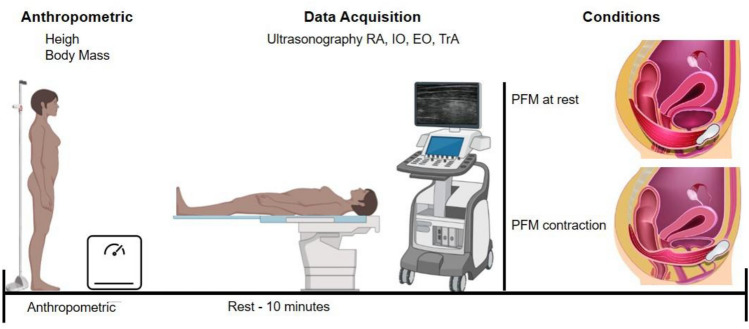 Figure 1
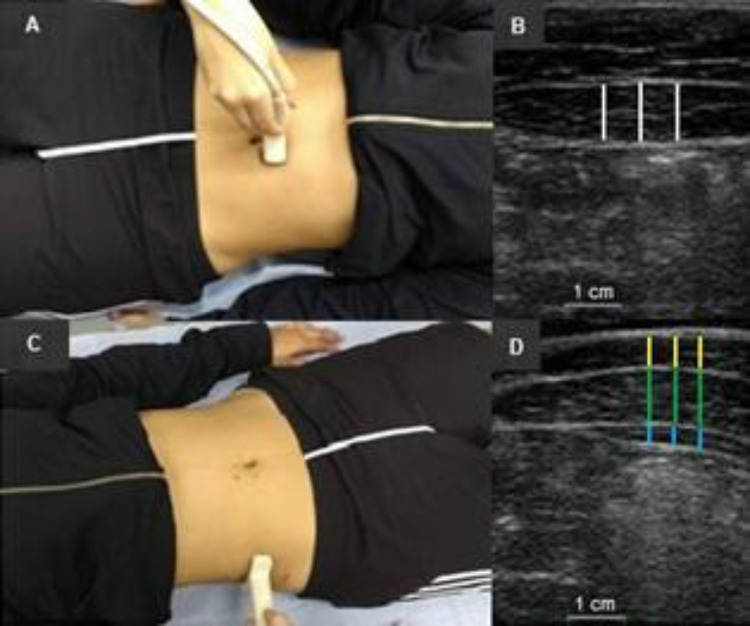 Figure 2
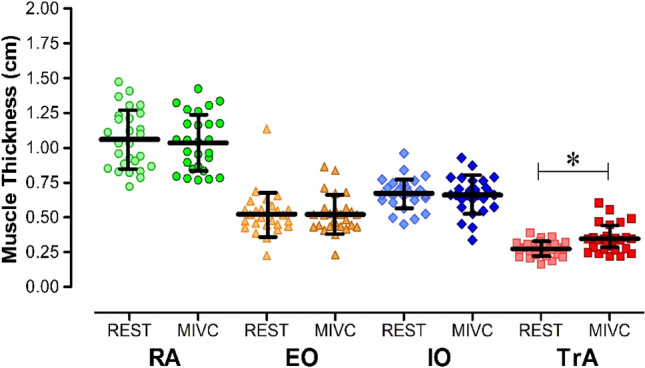 Figure 3
Peer Reviews
No public reviews on file for this paper yet. If you reviewed it on a platform where reviews are public (OpenReview, ICLR, NeurIPS, ICML), you can paste yours below so the community can read it here.
Videos
No videos yet. Explain this paper in a talk, walkthrough, or lecture? Add one.
Taxonomy
TopicsHernia repair and management · Myofascial pain diagnosis and treatment · Musculoskeletal pain and rehabilitation