Global patterns and drivers of soil microbial nitrogen and phosphorus use efficiency
Decai Gao, Yakov Kuzyakov, Manuel Delgado-Baquerizo, Josep Peñuelas, Daryl L. Moorhead, Robert L. Sinsabaugh, Xiaofeng Xu, Lifei Sun, Huimin Wang, Liang Kou, Xiaoli Fu, Xiaoqing Dai, Shengwang Meng, Ziping Liu, Siyu Wang, Frank Hagedorn, Matthias C. Rillig, Yongxing Cui

TL;DR
This study reveals global patterns in soil microbes' efficiency in using nitrogen and phosphorus, finding nitrogen use is nearly double phosphorus use, with soil carbon and climate playing key roles.
Contribution
The study quantifies global patterns of microbial nitrogen and phosphorus use efficiency and identifies soil organic carbon as a key driver.
Findings
Microbial nitrogen use efficiency (NUE) is nearly twice phosphorus use efficiency (PUE) globally.
Higher soil organic carbon is associated with greater nutrient use efficiency.
Tundra and boreal forest soils have significantly lower NUE compared to other regions.
Abstract
While nutrient use efficiency of soil microorganisms, the proportion of assimilated nutrients allocated into biosynthesis rather than invested in mineralization, is a critical microbial functional trait, its global patterns remain poorly quantified. Here, we estimate microbial nitrogen use efficiency (NUE, n = 2012) and phosphorus use efficiency (PUE, n = 3419) across terrestrial ecosystems using the ecoenzymatic stoichiometric approach. Globally, NUE (mean 0.60) is nearly twice as high as PUE (0.35). Soil organic carbon (SOC) is the strongest predictor of both, with higher SOC associated with greater nutrient use efficiency. Spatial upscaling shows that tundra and boreal forest soils have markedly lower NUE than other regions, suggesting high nitrogen investments in nutrient acquisition in cold ecosystems, whereas PUE is similar across biomes, implying pervasively low phosphorus…
Genes, proteins, chemicals, diseases, species, mutations and cell lines named across the full text — each resolved to its canonical identifier and authoritative record.
Click any figure to enlarge with its caption.
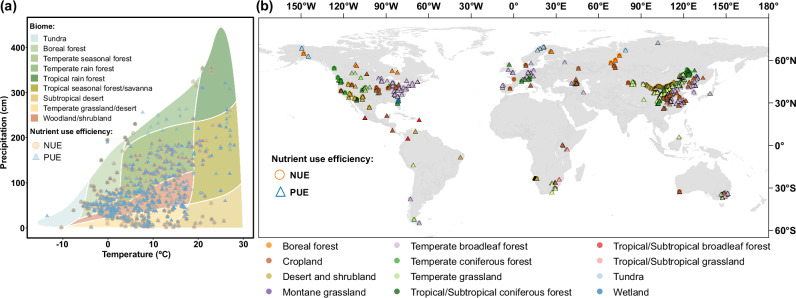 Figure 1
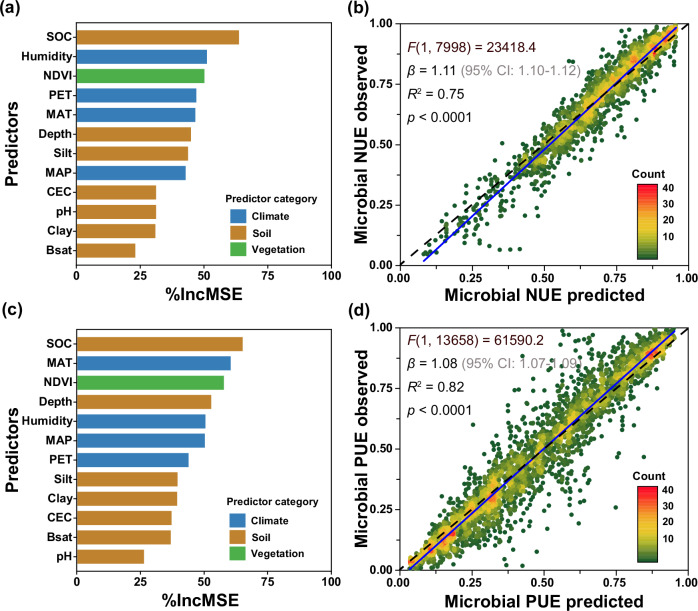 Figure 2
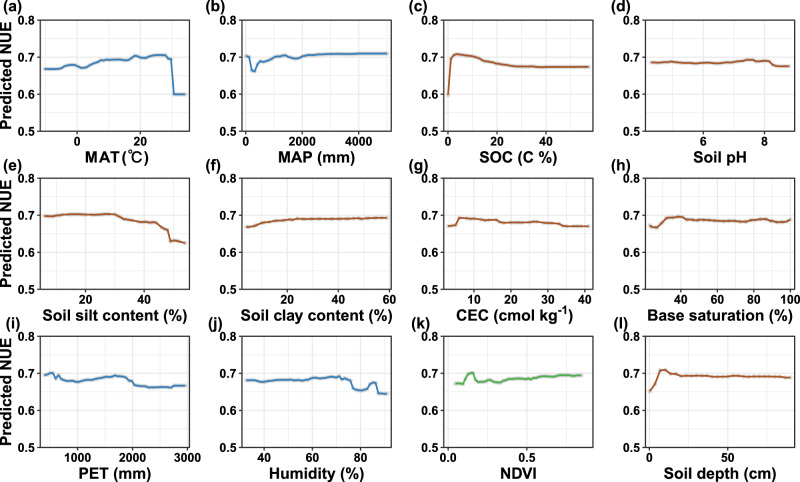 Figure 3
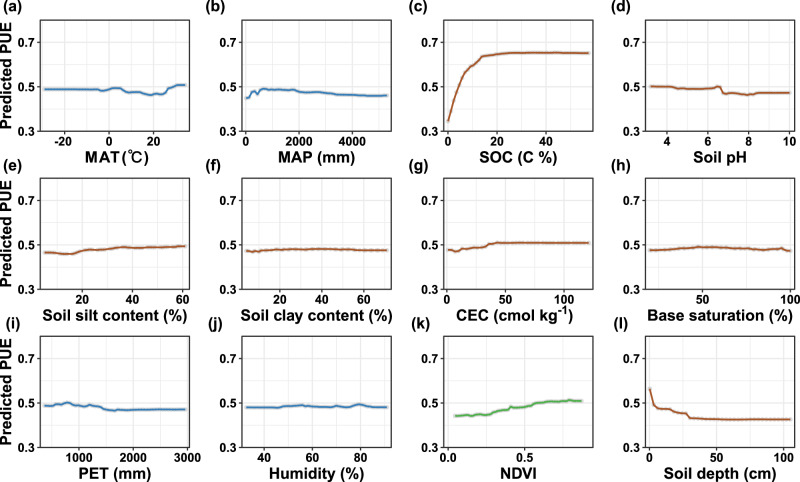 Figure 4
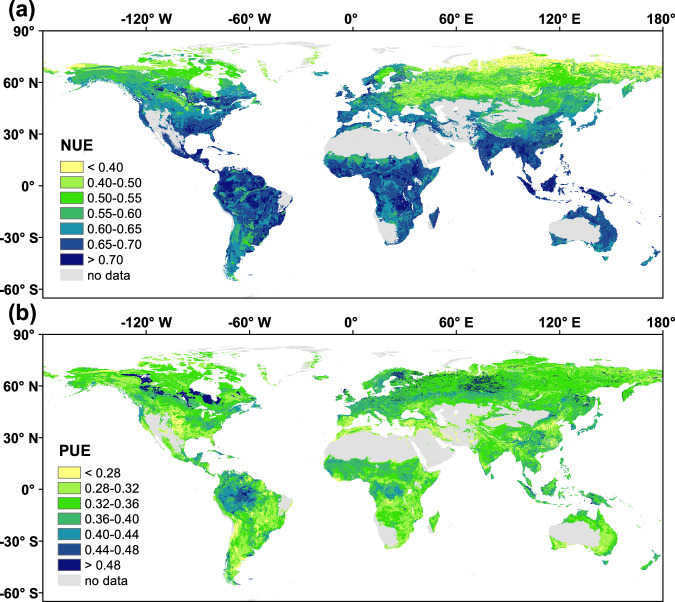 Figure 5
Peer Reviews
No public reviews on file for this paper yet. If you reviewed it on a platform where reviews are public (OpenReview, ICLR, NeurIPS, ICML), you can paste yours below so the community can read it here.
Videos
No videos yet. Explain this paper in a talk, walkthrough, or lecture? Add one.
Taxonomy
TopicsSoil Carbon and Nitrogen Dynamics · Polar Research and Ecology · Microbial Community Ecology and Physiology