Novel drugs targeting genetic variants: current applications and future prospects in heart failure treatment
Xiang Li, Suwen Bai, Yumei Luo

TL;DR
This paper reviews new heart failure drugs that target genetic variants, comparing their mechanisms and clinical outcomes.
Contribution
The novelty lies in analyzing recent drugs targeting genetic mutations in heart failure and their clinical implications.
Findings
New drugs like SGLT2 inhibitors and ARNIs show improved outcomes in heart failure patients.
Real-world data supports the clinical value of these novel therapies.
Challenges remain in fully understanding the genetic-drug interactions and long-term effects.
Abstract
Chronic heart failure (HF) is a common and frequently occurring disease worldwide, and its traditional treatment methods are undergoing earth-shaking changes. This study analyzes novel drugs targeting genetic mutations that have been launched in recent years, such as sodium-glucose co-transporter 2 inhibitors, angiotensin receptor neprilysin inhibitors, soluble guanylate cyclase, cardiac myosin activators, potassium channel openers, and vasopressin receptor antagonists, compares the drug action mechanisms, key clinical trial data in the research, and the application of real-world research, and discusses the clinical value and existing problems of new drugs.
Genes, proteins, chemicals, diseases, species, mutations and cell lines named across the full text — each resolved to its canonical identifier and authoritative record.
Click any figure to enlarge with its caption.
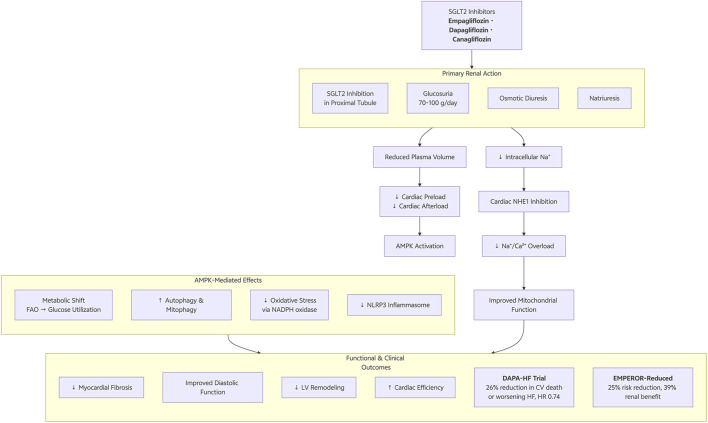 Figure 1
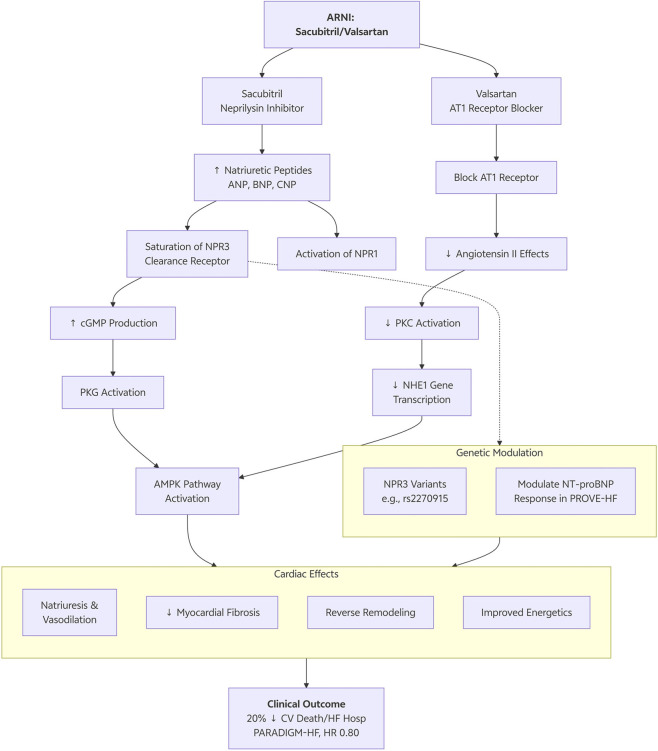 Figure 2
Peer Reviews
No public reviews on file for this paper yet. If you reviewed it on a platform where reviews are public (OpenReview, ICLR, NeurIPS, ICML), you can paste yours below so the community can read it here.
Videos
No videos yet. Explain this paper in a talk, walkthrough, or lecture? Add one.
Taxonomy
TopicsHeart Failure Treatment and Management · Renin-Angiotensin System Studies · Diabetes Treatment and Management