Multimodal machine learning for predicting postoperative functional outcomes in surgically treated supratentorial deep intracerebral hemorrhage: a prospective multicenter study
Min Cui, Yanyi Liu, Qi He, Weiming Xiong, Yang Liu, Lei Xu, Yongbing Deng, Xingwei Tan

TL;DR
This study developed a machine learning model combining clinical and biological data to predict recovery outcomes after brain hemorrhage surgery, showing strong performance and interpretability.
Contribution
A novel multimodal machine learning model using clinical, imaging, physiological, and biomarker data for predicting postoperative outcomes in sICH patients.
Findings
A Random Forest model achieved an AUC of 0.883 in predicting functional outcomes after surgery for intracerebral hemorrhage.
Admission GCS and hematoma volume were identified as the most important predictors by SHAP analysis.
The model included eight key predictors selected via LASSO, including biomarkers like TNF-α and GFAP.
Abstract
Early prediction of functional outcomes after surgery for spontaneous supratentorial deep intracerebral hemorrhage (sICH) remains difficult. This study developed and validated multimodal machine-learning models incorporating clinical, imaging, physiological, and biomarker data, including temperature management strategies, and explored interpretability using SHAP. This prospective multicenter cohort enrolled 285 surgically treated sICH patients. Outcome was defined as favorable (mRS 0–3) vs. unfavorable (mRS 4–6). Data were split by stratified random sampling into a training set (n = 199) and a test set (n = 86). LASSO with 10-fold cross-validation (1-SE rule) selected key predictors. Five classifiers (Random Forest, neural network, decision tree, k-nearest neighbors, naïve Bayes) were trained with 10-fold cross-validation and evaluated on the test set. Performance was assessed using…
Genes, proteins, chemicals, diseases, species, mutations and cell lines named across the full text — each resolved to its canonical identifier and authoritative record.
Click any figure to enlarge with its caption.
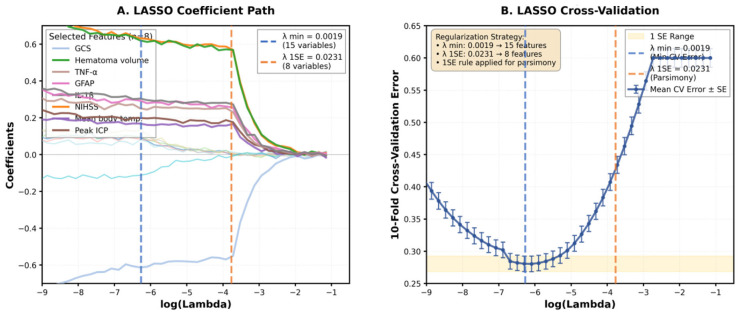 Figure 1
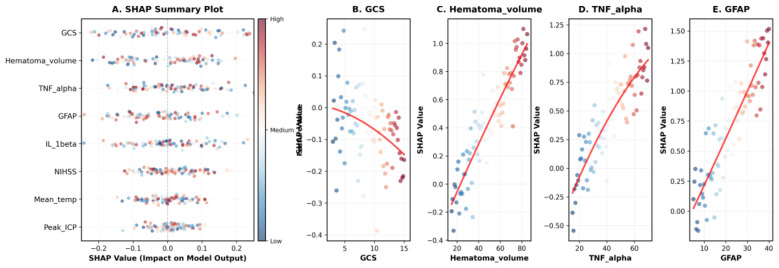 Figure 2
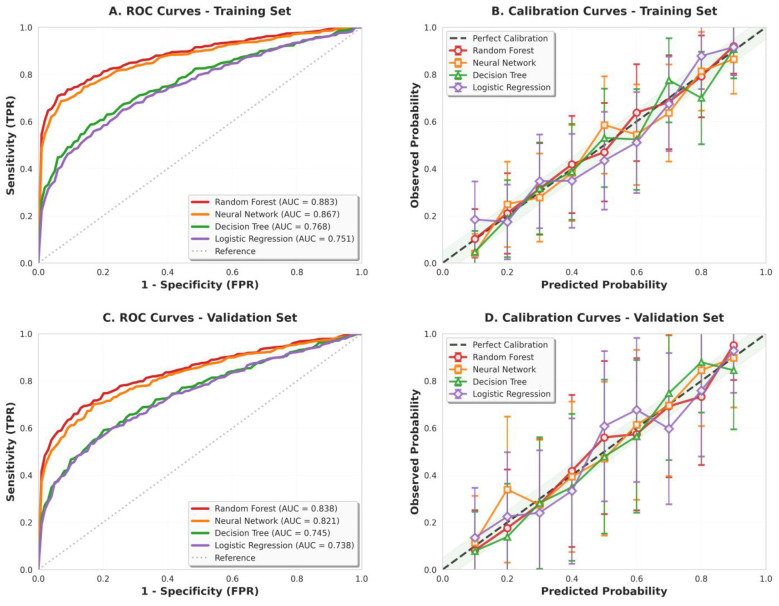 Figure 3
Peer Reviews
No public reviews on file for this paper yet. If you reviewed it on a platform where reviews are public (OpenReview, ICLR, NeurIPS, ICML), you can paste yours below so the community can read it here.
Videos
No videos yet. Explain this paper in a talk, walkthrough, or lecture? Add one.
Taxonomy
TopicsIntracerebral and Subarachnoid Hemorrhage Research · Traumatic Brain Injury and Neurovascular Disturbances · Acute Ischemic Stroke Management