Machine learning approaches for data-driven hydrocarbon bioaugmentation and phytoremediation: the role of multi-omics insights
Ugochukwu Chukwuma Okafor, Saeed M. Alghamdi, Lorna Anguilano, Yang Yang

TL;DR
This paper reviews how machine learning and multi-omics data can improve hydrocarbon cleanup using microbes and plants.
Contribution
The paper introduces novel integration of ML and multi-omics for optimizing bioaugmentation and phytoremediation of PAHs.
Findings
ML models can predict effective microbial strains and plant species for hydrocarbon degradation.
Multi-omics data combined with ML reveals key genes and metabolic pathways in bioremediation.
Adaptive ML models and real-time monitoring are needed for large-scale bioremediation success.
Abstract
Hydrocarbon contamination, particularly with polycyclic aromatic hydrocarbons (PAHs), poses a significant environmental challenge due to its persistence and carcinogenic effects on ecosystems and human health globally. This review explores how ML algorithms can enhance the efficiency of bio-augmentation and phytoremediation through predictive modeling, real-time optimization of microbial consortia, and plant species selection. Traditional bioremediation methods, such as bioaugmentation and phytoremediation, are characterized by slow degradation rates and sub-optimal performance in complex, multi-contaminant environmental milieus. The use of machine learning (ML) models with multi-omics data presents an advanced predictive approach to optimizing bioremediation processes by providing a systematic understanding of microbial and plant-mediated hydrocarbon degradation strategies and…
Genes, proteins, chemicals, diseases, species, mutations and cell lines named across the full text — each resolved to its canonical identifier and authoritative record.
Click any figure to enlarge with its caption.
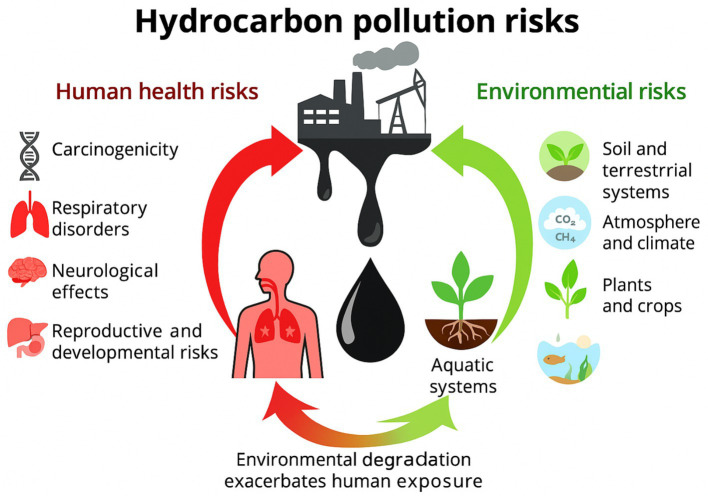 Figure 1
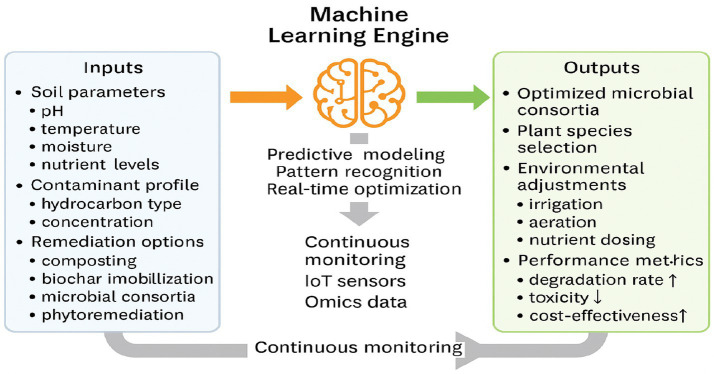 Figure 2
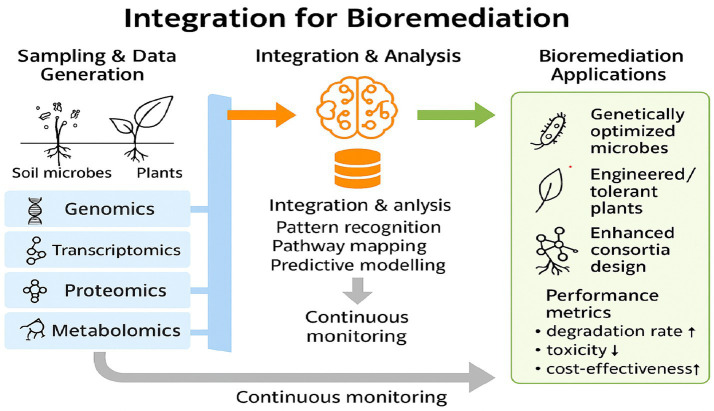 Figure 3
 Figure 4
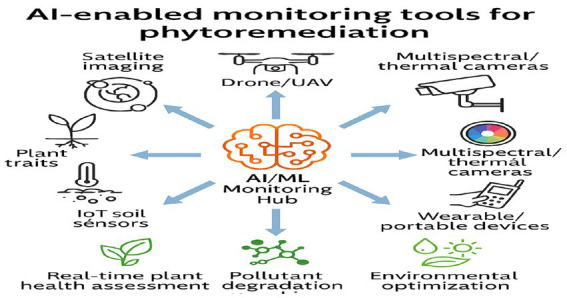 Figure 5
Peer Reviews
No public reviews on file for this paper yet. If you reviewed it on a platform where reviews are public (OpenReview, ICLR, NeurIPS, ICML), you can paste yours below so the community can read it here.
Videos
No videos yet. Explain this paper in a talk, walkthrough, or lecture? Add one.
Taxonomy
TopicsMicrobial bioremediation and biosurfactants · Genomics and Phylogenetic Studies · Enzyme-mediated dye degradation