Beyond blood pressure: the renin-angiotensin system as an innovative driver and therapeutic target in pathological scarring
Bang-Hui Shi, Xin-Ge Zhang, Qing-Qing Fang, Kai Xu, Xiao-Ling Chen, Wei-Qiang Tan, Shou-Jie Wang

TL;DR
This paper reviews how the renin-angiotensin system contributes to scar formation and explores its potential as a target for new treatments.
Contribution
The paper highlights the novel therapeutic potential of targeting the local RAS in pathological scarring using topical RAS inhibitors.
Findings
The Ang II/AT1R axis promotes fibroblast proliferation and ECM deposition in scar formation.
RAS inhibitors like ACEIs and ARBs show promise in treating fibrotic scarring, especially in topical forms.
Next-generation RAS therapies and precision medicine approaches are needed for clinical adoption.
Abstract
Pathological scarring, a fibroproliferative disorder, imposes a substantial burden on affected individuals. This review explores the pivotal role of the local cutaneous renin-angiotensin system (RAS) in the pathogenesis of pathological scarring. We summarize evidence demonstrating how the pro-fibrotic angiotensin II/angiotensin II type 1 receptor (Ang II/AT1R) axis drives scar formation by promoting fibroblast proliferation, inflammation, and excessive extracellular matrix (ECM) deposition. Concurrently, we examine the interactions between RAS and other fibrotic pathways, as well as inflammation and reactive oxygen species (ROS). Importantly, the review highlights the significant therapeutic potential of targeting this pathway with RAS inhibitors—specifically angiotensin-converting enzyme inhibitors (ACEIs) and angiotensin receptor blockers (ARBs)—particularly in topical formulations.…
Genes, proteins, chemicals, diseases, species, mutations and cell lines named across the full text — each resolved to its canonical identifier and authoritative record.
Click any figure to enlarge with its caption.
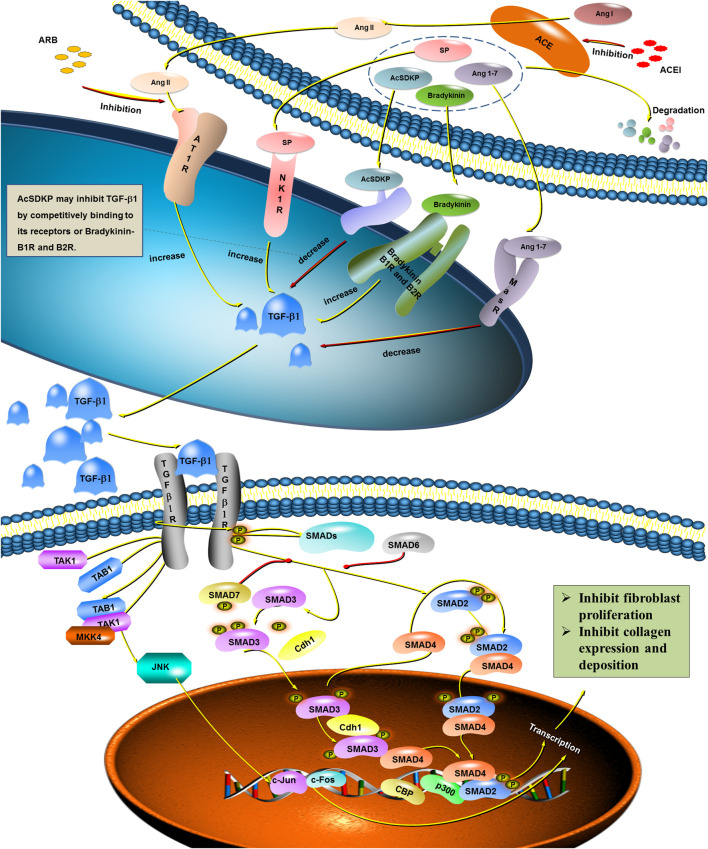 Figure 1
 Figure 2
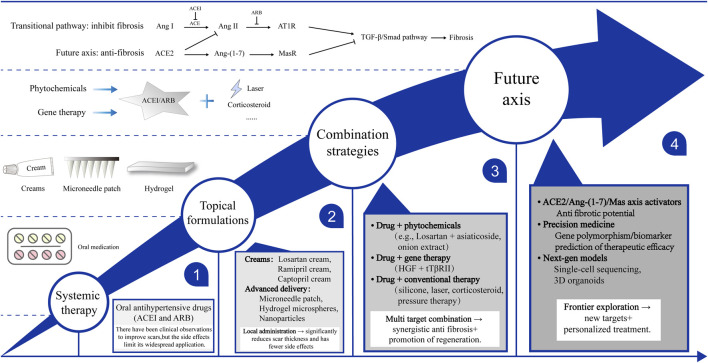 Figure 3
Peer Reviews
No public reviews on file for this paper yet. If you reviewed it on a platform where reviews are public (OpenReview, ICLR, NeurIPS, ICML), you can paste yours below so the community can read it here.
Videos
No videos yet. Explain this paper in a talk, walkthrough, or lecture? Add one.
Taxonomy
TopicsRenin-Angiotensin System Studies · Mast cells and histamine · Eosinophilic Disorders and Syndromes