Pyrimidine nucleoside: inspiration for novel antimicrobial agent
Binjie Xu, Pengyu Li, Jiping Liu, Mingkai Li

TL;DR
This review explores how pyrimidine nucleosides can be modified to create new antimicrobial agents, addressing challenges in drug development and resistance.
Contribution
The paper introduces a systematic framework for developing pyrimidine nucleosides by integrating structure-activity and metabolic mechanism research.
Findings
Pyrimidine nucleosides require intracellular phosphorylation to become active antibacterial agents.
Structural modifications like lipidation and selenylation influence antibacterial activity and metabolic stability.
Clinical translation barriers include host toxicity and narrow antimicrobial spectrum.
Abstract
Antimicrobial resistance (AMR) is a worsening global health crisis, with drug repurposing emerging as a key mitigation strategy. Pyrimidine nucleosides are promising antibacterial scaffolds due to their easily modifiable structures and multi-therapeutic potential. However, related research faces challenges, including fragmented structure-activity relationships (SAR), unclear metabolism-efficacy correlations, and limited clinical translation strategies. This review categorizes these derivatives into cytosine and uracil/thymine analogs. It analyzes how lipidation, selenylation, and other structural modifications regulate antibacterial activity by modulating target binding, membrane permeability, and metabolic stability. Crucially, it elucidates their metabolic activation mechanism. As prodrugs, these derivatives require intracellular enzymatic phosphorylation to form active metabolites…
Genes, proteins, chemicals, diseases, species, mutations and cell lines named across the full text — each resolved to its canonical identifier and authoritative record.
Click any figure to enlarge with its caption.
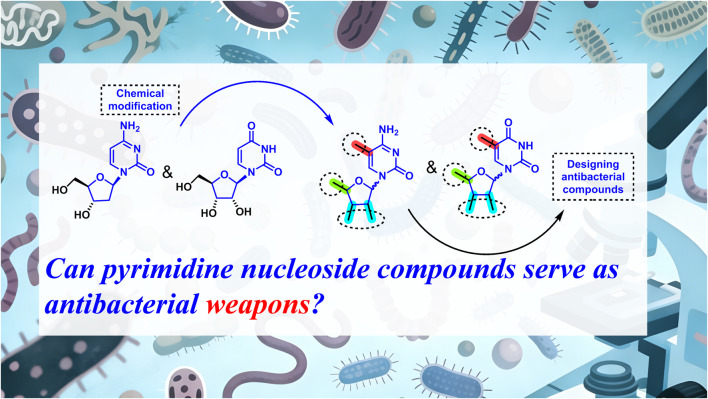 Figure 1
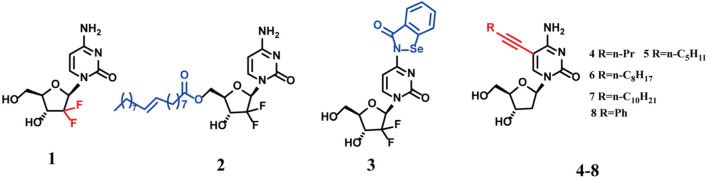 Figure 2
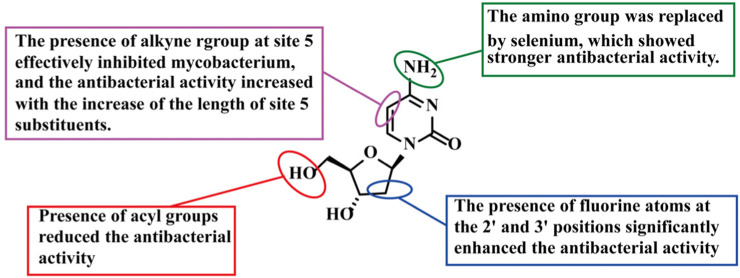 Figure 3
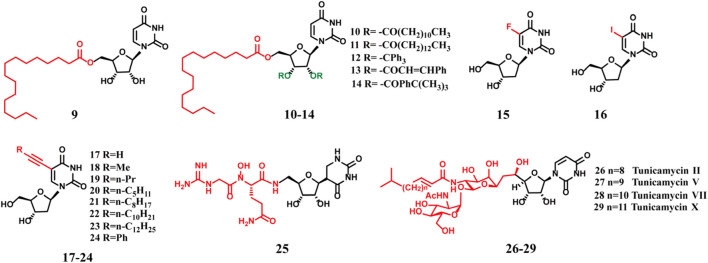 Figure 4
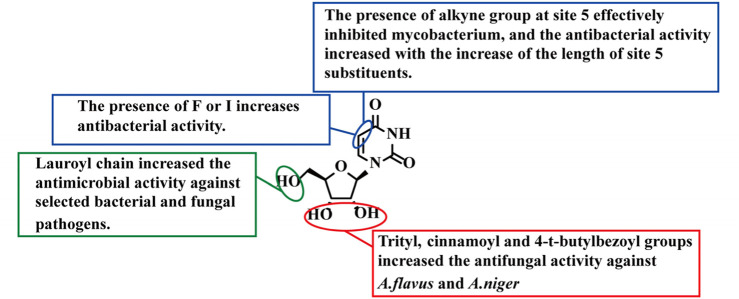 Figure 5
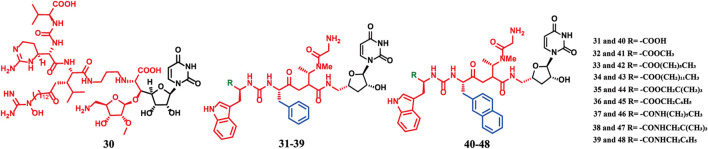 Figure 6
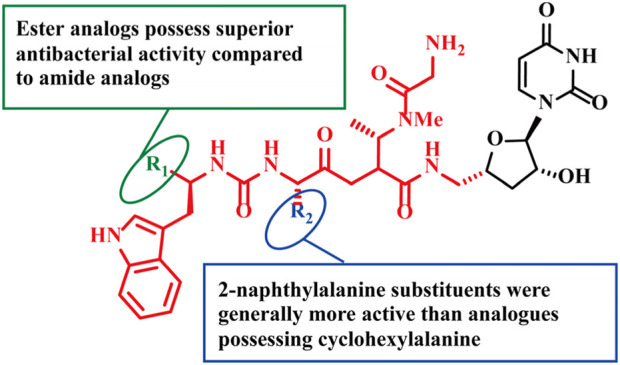 Figure 7
 Figure 8
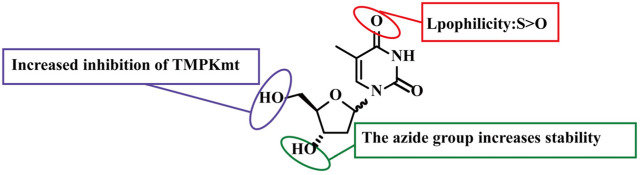 Figure 9
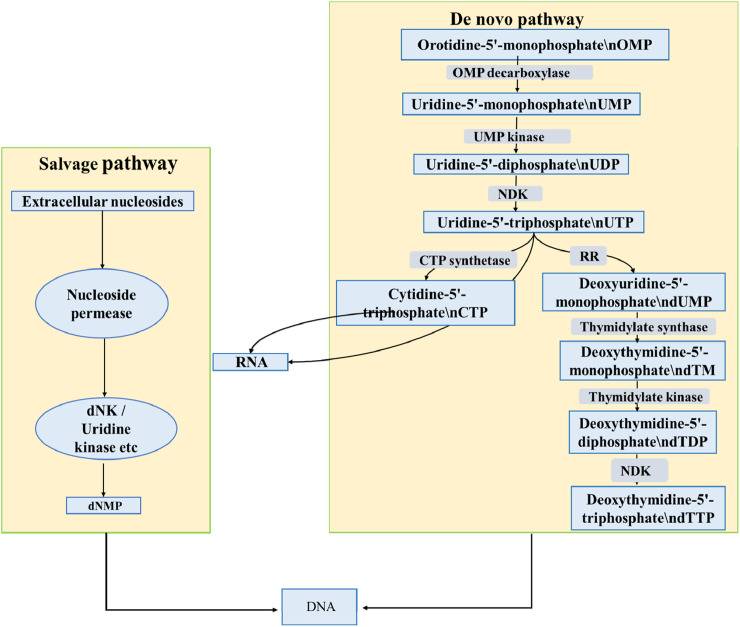 Figure 10
Peer Reviews
No public reviews on file for this paper yet. If you reviewed it on a platform where reviews are public (OpenReview, ICLR, NeurIPS, ICML), you can paste yours below so the community can read it here.
Videos
No videos yet. Explain this paper in a talk, walkthrough, or lecture? Add one.
Taxonomy
TopicsBiochemical and Molecular Research · HIV/AIDS drug development and treatment · Sirtuins and Resveratrol in Medicine