Serum proteomics reveals biomarkers for diagnosis, stratification, and mechanistic insights into cerebral microbleeds
Wu-meng Yin, Liu-chang He, Guang-yi Han, An-ming Li, Hang-hang Zhu, Yuan Cao, Xin-li Xue, Lei Zhang, Chang-he Shi, Yu-ming Xu, Yun-chao Wang

TL;DR
This study identifies blood protein biomarkers for detecting and understanding cerebral microbleeds, offering a non-invasive diagnostic tool and insights into their causes.
Contribution
The study is the first to provide a comprehensive serum proteomic profile of CMBs and identifies novel biomarkers for diagnosis and subtype differentiation.
Findings
151 serum proteins were found to differ between CMB patients and healthy controls.
Five proteins (MMP3, EFEMP1, TIMP1, UMOD, UBA52) were identified as candidate biomarkers with strong validation performance.
Subtype-specific biomarkers (RCN1, NEO1, APLP1) effectively distinguished lobar from deep CMBs with high diagnostic accuracy.
Abstract
Cerebral microbleeds (CMBs) are small vascular lesions detectable on MRI and are associated with increased stroke risk and cognitive decline. However, imaging-based diagnosis is limited by cost and accessibility. This study aimed to identify serum protein biomarkers for early CMB diagnosis and to elucidate molecular mechanisms underlying CMB subtypes. We enrolled 43 patients with MRI confirmed CMBs and 38 healthy controls. Serum proteomic profiling used high performance liquid chromatography coupled with tandem mass spectrometry. Differential protein expression and pathway enrichment analyses were performed. Biomarkers were selected using LASSO, support vector machine recursive feature elimination, and random forest algorithms. Validation employed enzyme linked immunosorbent assay (n = 60) and Western blotting (n = 8). We identified 151 proteins that differed between CMB and control…
Genes, proteins, chemicals, diseases, species, mutations and cell lines named across the full text — each resolved to its canonical identifier and authoritative record.
Click any figure to enlarge with its caption.
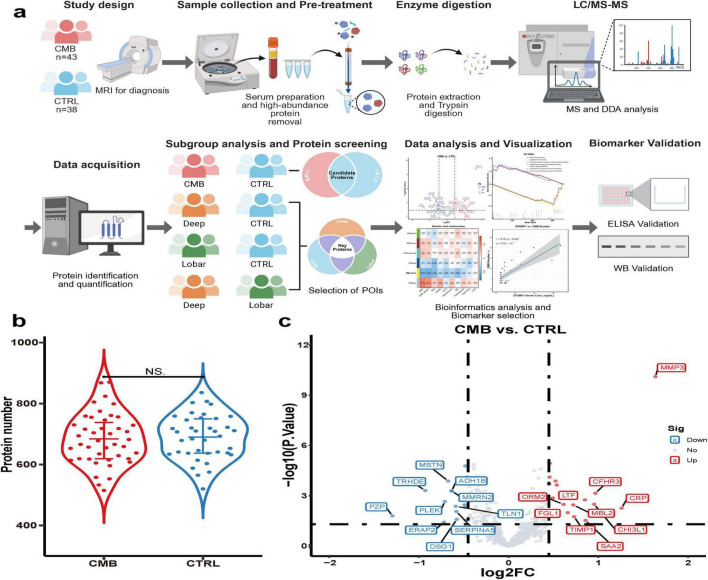 Figure 1
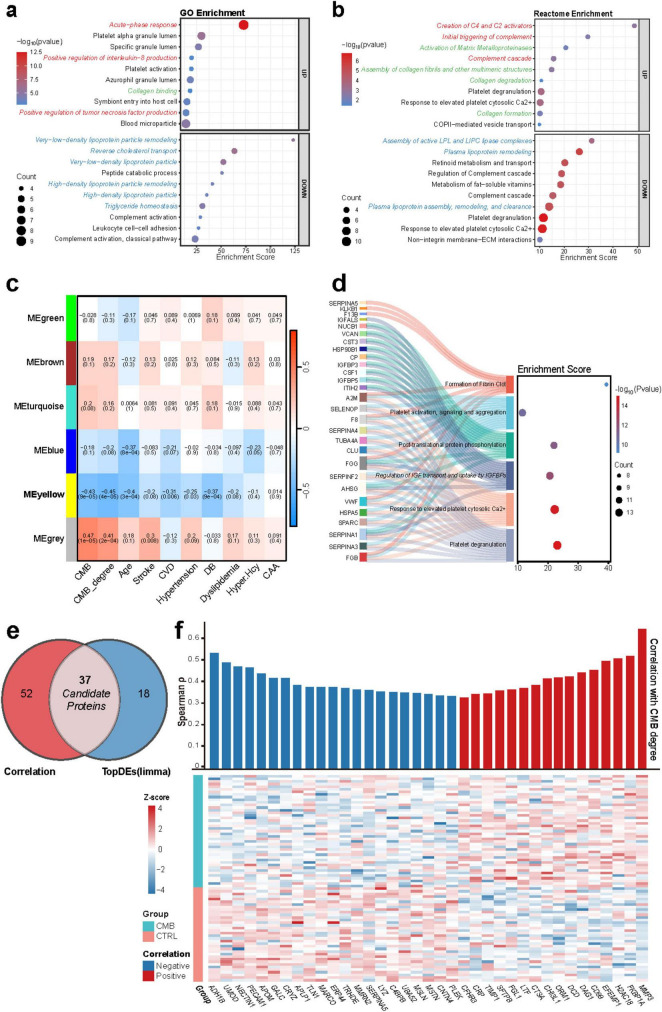 Figure 2
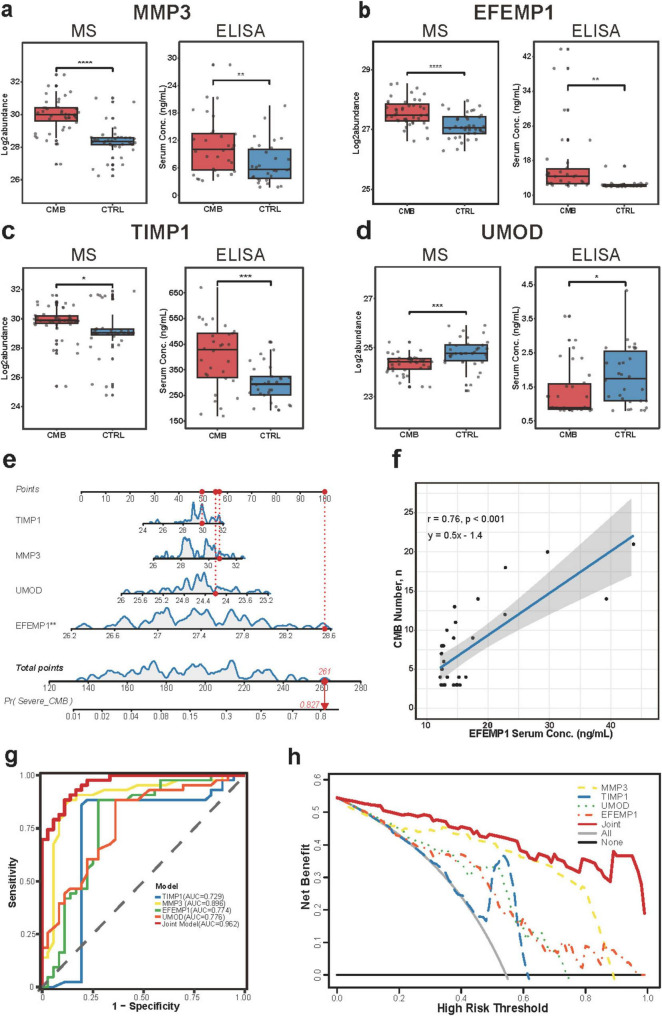 Figure 3
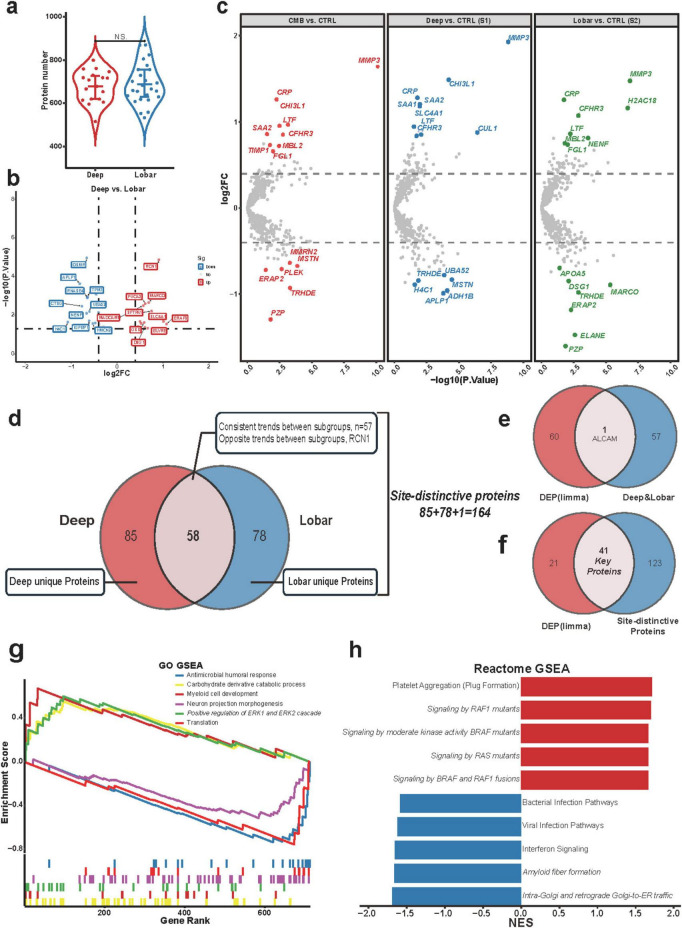 Figure 4
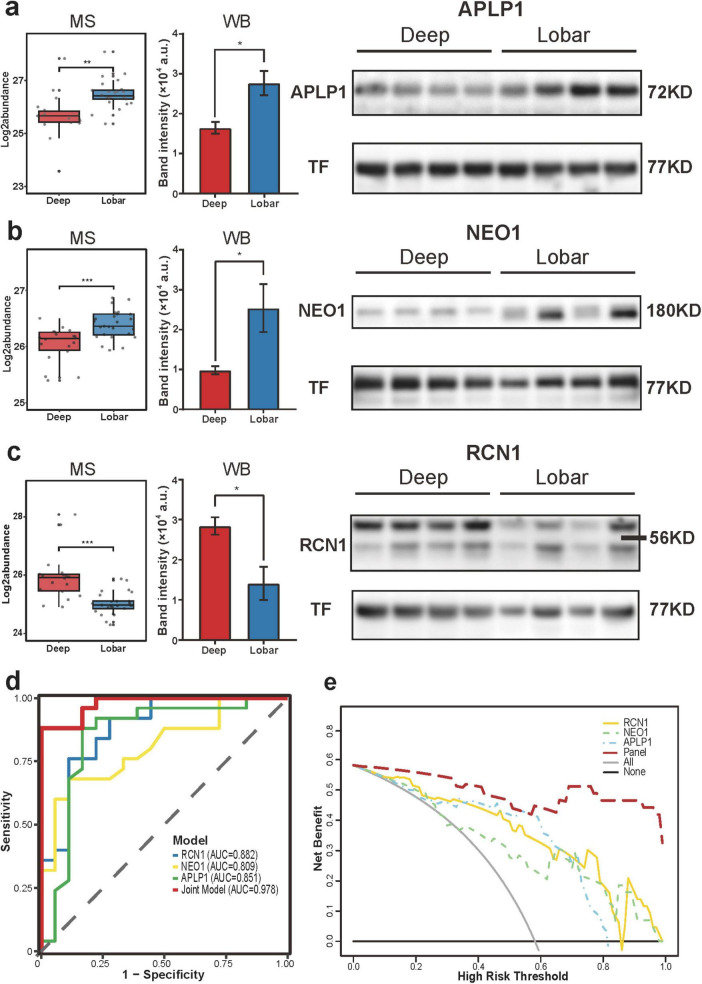 Figure 5
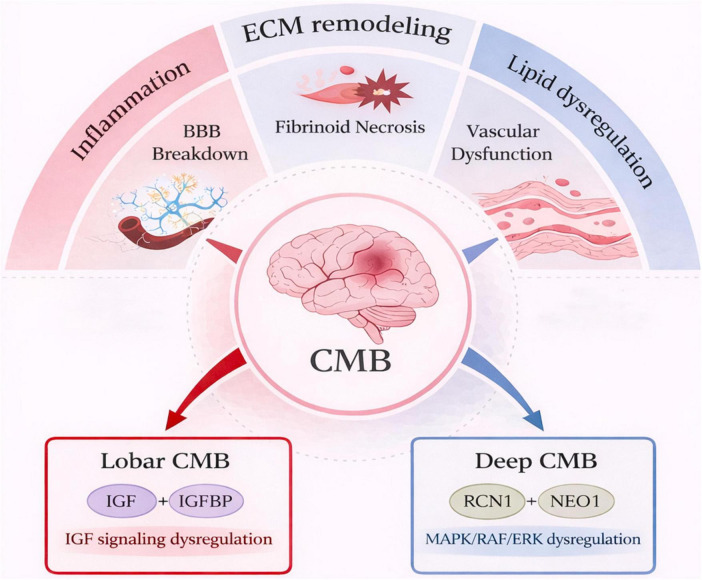 Figure 6
Peer Reviews
No public reviews on file for this paper yet. If you reviewed it on a platform where reviews are public (OpenReview, ICLR, NeurIPS, ICML), you can paste yours below so the community can read it here.
Videos
No videos yet. Explain this paper in a talk, walkthrough, or lecture? Add one.
Taxonomy
TopicsIntracerebral and Subarachnoid Hemorrhage Research · Amyotrophic Lateral Sclerosis Research · S100 Proteins and Annexins