Investigation of carbapenem-hydrolysing Klebsiella oxytoca strains lacking detectable carbapenemase genes
Hiroshi Teraguchi, Ayaka Oda, Satoyo Wakai, Sayoko Kawakami, Koki Yoshida, Wataru Hayashi, Norikazu Kitamura, Yo Sugawara, Naoya Ohara, Motoyuki Sugai, Koji Yahara, Aki Hirabayashi

TL;DR
Researchers found Klebsiella oxytoca strains that showed carbapenem resistance without known resistance genes, highlighting the need for better diagnostic methods.
Contribution
Identified K. oxytoca strains with carbapenem resistance despite lacking known carbapenemase genes, suggesting overproduction of OXY-2 as a resistance mechanism.
Findings
K. oxytoca strains showed reduced carbapenem susceptibility but lacked detectable carbapenemase genes.
mCIM-positive results were likely due to overproduction of the class A β-lactamase OXY-2.
Combined susceptibility testing with clavulanic and dipicolinic acids can help distinguish resistance mechanisms.
Abstract
Introduction. Carbapenemase-producing Enterobacterales (CPE) pose a clinical concern due to limited treatment options and plasmid-mediated spread of carbapenemase genes. The modified carbapenem inactivation method (mCIM) is increasingly used in clinical settings to detect CPE. Gap Statement. Interpretation of mCIM results for isolates with reduced carbapenem susceptibility remains challenging. Aim. To assess the interpretation of positive mCIM results in Klebsiella oxytoca isolates lacking detectable carbapenemase genes and exhibiting reduced carbapenem susceptibility and to propose a phenotypic testing strategy for accurate evaluation. Methodology. Antimicrobial susceptibility testing with clavulanic or dipicolinic acid supplementation, phenotypic carbapenemase assays, carbapenem hydrolysis assays and whole-genome sequencing (WGS) were conducted on K. oxytoca strains. Results. K.…
Genes, proteins, chemicals, diseases, species, mutations and cell lines named across the full text — each resolved to its canonical identifier and authoritative record.
Click any figure to enlarge with its caption.
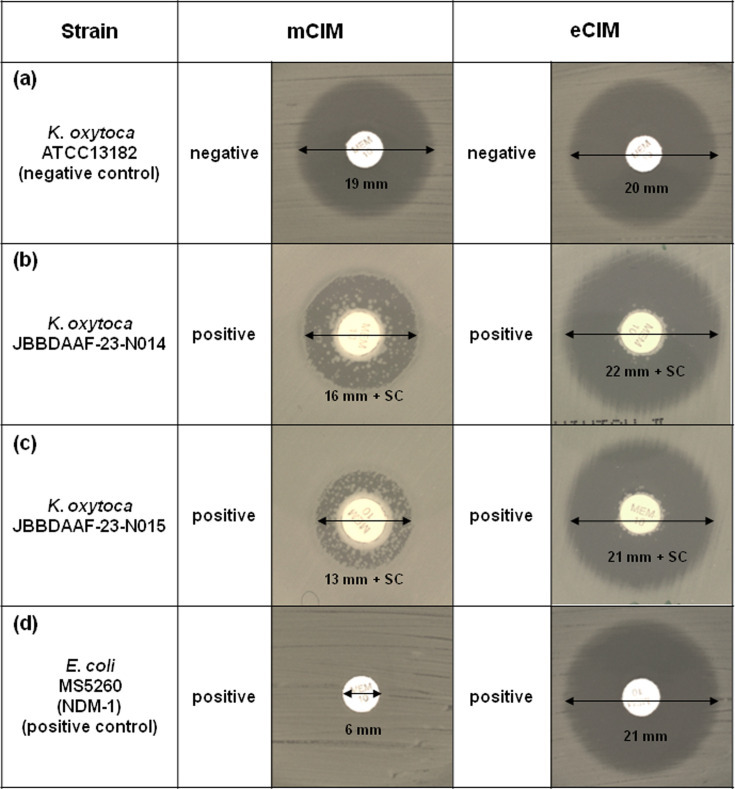 Figure 1
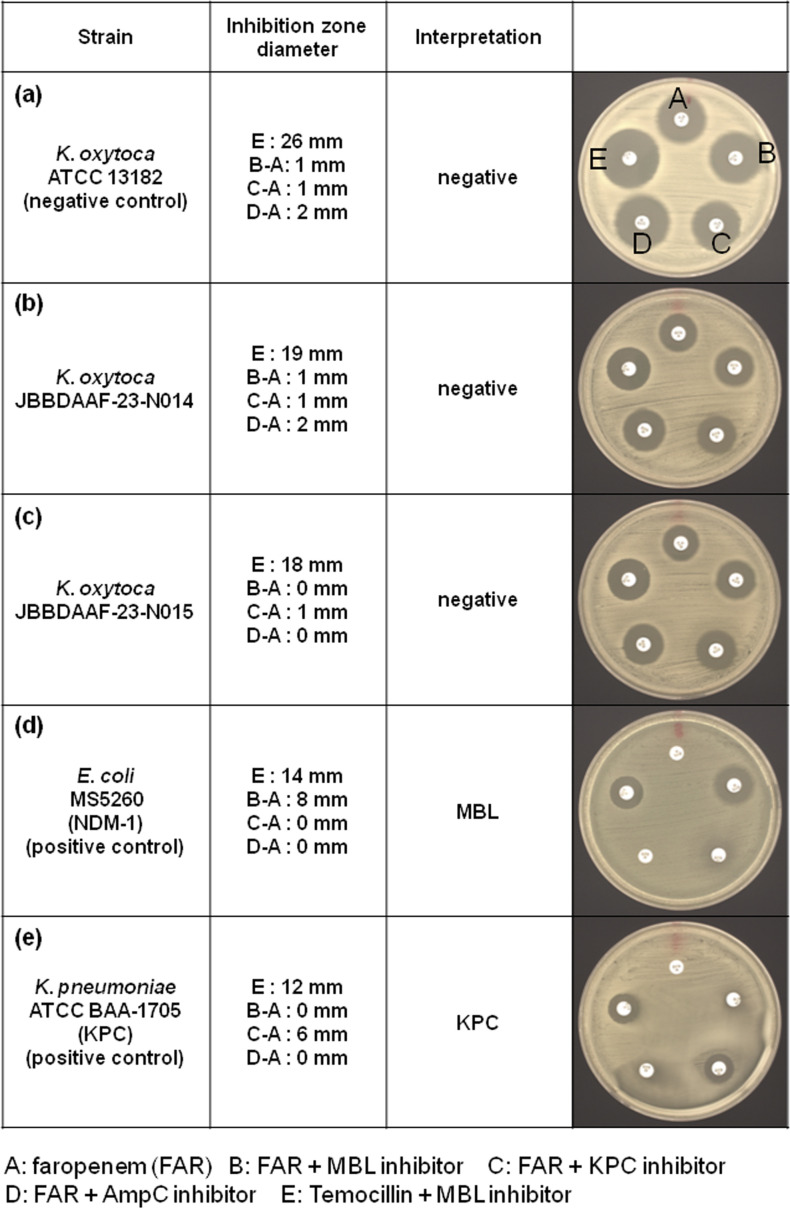 Figure 2
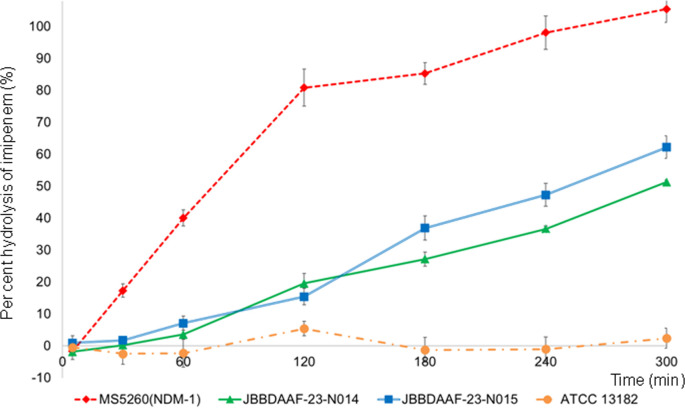 Figure 3
Peer Reviews
No public reviews on file for this paper yet. If you reviewed it on a platform where reviews are public (OpenReview, ICLR, NeurIPS, ICML), you can paste yours below so the community can read it here.
Videos
No videos yet. Explain this paper in a talk, walkthrough, or lecture? Add one.
Taxonomy
TopicsAntibiotic Resistance in Bacteria · Bacterial Identification and Susceptibility Testing · Escherichia coli research studies