Generative modelling of continuous feature foraging reveals probabilistic representations of target distributions
Jennifer C. Magerl Fuller, Árni Kristjánsson, Alasdair Clarke, Árni Gunnar Ásgeirsson

TL;DR
The study shows how people use probabilistic models to focus on important visual items in complex environments.
Contribution
A novel foraging task and Bayesian generative model reveal how people track probabilistic distributions of visual targets.
Findings
Participants preferentially selected colors with higher probability in the scene.
The model captures how observers infer distribution properties through continuous foraging.
Selection likelihood aligns with the underlying probability distribution of target colors.
Abstract
To successfully orient ourselves within noisy visual environments, we must focus our attention on items of importance, ignoring sources of distraction. This selective attending is typically thought to be facilitated by templates, tuned towards current goals. However, in real-world scenes, the appearance of objects, such as their colour or luminance, varies greatly due to perceptual interpretation and environmental factors. Therefore, tuning attentional templates probabilistically may be more efficient than tuning them to precise values. This seems particularly important during continuous tasks, that require the selection of multiple objects which share certain properties. We investigated the effects of variability in target identity, using a novel foraging task. Participants (N = 15) had to continuously select 30 target objects, drawn from a truncated Gaussian colour distribution,…
Genes, proteins, chemicals, diseases, species, mutations and cell lines named across the full text — each resolved to its canonical identifier and authoritative record.
Click any figure to enlarge with its caption.
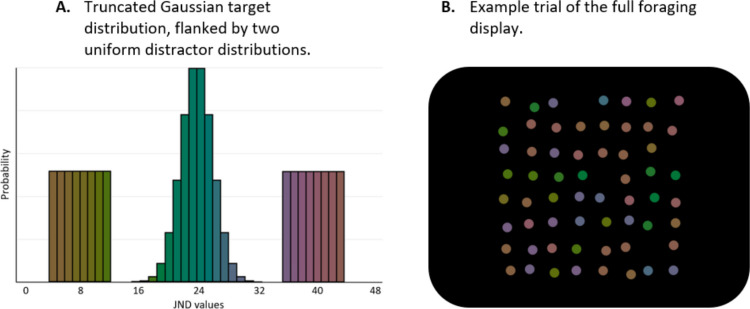 Figure 1
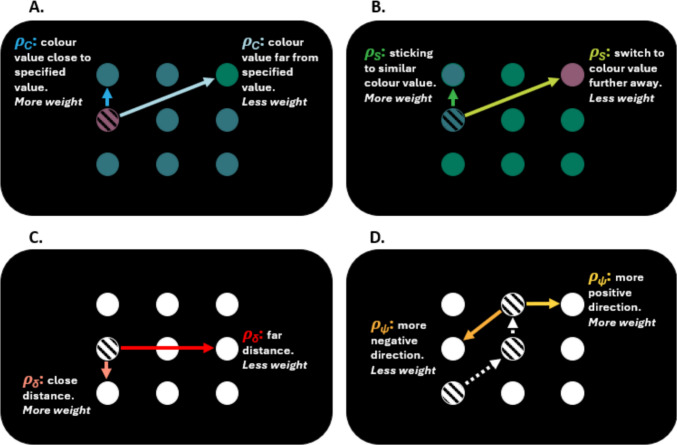 Figure 2
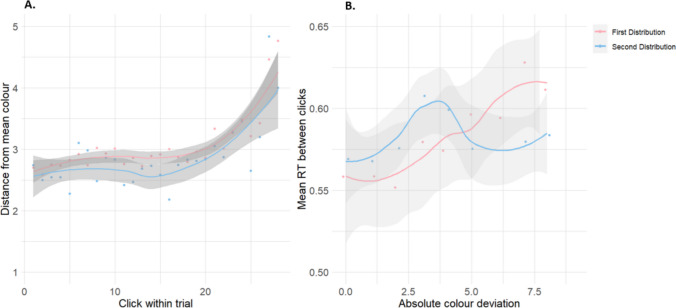 Figure 3
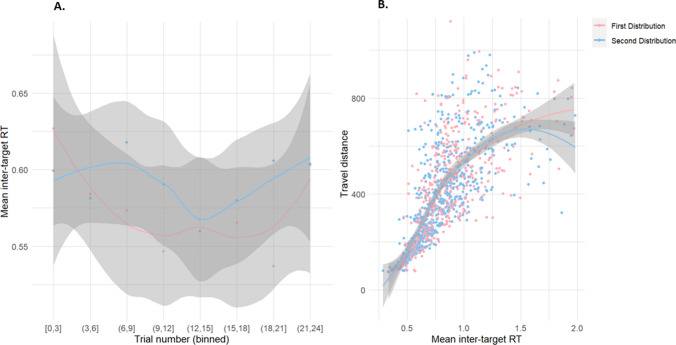 Figure 4
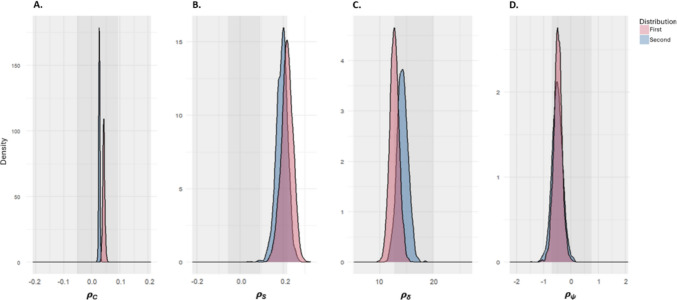 Figure 5
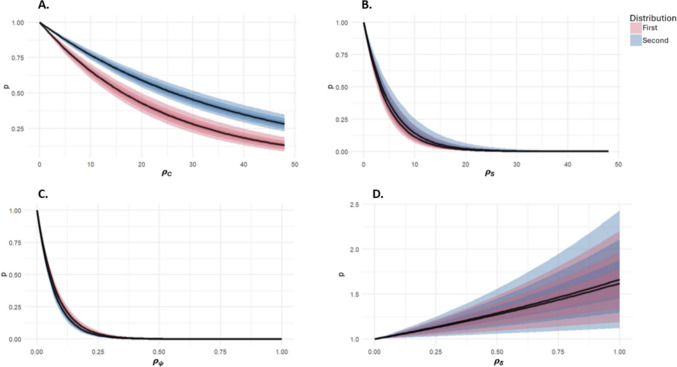 Figure 6
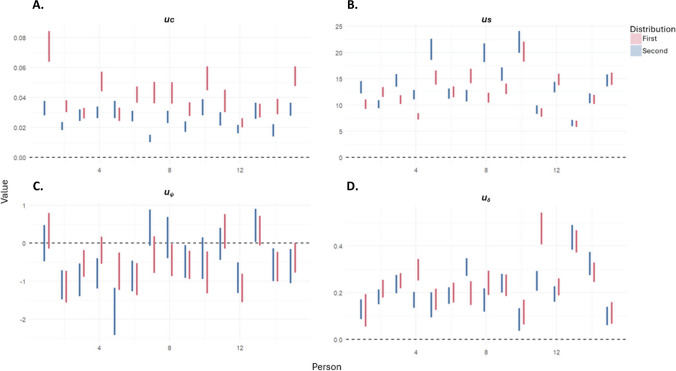 Figure 7
Peer Reviews
No public reviews on file for this paper yet. If you reviewed it on a platform where reviews are public (OpenReview, ICLR, NeurIPS, ICML), you can paste yours below so the community can read it here.
Videos
No videos yet. Explain this paper in a talk, walkthrough, or lecture? Add one.
Taxonomy
TopicsVisual perception and processing mechanisms · Spatial Cognition and Navigation · Neural and Behavioral Psychology Studies