Isolation, identification, and antimicrobial effect analysis of active components from Humulus scandens against Phytophthora nicotianae
Xiaoyun Wu, Yuxuan Liu, Deqiang Qin, Dongmei Liu, Yongsheng Ren, Jin Tian, Siyue Lan, Xiao Ding, Xiaoping Qin

TL;DR
Scientists isolated and tested compounds from Humulus scandens that effectively inhibit a plant pathogen, offering potential for eco-friendly pesticides.
Contribution
Identification of five active compounds from Humulus scandens with strong antimicrobial effects against Phytophthora nicotianae.
Findings
Five compounds were isolated from Humulus scandens with antimicrobial activity against Phytophthora nicotianae.
Compounds 1 and 5 showed the strongest inhibitory effects with EC50 values of 51.70 and 31.71 μg/ml.
Microscopic analysis showed that compounds 1 and 5 caused structural damage to the pathogen's mycelia.
Abstract
Monomeric compounds from Humulus scandens that effectively inhibit Phytophthora nicotianae were isolated, and their antimicrobial effects were analyzed. Methanol extracts were isolated using a combination of activity tracking and chemical separation methods. Compound structures were identified using NMR and other techniques. Antimicrobial activity against P. nicotianae was assessed via the mycelial growth rate method with mycelial morphology further observed using optical microscopy and scanning electron microscopy. Five compounds were isolated from the ethyl acetate (EtOAc) layer of H. scandens, namely, chromone (compound 1), tectochrysin (compound 2), isorhamnetin (compound 3), hyperoside (compound 4), and Apigenin 7-glucoside (compound 5). All compounds exhibited varying degrees of antimicrobial activity. Compounds 1 and 5 demonstrated superior inhibitory effects, with EC50 values of…
Genes, proteins, chemicals, diseases, species, mutations and cell lines named across the full text — each resolved to its canonical identifier and authoritative record.
Click any figure to enlarge with its caption.
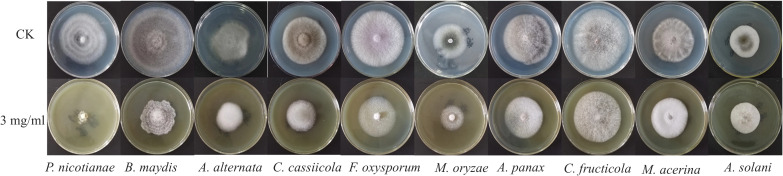 Figure 1
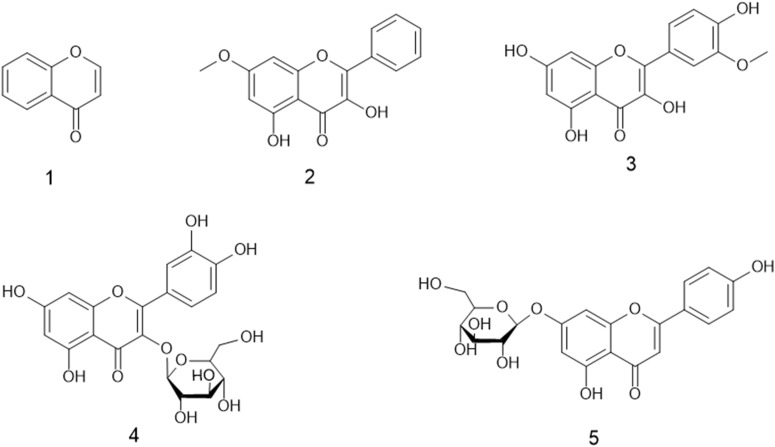 Figure 2
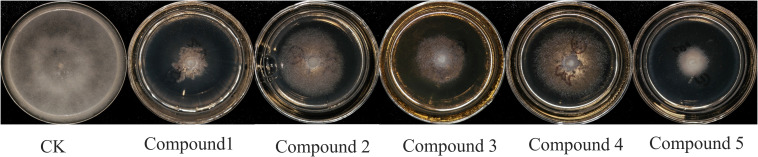 Figure 3
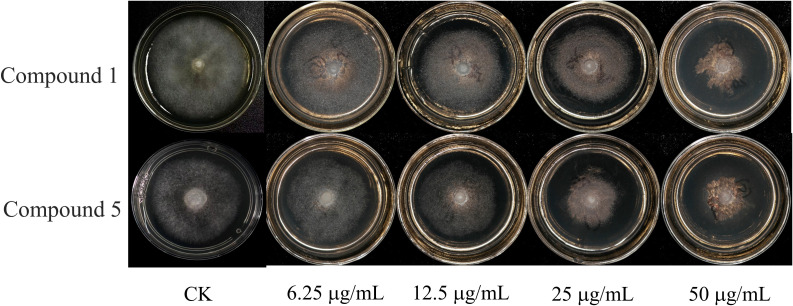 Figure 4
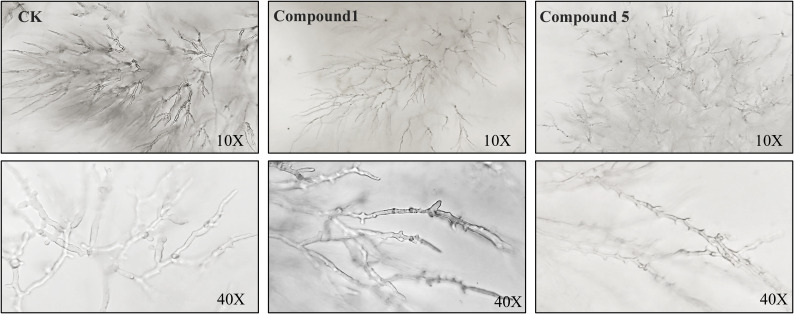 Figure 5
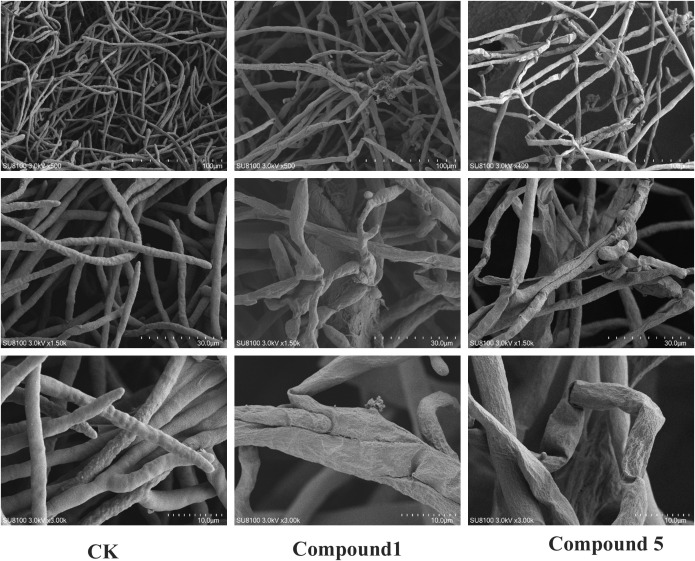 Figure 6
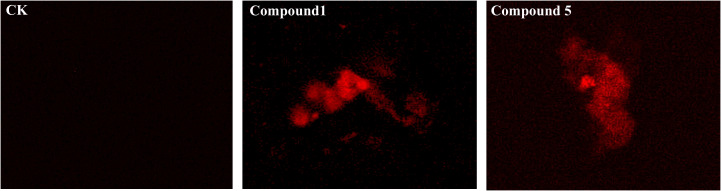 Figure 7
Peer Reviews
No public reviews on file for this paper yet. If you reviewed it on a platform where reviews are public (OpenReview, ICLR, NeurIPS, ICML), you can paste yours below so the community can read it here.
Videos
No videos yet. Explain this paper in a talk, walkthrough, or lecture? Add one.
Taxonomy
TopicsHops Chemistry and Applications · Polysaccharides and Plant Cell Walls · Phytochemicals and Antioxidant Activities