Development of a shoulder muscle feedback controller for human body models
Emma Larsson, Jason Fice, Johan Iraeus, Jonas Östh, Bengt Pipkorn, Johan Davidsson

TL;DR
This paper develops a new shoulder muscle controller for human body models to better predict occupant movements during driving maneuvers.
Contribution
A novel shoulder muscle controller with directionally dependent load sharing based on volunteer muscle activity data is developed and validated.
Findings
The model successfully predicted peak elbow displacements for all loading directions.
A sensitivity study confirmed the controller's performance with varying gains.
The controller is ready for implementation in full-body models simulating driver maneuvers.
Abstract
State-of-the-art finite element human body models (FE HBMs) with active muscle controllers can predict occupant kinematics during braking and steering, which are typical pre-crash interventions aiming at avoiding crashes. Information about the pre-crash occupant kinematics can be used in the design of systems that influence the occupant position in the pre-crash phase and the interaction between the occupant and the restraints in both the pre- and in-crash phases. For driver HBMs, active shoulder muscles are required to reproduce the load between the steering wheel and the torso. The shoulder is the most freely moving joint in the body, and the stability of the shoulder complex depends on muscle activity. Thus, intermuscular load sharing cannot be determined solely from the geometrical location of the muscle because other muscles co-contract to maintain stability during the movement.…
Genes, proteins, chemicals, diseases, species, mutations and cell lines named across the full text — each resolved to its canonical identifier and authoritative record.
Click any figure to enlarge with its caption.
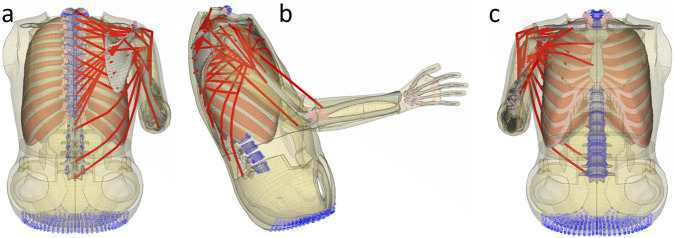 Figure 1
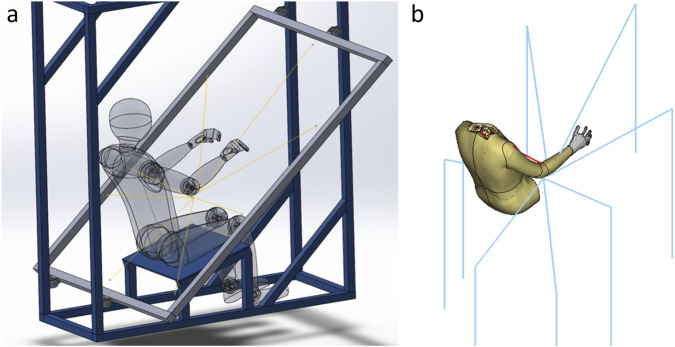 Figure 2
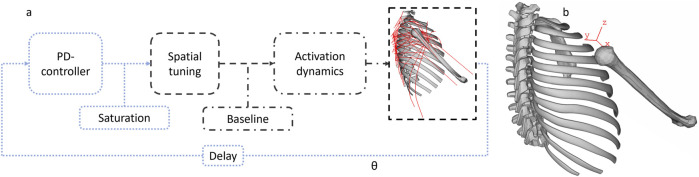 Figure 3
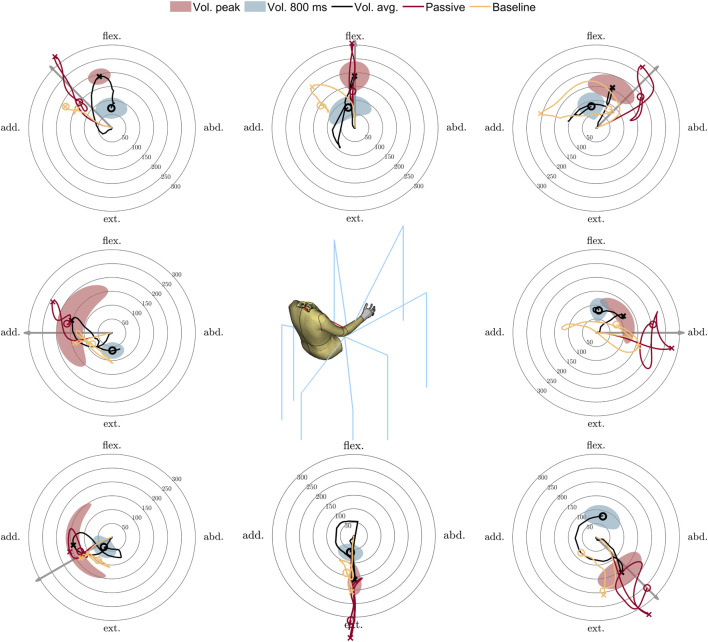 Figure 4
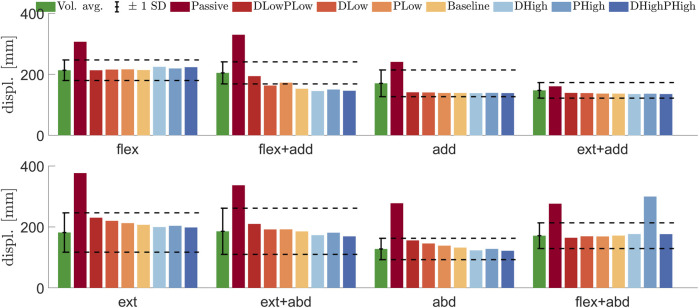 Figure 5
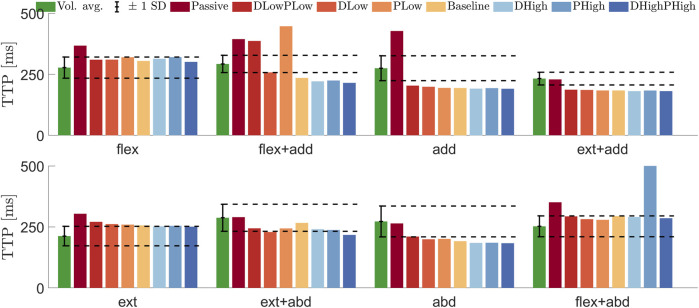 Figure 6
Peer Reviews
No public reviews on file for this paper yet. If you reviewed it on a platform where reviews are public (OpenReview, ICLR, NeurIPS, ICML), you can paste yours below so the community can read it here.
Videos
No videos yet. Explain this paper in a talk, walkthrough, or lecture? Add one.
Taxonomy
TopicsAutomotive and Human Injury Biomechanics · Motor Control and Adaptation · Ergonomics and Musculoskeletal Disorders