Age-related directional asymmetry in the rod-and-frame test
Michał Adamski, Miroslaw Latka, Anna Latka, Sławomir Wudarczyk, Tadeusz Sebzda, Bruce J. West

TL;DR
Older adults make more errors in a visual task involving tilted frames, especially for clockwise tilts, possibly due to changes in attention and cue use.
Contribution
The study identifies age-related directional asymmetry in the Rod-and-Frame Test and links it to lateralized attention changes.
Findings
Older adults showed higher median errors than young adults at specific clockwise and one counterclockwise tilt.
The asymmetry index was significantly positive in older adults, especially those over 68 years.
Older adults relied more on edge-based cues for clockwise tilts, unlike younger adults who used both edge and diagonal cues.
Abstract
In the classic Rod-and-Frame Test (RFT), participants align a pivoted rod with the vertical while viewing a tilted, coaxially mounted frame. In doing so, they can use the edge of the frame or its imaginary diagonal as visual cues. The error in this simple perceptual task has long been used to distinguish field-dependent from field-independent cognitive styles. Recent findings indicate that aging increases field dependence. Here, we test whether the shape of the RFT error curve as a function of frame tilt changes with age. Thirty-nine young adults (range: 19–27 years) and 50 older adults (range: 57–81 years) completed a virtual-reality version of the RFT. Each participant determined the vertical for nineteen frame tilt angles ranging from −45° to 45° in 5° increments. At five clockwise tilts (10°–30°) and one counterclockwise tilt (−15°), older adults showed higher median errors than…
Genes, proteins, chemicals, diseases, species, mutations and cell lines named across the full text — each resolved to its canonical identifier and authoritative record.
Click any figure to enlarge with its caption.
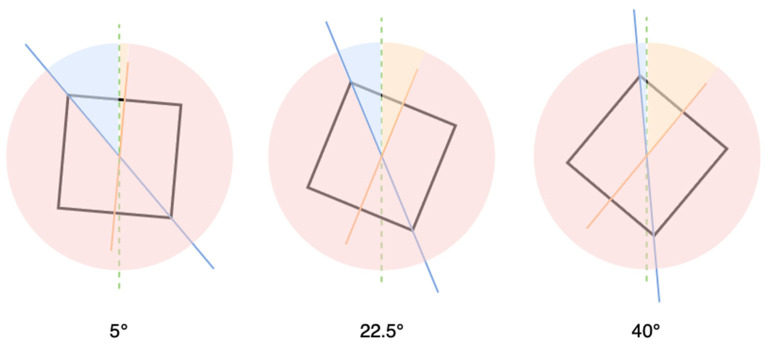 Figure 1
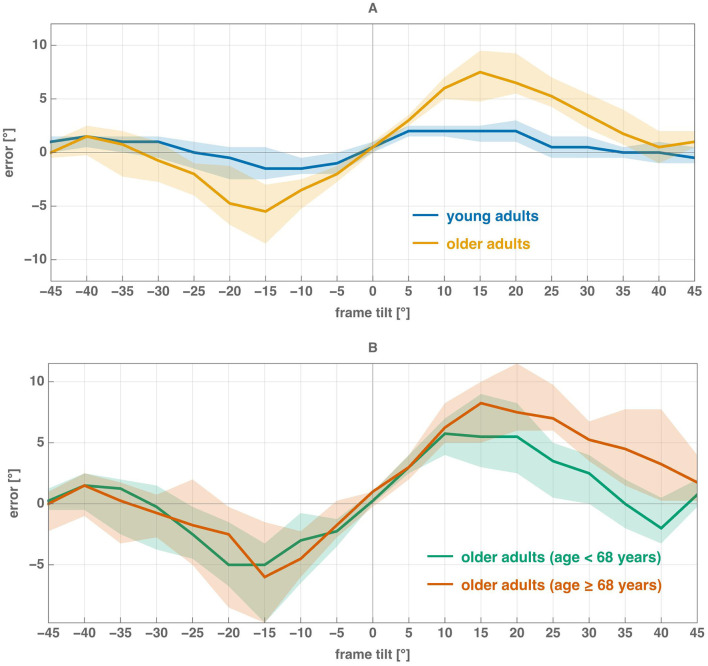 Figure 2
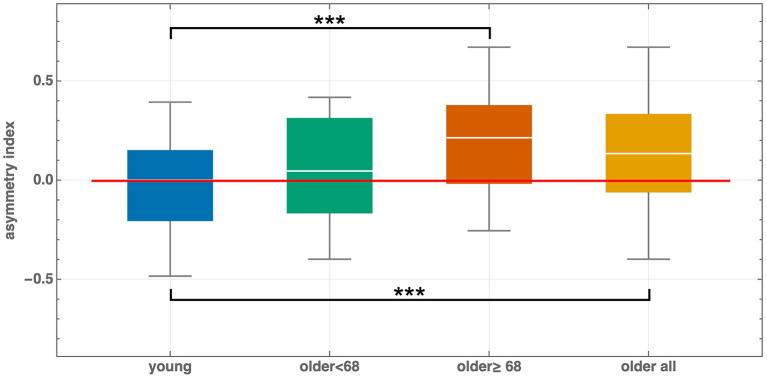 Figure 3
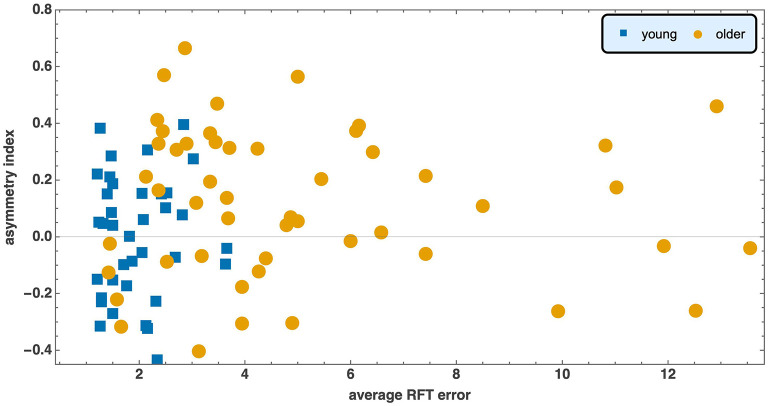 Figure 4
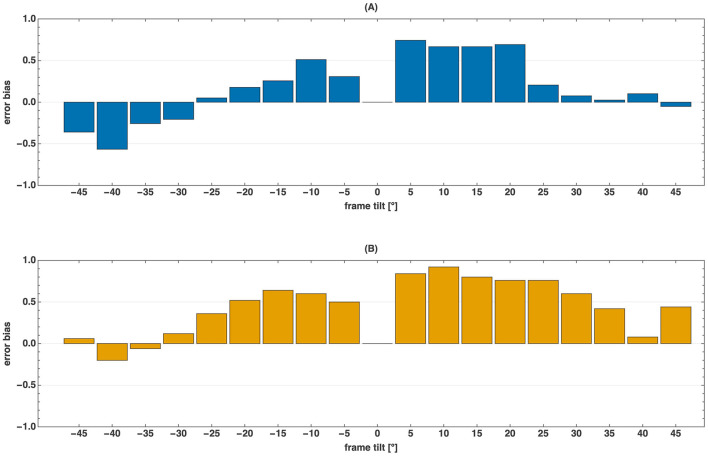 Figure 5
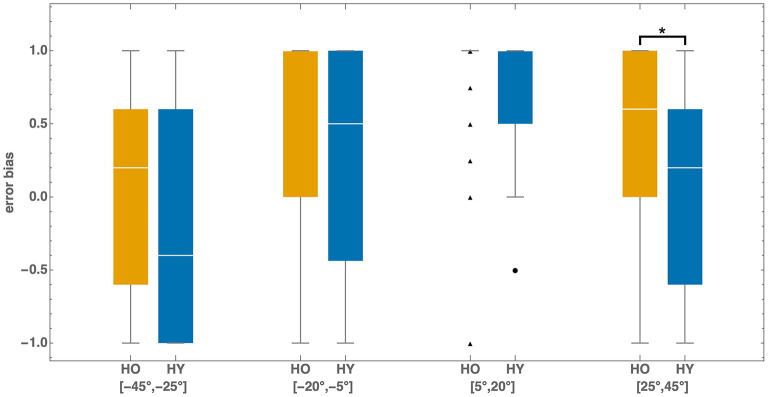 Figure 6
Peer Reviews
No public reviews on file for this paper yet. If you reviewed it on a platform where reviews are public (OpenReview, ICLR, NeurIPS, ICML), you can paste yours below so the community can read it here.
Videos
No videos yet. Explain this paper in a talk, walkthrough, or lecture? Add one.
Taxonomy
TopicsVisual perception and processing mechanisms · Spatial Neglect and Hemispheric Dysfunction · Spatial Cognition and Navigation