Postmortem Interval Estimation Based on the Developmental Patterns of Hemilucilia segmentaria (Fabricius) (Diptera, Calliphoridae) and Peckia (Euboettcheria) anguilla (Curran & Walley) (Diptera, Sarcophagidae): a Case in Southeastern Brazil
Carina Mara Souza, Vinícius da Costa-Silva, Aline Marrara Prado, Andre Gardelino Savino, Patricia Jacqueline Thyssen

TL;DR
This paper estimates the time since death of a corpse in Brazil using two types of flies, including a first-time observation of one species on a decaying body.
Contribution
First report of Peckia (Euboettcheria) anguilla rearing in a decaying corpse and its use in PMI estimation.
Findings
PMI was estimated using developmental stages of Hemilucilia segmentaria and Peckia (Euboettcheria) anguilla.
Peckia (Euboettcheria) anguilla was observed for the first time rearing in a decaying corpse in forensic context.
Abstract
Decaying corpses constitute a relevant source of food resources for a wide range of insects classified as necrophagous. Several blowflies (Diptera: Calliphoridae) and flesh flies (Diptera: Sarcophagidae) species are necrophagous and, for this reason, comprise two of the most relevant families of insects in forensics. Obtaining reliable postmortem interval (PMI) estimates based on entomological traces is of great importance in investigative processes. We present a case report of PMI estimation based on entomological evidence collected in a young woman’s corpse found in a wild area from southeastern Brazil, using two Diptera species: Hemilucilia segmentaria (Fabricius) (Calliphoridae) and Peckia (Euboettcheria) anguilla (Curran & Walley) (Sarcophagidae). Additionally, we report for the first time P. (E.) anguilla rearing in a decaying corpse.
Genes, proteins, chemicals, diseases, species, mutations and cell lines named across the full text — each resolved to its canonical identifier and authoritative record.
Click any figure to enlarge with its caption.
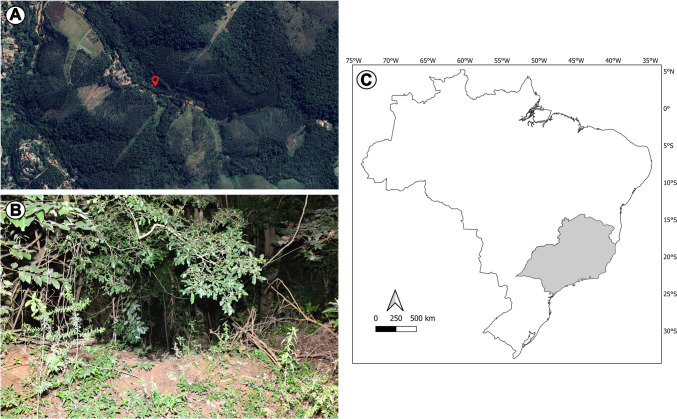 Figure 1
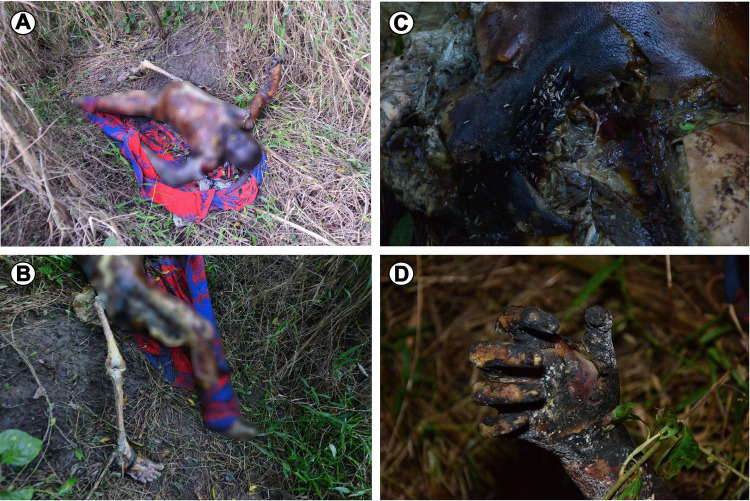 Figure 2
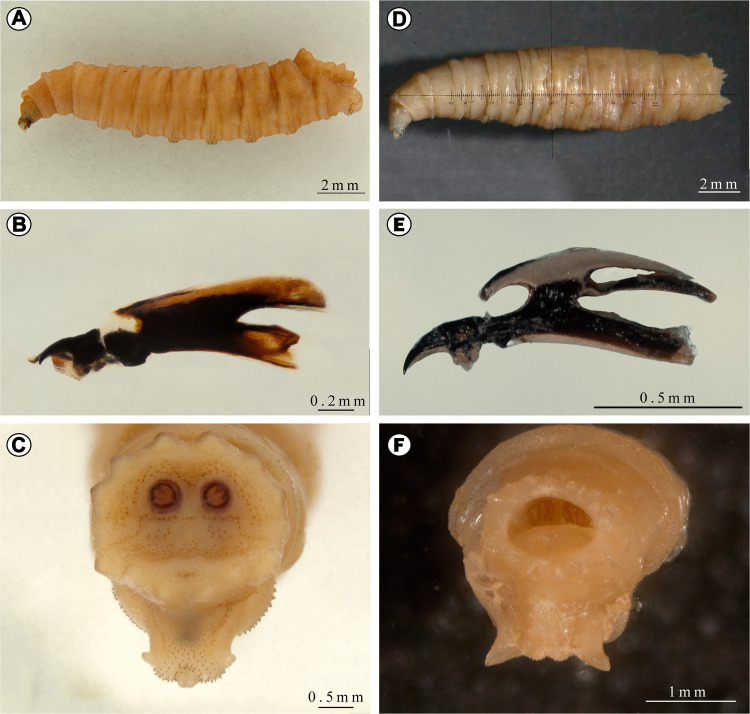 Figure 3
Peer Reviews
No public reviews on file for this paper yet. If you reviewed it on a platform where reviews are public (OpenReview, ICLR, NeurIPS, ICML), you can paste yours below so the community can read it here.
Videos
No videos yet. Explain this paper in a talk, walkthrough, or lecture? Add one.
Taxonomy
TopicsForensic Entomology and Diptera Studies · Paleopathology and ancient diseases · Insect Utilization and Effects