Artificial intelligence in immunotherapy: revolutionizing diagnostic and therapeutic applications in cancer and autoimmune diseases
Jamal Alshorman, Mohammad Javad Mehran, Yadollah Bahrami, Sara Mohammadzadeh, Rambod Barzigar, Mahdi Morshedi, Khawaja Husnain Haider, Kingsley Miyanda Tembo, Shan-Jie Rong, Nasir Jadgal, Ruba Altahla, Mansoor Bolideei, Yongping Wang

TL;DR
Artificial intelligence is transforming cancer and autoimmune disease treatments by improving diagnosis, treatment selection, and monitoring through advanced data analysis.
Contribution
The paper highlights novel AI applications in biomarker discovery, immune checkpoint inhibitor prediction, and real-time disease tracking in precision immunotherapy.
Findings
Multimodal AI models improve patient stratification and non-invasive response assessment in oncology with AUC ~ 0.70–0.95.
AI enables earlier diagnosis and precision management in autoimmune diseases like rheumatoid arthritis and type 1 diabetes.
Explainable AI and federated learning address challenges like data heterogeneity and model interpretability for clinical translation.
Abstract
Artificial intelligence (AI) is increasingly advancing precision immunotherapy by integrating high-dimensional biomedical data to support diagnosis, treatment selection, and longitudinal monitoring in both cancer and autoimmune diseases. This review summarizes AI applications in biomarker discovery, prediction of immune checkpoint inhibitor (ICI) response and toxicity, neoantigen prioritization, CAR-T cell optimization, and therapeutic antibody engineering. In oncology, multimodal models combining multi-omics, medical imaging, and clinical variables improve patient stratification and non-invasive response assessment, with several imaging- and pathology-based prediction tasks reporting clinically meaningful performance (frequently AUC ~ 0.70–0.95 across tumor types and endpoints). In autoimmune diseases, AI enables earlier diagnosis, molecular subtyping, treatment-response prediction,…
Genes, proteins, chemicals, diseases, species, mutations and cell lines named across the full text — each resolved to its canonical identifier and authoritative record.
Click any figure to enlarge with its caption.
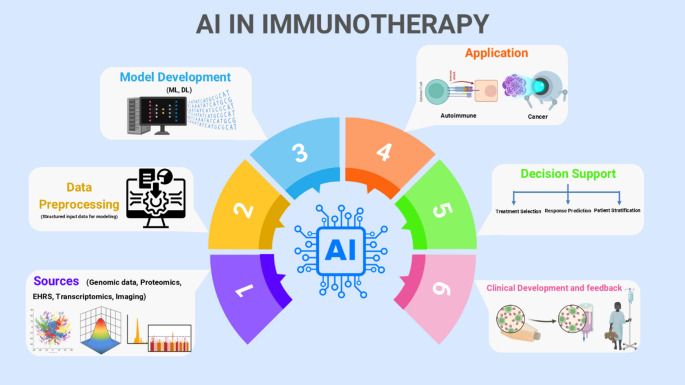 Figure 1
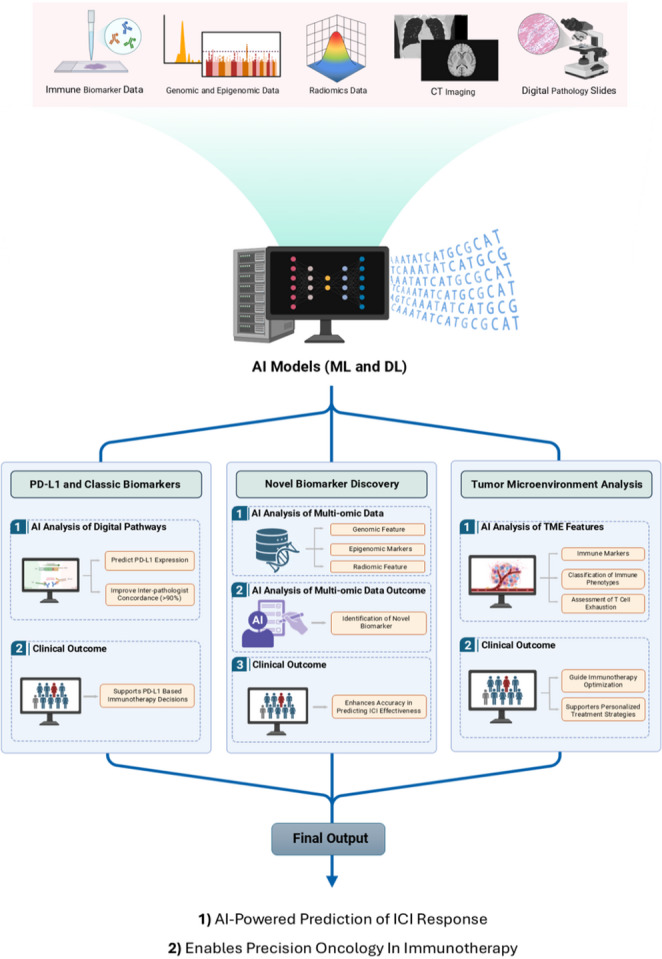 Figure 2
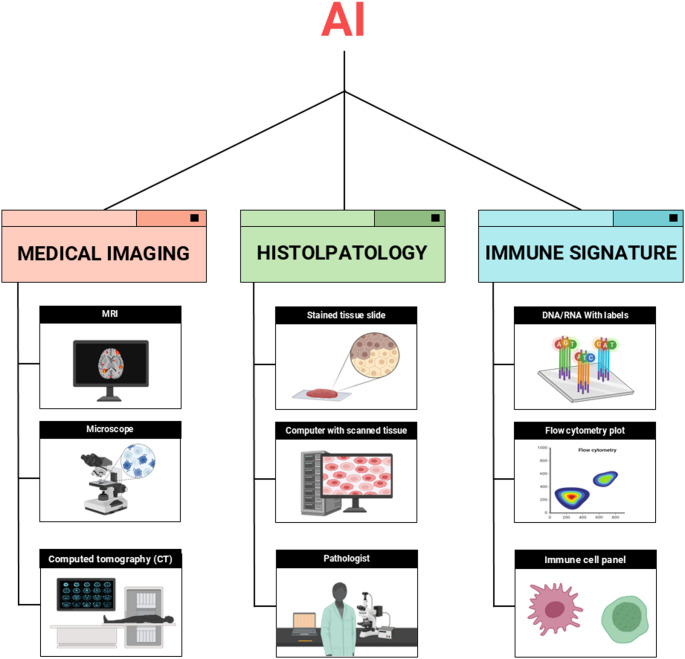 Figure 3
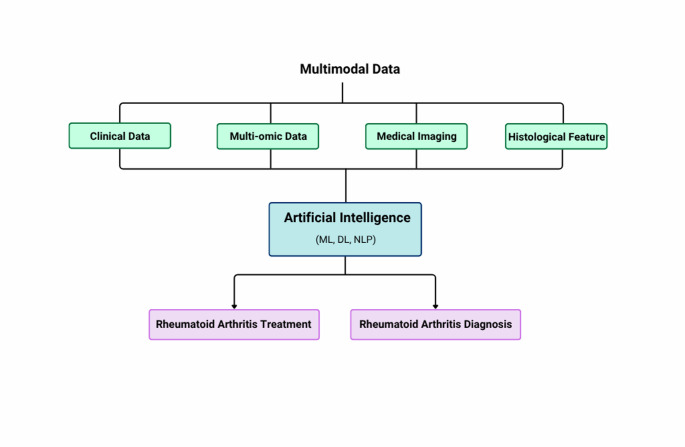 Figure 4
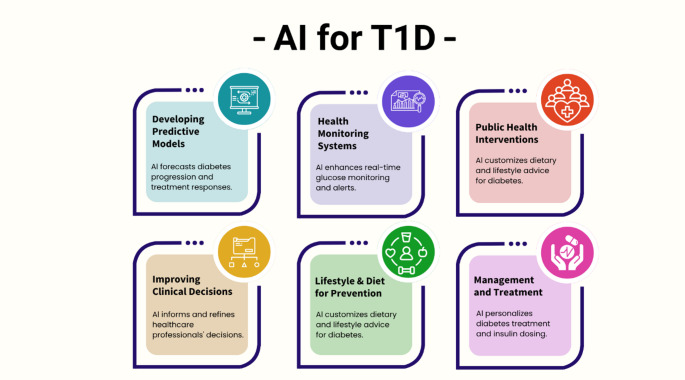 Figure 5
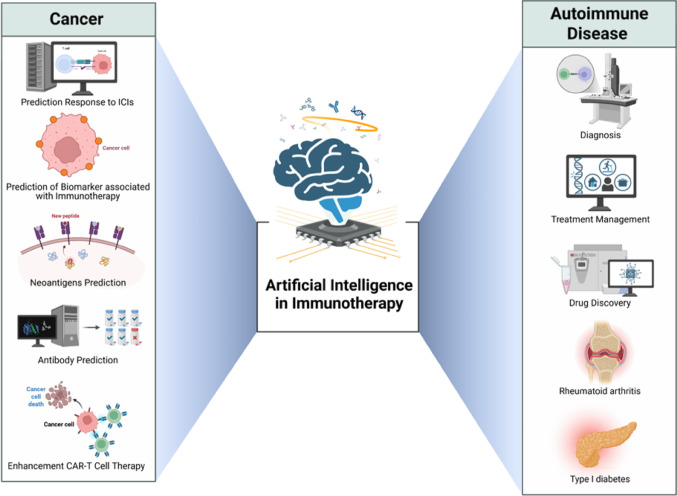 Figure 6
Peer Reviews
No public reviews on file for this paper yet. If you reviewed it on a platform where reviews are public (OpenReview, ICLR, NeurIPS, ICML), you can paste yours below so the community can read it here.
Videos
No videos yet. Explain this paper in a talk, walkthrough, or lecture? Add one.
Taxonomy
Topicsvaccines and immunoinformatics approaches · Immunotherapy and Immune Responses · Cancer Immunotherapy and Biomarkers