Combined ACEI and ARB therapy and ICU mortality in critically ill COVID-19 patients: a retrospective cohort study
Ivanny Marchant, Gloria Balcazar, Valentina Pozo, Pablo Olivero, Belén Rodríguez, Romina Castillo, Hilda Espinoza

TL;DR
This study found that combined ACEI and ARB therapy was linked to lower ICU mortality in critically ill COVID-19 patients, with early bicarbonate increases possibly indicating better outcomes.
Contribution
The study explores the combined use of ACEI and ARB in ICU patients and its association with mortality and acid-base status.
Findings
Combined ACEI + ARB therapy was associated with lower ICU mortality (16.9%) compared to no RAAS blockade (38.3%).
Early increases in bicarbonate levels within 48 hours were linked to reduced mortality in patients with low or normal admission levels.
Patients with elevated baseline bicarbonate who survived had longer ICU stays and mechanical ventilation durations.
Abstract
The clinical safety and potential benefits of renin–angiotensin–aldosterone system (RAAS) inhibitors in COVID-19 remain debated, particularly in critically ill populations. Evidence on combined angiotensin-converting enzyme inhibitor (ACEI) and angiotensin receptor blocker (ARB) therapy is limited, and the potential interaction with acid–base status has not been sufficiently explored. We conducted a retrospective cohort study including adults with PCR-confirmed COVID-19 admitted to the intensive care unit (ICU) at Hospital Dr. Gustavo Fricke (Chile) between March 2020 and December 2021. Patients were categorized according to RAAS therapy at admission (none, ACEI only, ARB only, ACEI + ARB) and arterial bicarbonate (HCO3 −) levels (low <21 mEq/L, normal 21–27 mEq/L, high >27 mEq/L). Changes in HCO3 − during the first 48 h were evaluated. The primary outcome was in-hospital mortality;…
Genes, proteins, chemicals, diseases, species, mutations and cell lines named across the full text — each resolved to its canonical identifier and authoritative record.
Click any figure to enlarge with its caption.
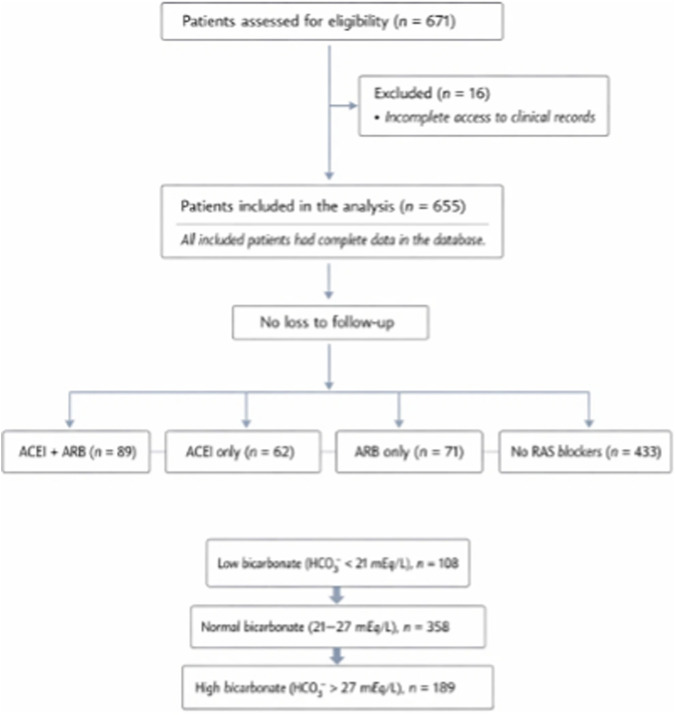 Figure 1
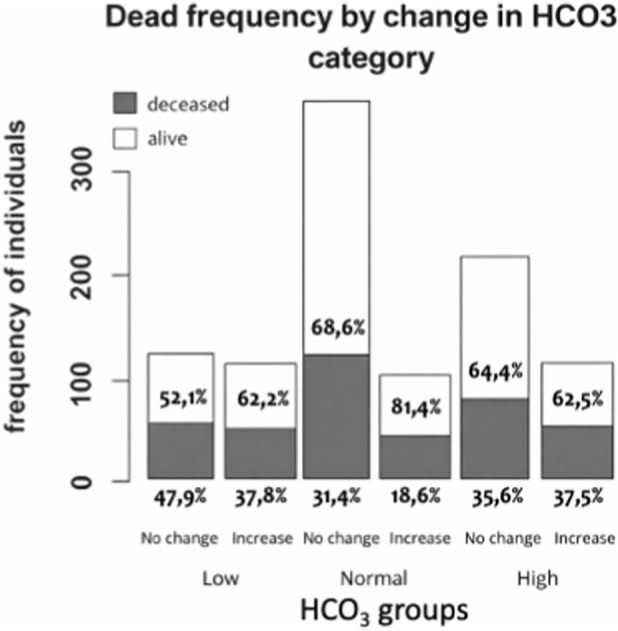 Figure 2
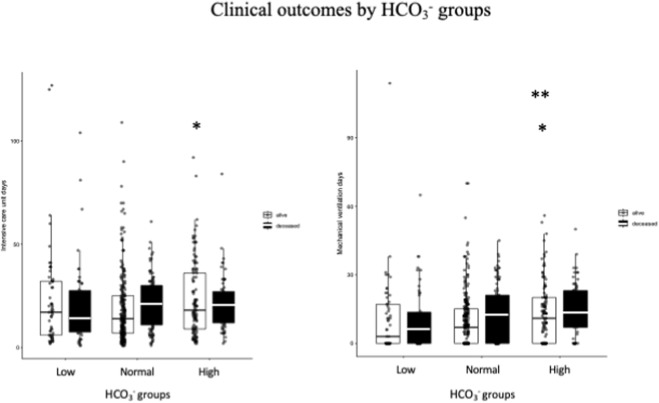 Figure 3
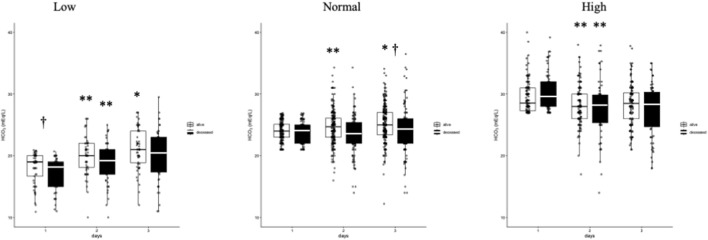 Figure 4
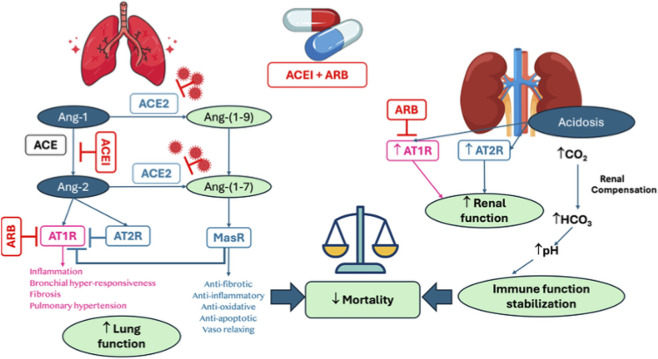 Figure 5
Peer Reviews
No public reviews on file for this paper yet. If you reviewed it on a platform where reviews are public (OpenReview, ICLR, NeurIPS, ICML), you can paste yours below so the community can read it here.
Videos
No videos yet. Explain this paper in a talk, walkthrough, or lecture? Add one.
Taxonomy
TopicsCOVID-19 Clinical Research Studies · Renal function and acid-base balance · Long-Term Effects of COVID-19