Efficacy of transcranial magnetic stimulation in the treatment of combat-related PTSD: a systematic review and meta-analysis
Hesed Virto-Farfan, Fritz Fidel Váscones-Román, Valeria Rivera, Olga Karpenko, Elena Bochkina, Ekaterina Parshakova, Alexey Sinev, Gustavo E. Tafet, Niels Pacheco-Barrios

TL;DR
This study reviews and analyzes the effectiveness of transcranial magnetic stimulation (TMS) in treating combat-related PTSD, finding it improves symptoms but lacks strong evidence of superiority over sham treatments.
Contribution
The study provides a systematic review and meta-analysis of TMS for combat-related PTSD, clarifying its efficacy and safety profile in this specific population.
Findings
TMS significantly reduces PTSD symptoms in combat-exposed individuals with a large pooled mean improvement.
High-frequency left DLPFC rTMS protocols show the greatest symptom improvement.
TMS is well tolerated with minimal adverse effects and low dropout rates.
Abstract
Combat-related post-traumatic stress disorder (PTSD) remains highly prevalent among military personnel and veterans and is frequently chronic, disabling, and only partially responsive to first-line pharmacological and psychotherapeutic interventions. Given the central role of fronto-limbic circuit dysfunction in PTSD, transcranial magnetic stimulation (TMS) has emerged as a biologically plausible neuromodulatory strategy, yet its protocol-level efficacy in combat-exposed populations is not well established. Clarifying whether specific TMS modalities offer clinically meaningful benefit beyond sham, and whether any protocol can be prioritized, is critical for rationally integrating TMS into veteran-focused care pathways. This systematic review and meta-analysis followed PRISMA 2020 and Cochrane Handbook recommendations and was prospectively registered in PROSPERO (CRD420251105555). We…
Genes, proteins, chemicals, diseases, species, mutations and cell lines named across the full text — each resolved to its canonical identifier and authoritative record.
Click any figure to enlarge with its caption.
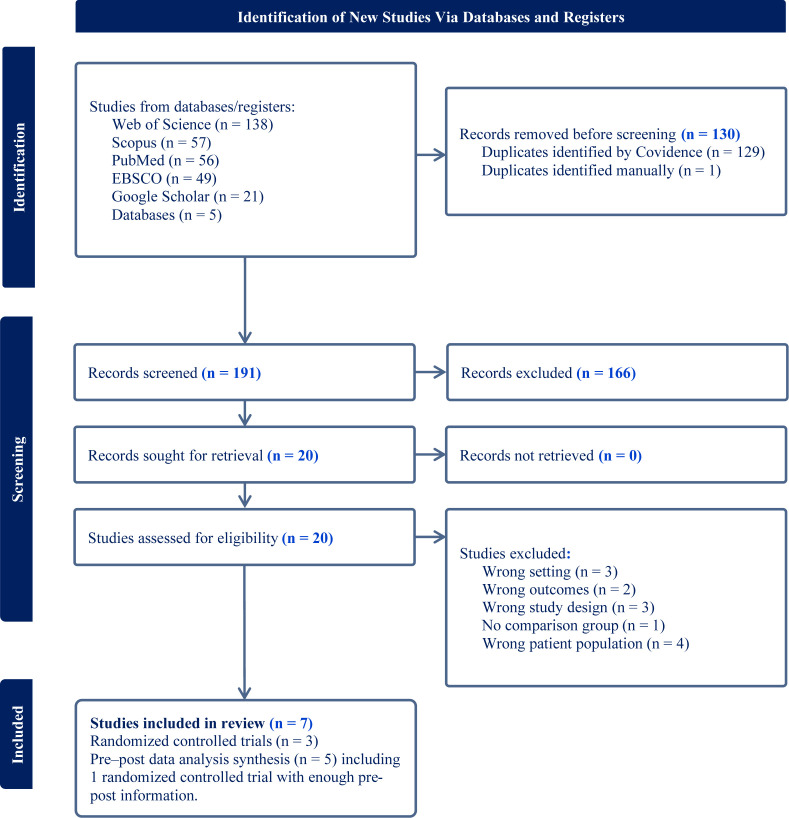 Figure 1
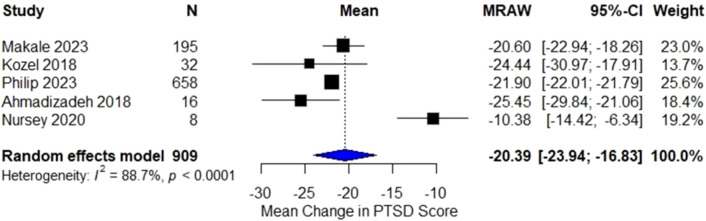 Figure 2
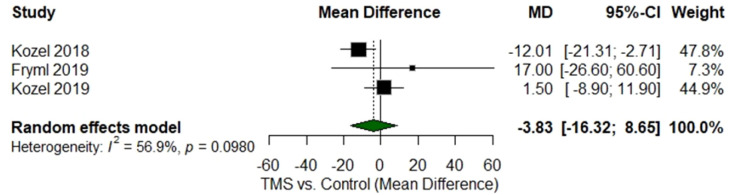 Figure 3
 Figure 4
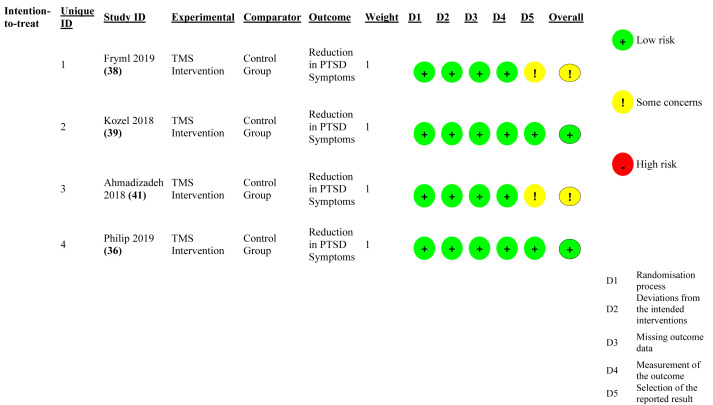 Figure 5
Peer Reviews
No public reviews on file for this paper yet. If you reviewed it on a platform where reviews are public (OpenReview, ICLR, NeurIPS, ICML), you can paste yours below so the community can read it here.
Videos
No videos yet. Explain this paper in a talk, walkthrough, or lecture? Add one.
Taxonomy
TopicsTranscranial Magnetic Stimulation Studies · Traumatic Brain Injury Research · Pain Management and Treatment